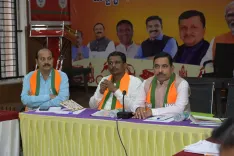
Uttarakhand CMO champions posthumous organ donation

Synopsis
The Uttarakhand Chief Minister's Office on 27 June 2026 declared posthumous organ donation the highest form of human welfare, lending executive-level weight to India's push to raise its critically low deceased-donor rate of under 1 per million population.
Key Takeaways
The Uttarakhand Chief Minister's Office publicly endorsed posthumous organ donation on 27 June 2026 , calling it the greatest act of human welfare.
India's deceased-donor rate remains below 1 per million population , among the lowest globally.
The Transplantation of Human Organs Act, 1994 (amended 2011 and 2014 ) provides the legal basis for organ retrieval and transplantation in India.
NOTTO , established in 2014 , is the national apex body managing organ waiting lists and inter-state allocation.
State-level political endorsement is considered a critical missing link in translating national transplant infrastructure into actual donor registrations.
Follow-up action in Uttarakhand may include a state donor registry, hospital coordination cells, or a structured public awareness campaign.
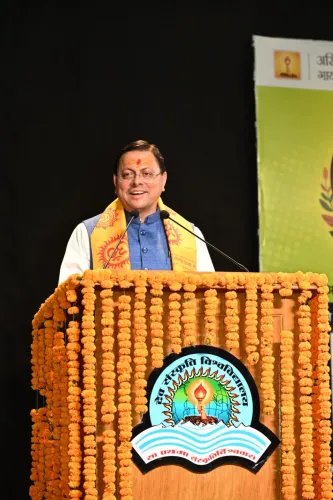
The Chief Minister's Office of Uttarakhand shared a statement on Saturday, 27 June 2026 emphasising posthumous organ donation as the highest act of human welfare, urging citizens across the state to pledge their organs for those in need after death.
The post quoted a speaker saying, 'Mrityu ke baad bhi yadi sharir ka koi ang kisi zarooratmand vyakti ko naya jeevan de sakta hai, to isse bada manav kalyan ka karya koi nahin ho sakta' — 'Even after death, if any organ of the body can give a new life to a person in need, there can be no greater act of human welfare than this.' The statement frames posthumous organ donation not merely as a medical act but as a moral and social obligation.
Context
India records one of the world's lowest deceased-donor rates — fewer than 1 donation per million population — a stark contrast to countries such as Spain and the United States, where rates exceed 40 per million. The gap is attributed to a combination of low awareness, cultural hesitation, and insufficient hospital-level transplant coordination infrastructure. State governments have increasingly taken up awareness campaigns to bridge this divide.
Uttarakhand, a northern hill state, has periodically run organ-donation awareness drives through its health department. A public statement from the Chief Minister's Office lends political weight to such messaging and signals that the issue has moved from departmental routine to executive-level priority.
Policy Backdrop
The legal framework for organ transplantation in India rests on the Transplantation of Human Organs Act, 1994, amended in 2011 and 2014 to expand the definition of donors and streamline consent procedures. The National Organ Transplant Programme, launched in 2014, created a national registry and regional networks for inter-state organ sharing.
The National Organ and Tissue Transplant Organisation (NOTTO), established in 2014, serves as the apex national nodal body for maintaining waiting lists and facilitating allocation across state lines. Despite this infrastructure, the gap between patients awaiting organs and available donors remains critically wide, making state-level advocacy essential to any national improvement.
Stakeholders and Impact
The most immediate beneficiaries of increased organ-donation pledges are the thousands of organ-failure patients in Uttarakhand and neighbouring states who remain on transplant waiting lists, many of whom do not survive the wait. Families of brain-dead patients also stand to benefit from clearer public discourse that normalises the decision to donate.
Health workers, hospital transplant coordinators, and civil society organisations working on donor registration are the key implementation stakeholders. A high-profile endorsement from the Chief Minister's Office can accelerate institutional responsiveness at the district and block levels, where awareness gaps are sharpest.
What's Next
Policy watchers will look for follow-through in the form of a Uttarakhand state organ-donation registry, mandatory transplant coordination cells in government hospitals, or a structured information-education-communication campaign targeting rural populations. The statement, if backed by administrative action, could position Uttarakhand as a model for other hill states grappling with similar healthcare access challenges.
With the central government's NOTTO framework already in place, the missing link has consistently been state-level political will and public mobilisation — both of which this communication from the Chief Minister's Office appears designed to signal.
Point of View
High-visibility advocacy can shift. By framing posthumous donation as the highest form of human welfare, the office is deploying moral language rather than clinical argument, a strategy that has historically proven more effective in community mobilisation. The real test will be whether this statement is the precursor to a concrete state programme or remains a one-off social-media moment.
NationPress
27 Jun 2026
Frequently Asked Questions
What did the Uttarakhand Chief Minister's Office say about organ donation?
The Uttarakhand CMO shared a statement on 27 June 2026 saying that if any organ of the body can give new life to a person in need even after death, there is no greater act of human welfare — calling on citizens to consider posthumous organ donation.
What is India's organ donation rate compared to other countries?
India's deceased-donor rate is below 1 per million population, far lower than countries like Spain and the United States where rates exceed 40 per million, making awareness campaigns at the state level critically important.
What is NOTTO and what does it do?
NOTTO, the National Organ and Tissue Transplant Organisation, was established in 2014 as India's apex national body to maintain organ waiting lists, coordinate inter-state organ allocation, and oversee the National Organ Transplant Programme.
Is posthumous organ donation legal in India?
Yes. The Transplantation of Human Organs Act, 1994, amended in 2011 and 2014, fully legalises and regulates the retrieval and transplantation of human organs from deceased donors in India.
How can I register as an organ donor in Uttarakhand?
Citizens can register as organ donors through the NOTTO national portal or through state health department initiatives. Uttarakhand's government is expected to announce more specific registration drives following this public endorsement.