Uttarakhand CMO Marks 12 Years of Ayushman Bharat Welfare Push
Synopsis
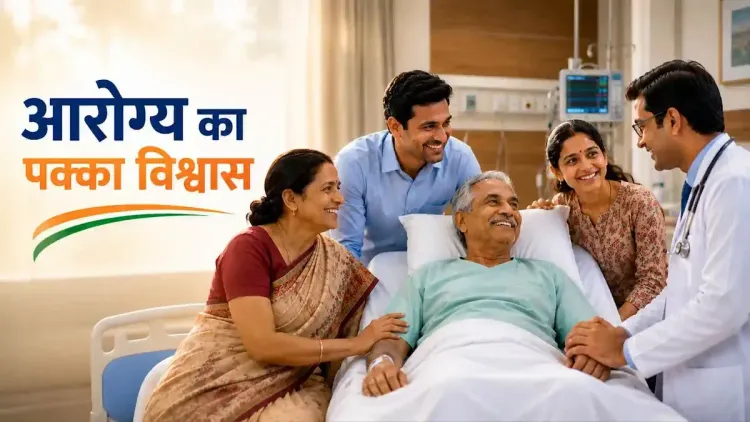
The Chief Minister's Office of Uttarakhand marked 12 years of central welfare initiatives on 16 June 2026, highlighting Ayushman Bharat's Rs 5 lakh annual health cover for poor families as a defining pillar of India's public health mission under the Garib Kalyan banner.
Key Takeaways
The Chief Minister's Office of Uttarakhand posted on 16 June 2026 under #12YearsofGaribKalyan to mark a decade-plus of central welfare programmes.
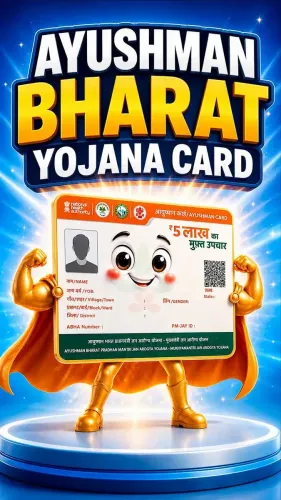
Ayushman Bharat , launched in September 2018 , provides up to Rs 5 lakh annual cashless health cover per family under Pradhan Mantri Jan Arogya Yojana .
The scheme succeeded the Rashtriya Swasthya Bima Yojana of 2008 and expanded coverage to include Health and Wellness Centres for primary care.
Uttarakhand has integrated Ayushman Bharat into its state health delivery system, with hill communities among the key beneficiary groups.
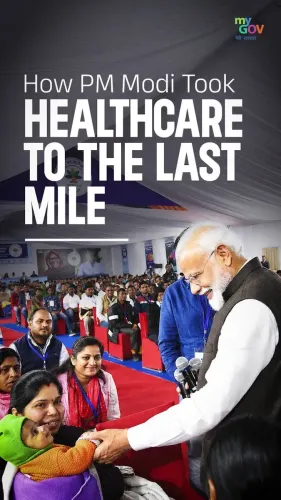
The post reflects alignment between the state government and the Union government's welfare messaging as the Modi government completes two full terms.
The Chief Minister's Office of Uttarakhand on Tuesday, 16 June 2026 joined a national chorus marking 12 years of central welfare initiatives under the #12YearsofGaribKalyan banner, spotlighting Ayushman Bharat as a cornerstone of India's public health architecture. The post, shared on X, carried the message '12 saal vishwas aur jankalyan ke: swasth Bharat ki or badhte majboot kadam' ('12 years of trust and public welfare: strong steps towards a healthy India'), underscoring the state government's alignment with the Union government's flagship health mission.
Context
Ayushman Bharat, announced in Union Budget 2018 and rolled out from September 2018, is a two-pronged national health protection mission. Its insurance arm, the Pradhan Mantri Jan Arogya Yojana (PM-JAY), provides up to Rs 5 lakh in annual health coverage per family for secondary and tertiary hospitalisation, targeting economically weaker sections. The scheme is widely regarded as the world's largest publicly funded health assurance programme by intended beneficiary count.
The #12YearsofGaribKalyan hashtag situates Ayushman Bharat within a broader sequence of direct-benefit welfare programmes initiated since 2014 under Prime Minister Narendra Modi. The framing reflects the completion of two full terms of the present central government and its emphasis on welfare delivery to low-income and rural households.
Policy Backdrop
India's structured approach to health insurance for the poor predates Ayushman Bharat. The Rashtriya Swasthya Bima Yojana, launched in 2008, was the first major attempt to extend hospitalisation cover to below-poverty-line families. Ayushman Bharat expanded that architecture significantly, adding Health and Wellness Centres at the primary care level alongside the insurance component, aiming to create a continuum from preventive care to tertiary treatment.
Uttarakhand, a hill state with dispersed rural populations and challenging terrain, has integrated Ayushman Bharat into its public health delivery system. Access to quality secondary and tertiary care has historically been a constraint for residents of remote districts, making cashless hospitalisation cover particularly consequential for the state's beneficiary base.
Stakeholders and Impact
The primary beneficiaries of PM-JAY are low-income families and rural households who would otherwise face catastrophic out-of-pocket expenditure during serious illness. For Uttarakhand, this includes communities in hill districts where private healthcare infrastructure is limited and government hospitals serve as the principal point of care.
The Chief Minister's Office amplifying the scheme anniversary signals continued state-level commitment to its implementation. State health agencies are responsible for empanelling hospitals, verifying beneficiary eligibility, and processing claims — making active state participation essential to on-ground outcomes.
What's Next
Observers will watch for state-level announcements on Ayushman Bharat utilisation data specific to Uttarakhand, including the number of families enrolled, claims processed, and any expansion of empanelled hospitals in underserved hill districts. Any revision to the Rs 5 lakh annual coverage cap or addition of new Health and Wellness Centres in the state would be the next concrete policy marker. The anniversary messaging also sets the stage for potential scheme-extension announcements at the central level, which states like Uttarakhand would then be expected to operationalise.
Point of View
With BJP-governed states amplifying the Centre's welfare anniversary narrative ahead of what is likely a sustained campaign cycle. Framing Ayushman Bharat within '12 years of Garib Kalyan' is a deliberate attempt to consolidate the Modi government's welfare credentials into a single, legible arc. For a state like Uttarakhand — with a dispersed rural electorate and dependence on central transfers — echoing this messaging carries both governance and electoral logic. The durability of this framing will depend on whether beneficiary-level outcomes, particularly in remote hill districts, match the scale of the scheme's ambitions.
NationPress
15 Sept 2026
Frequently Asked Questions
What is Ayushman Bharat and who can benefit from it?
Ayushman Bharat is a national health protection mission launched in September 2018. Its insurance arm, PM-JAY, provides up to Rs 5 lakh in annual cashless hospitalisation cover to economically weaker families for secondary and tertiary medical treatment.
What does 12 years of Garib Kalyan mean?
The '12 Years of Garib Kalyan' campaign marks roughly 12 years of welfare schemes initiated under the central government since 2014, encompassing programmes such as Ayushman Bharat, direct benefit transfers, and housing and sanitation initiatives targeting low-income households.
How does Uttarakhand implement Ayushman Bharat?
Uttarakhand has integrated Ayushman Bharat into its state public health system by empanelling government and private hospitals, enrolling eligible families, and processing cashless claims — functions that require active state-level administration alongside central funding.
What came before Ayushman Bharat in India?
The Rashtriya Swasthya Bima Yojana, launched in 2008, was India's first structured health insurance scheme for below-poverty-line families. Ayushman Bharat replaced and significantly expanded it from September 2018 onward.
What is the coverage limit under Pradhan Mantri Jan Arogya Yojana?
PM-JAY provides up to Rs 5 lakh per family per year for hospitalisation expenses at empanelled public and private hospitals, covering a wide range of secondary and tertiary medical procedures.