CM Dhami's Office Marks 12 Years of Garib Kalyan Infrastructure Push
Synopsis
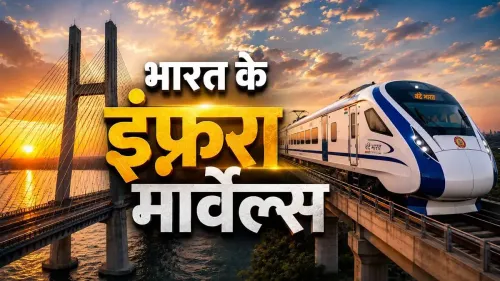
The Chief Minister's Office of Uttarakhand on 17 June 2026 amplified the #12YearsOfGaribKalyan campaign, sharing a video on India's biggest infrastructure milestones under the Modi government since 2014, spanning highways, multi-modal connectivity, and a ₹111 lakh crore investment pipeline.
Key Takeaways
The Uttarakhand CMO posted on 17 June 2026 under the hashtag #12YearsOfGaribKalyan , marking 12 years of the Modi government's infrastructure and welfare push.
The campaign highlights programmes including Bharatmala Pariyojana (over 83,000 km of roads) and the PM Gati Shakti National Master Plan launched in October 2021 .
The National Infrastructure Pipeline announced in 2019-20 envisaged ₹111 lakh crore in investment over five years.
Uttarakhand , a hill state with strategic border areas, is a direct beneficiary of central road and connectivity schemes.
CM Pushkar Singh Dhami's administration has consistently aligned state communication with central infrastructure narratives since 2021 .
Upcoming NITI Aayog reviews and the state budget are the next milestones to watch for Uttarakhand -specific project updates.
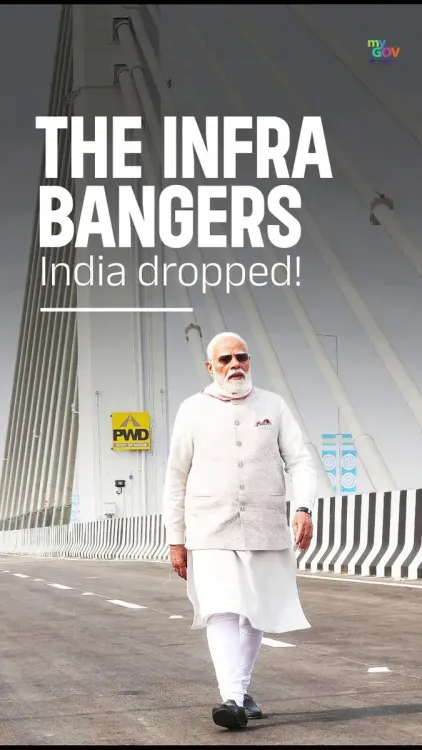
The Chief Minister's Office of Uttarakhand on Wednesday, 17 June 2026 shared a video highlighting what it described as 'India's Biggest Infrastructure Milestones in 12 Years,' joining the nationwide #12YearsOfGaribKalyan campaign that marks a dozen years of the Narendra Modi-led Union government's welfare and development agenda.
Context
The post, published from the official handle of the Uttarakhand Chief Minister's Office, amplifies a central government messaging campaign commemorating 12 years of the BJP-led government at the Centre, which took office in May 2014. The hashtag #12YearsOfGaribKalyan — loosely translated as '12 years of welfare for the poor' — has been used by party and government accounts to showcase programmes spanning roads, railways, housing, and digital connectivity. The accompanying video, the sole media attached to the post, is understood to catalogue infrastructure achievements over this period, though the specific milestones referenced could not be independently verified from available data.
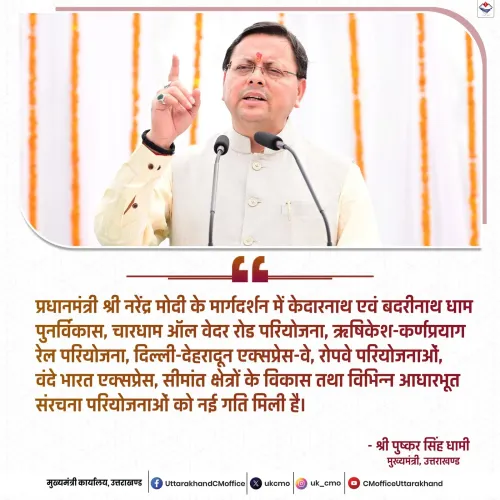
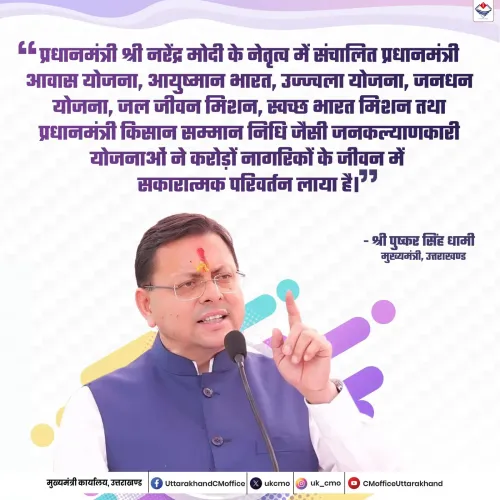
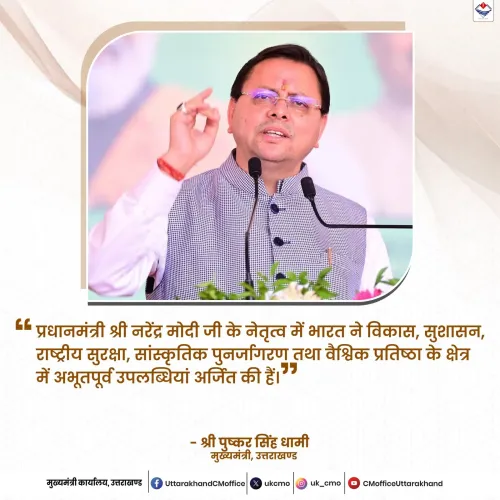
Chief Minister Pushkar Singh Dhami, who has led Uttarakhand since 2021, has consistently aligned his state administration's communication with central government narratives, particularly on infrastructure and welfare delivery. The CMO's participation in the campaign underscores the political salience of infrastructure messaging for a hill state that has long depended on central funding for roads, tunnels, and connectivity projects.
Policy Backdrop
The 12-year infrastructure story the campaign references draws on a series of landmark central programmes. The Bharatmala Pariyojana, approved by the Union Cabinet in October 2017, set out to construct and upgrade over 83,000 km of roads, with a specific focus on economic corridors and border-area connectivity — the latter being of direct relevance to Uttarakhand, which shares a sensitive border with China and Nepal. The PM Gati Shakti National Master Plan, launched in October 2021, added a multi-modal layer, integrating roads, railways, airports, and ports on a unified digital platform.
Underpinning these schemes is the National Infrastructure Pipeline, announced in the Union Budget 2019-20, which envisaged an investment of ₹111 lakh crore over five years. Together, these initiatives represent the policy architecture the #12YearsOfGaribKalyan campaign seeks to highlight. For states like Uttarakhand, projects under these umbrellas have included all-weather road links to remote districts and highway upgrades connecting the state to the national grid.
Stakeholders and Impact
The beneficiaries of sustained infrastructure investment in a hill state are broad: residents of remote villages gain access to markets, schools, and hospitals; logistics companies see reduced transit times and costs on mountain routes; and the tourism sector — a pillar of Uttarakhand's economy — depends heavily on road quality for pilgrim and adventure-tourist traffic to destinations like Kedarnath, Badrinath, and Rishikesh. Border-area infrastructure also carries strategic significance, a point the Union government has repeatedly emphasised since 2020.
For the BJP-led state government, associating itself with 12 years of central infrastructure delivery serves a dual purpose: it reinforces the party's development credentials ahead of future electoral cycles and positions Uttarakhand as an active participant in, rather than a passive recipient of, national growth programmes.
What's Next
Observers will watch for Uttarakhand-specific project announcements in the upcoming state budget and in forthcoming NITI Aayog reviews, where progress on Bharatmala and PM Gati Shakti components relevant to the state is expected to be assessed. The #12YearsOfGaribKalyan campaign is likely to intensify through the anniversary week, with state governments across BJP-ruled states continuing to add their own regional data points to the national narrative. Whether the campaign translates into fresh project announcements or funding commitments for Uttarakhand will be the more consequential test of its political momentum.
Point of View
Which suggests the communication is primarily about brand association rather than accountability. The real test will come when state and central budgets are presented: whether the rhetoric of 12 years translates into fresh, costed commitments for the hill state's connectivity gaps.
NationPress
17 Sept 2026
Frequently Asked Questions
What is the #12YearsOfGaribKalyan campaign about?
#12YearsOfGaribKalyan is a social media campaign marking 12 years of the Narendra Modi-led Union government since May 2014, highlighting welfare and infrastructure achievements including highways, housing, and digital connectivity programmes.
Why did the Uttarakhand CMO post about India's infrastructure milestones?
The Uttarakhand Chief Minister's Office joined the nationwide #12YearsOfGaribKalyan campaign to align the state government's communication with the BJP-led Centre's development narrative and highlight the hill state's stake in national infrastructure programmes.
What is the Bharatmala Pariyojana and how does it affect Uttarakhand?
Bharatmala Pariyojana is an umbrella highway programme approved in October 2017 to build and upgrade over 83,000 km of roads, with components covering border-area connectivity that are directly relevant to Uttarakhand's strategic geography.
What is the National Infrastructure Pipeline?
The National Infrastructure Pipeline is a government investment framework announced in the Union Budget 2019-20, envisaging ₹111 lakh crore in infrastructure spending over five years across roads, railways, ports, and urban infrastructure.
Who is the Chief Minister of Uttarakhand in 2026?
Pushkar Singh Dhami is the Chief Minister of Uttarakhand, having held the post since 2021. His administration has consistently amplified central government infrastructure and welfare messaging through official state channels.