Uttarakhand CMO: Poultry Farm Boosts Women's Self-Employment in Pauri Garhwal
Synopsis
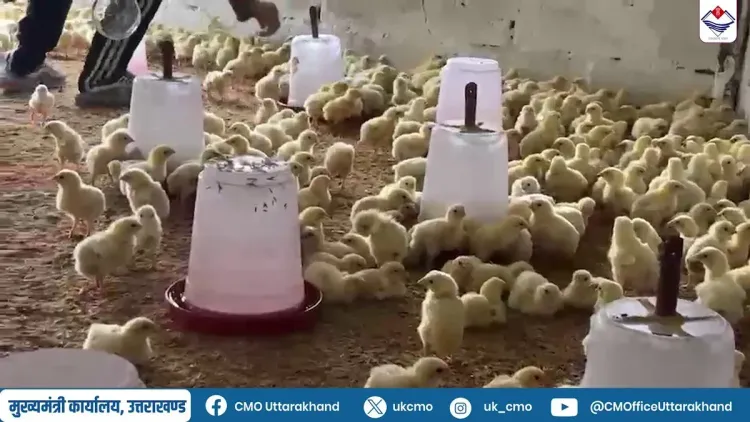
The Chief Minister's Office of Uttarakhand has highlighted a poultry farm in Pabau development block, Pauri Garhwal, as a growing source of self-employment for rural women, reflecting the state's broader push to build micro-enterprise livelihoods in remote hill districts.
Key Takeaways
The Uttarakhand CMO spotlighted a poultry farm in Pabau development block, Pauri Garhwal as a self-employment driver for women on 29 September 2026 .
Pauri Garhwal is a predominantly rural, hilly district where formal employment opportunities are limited and out-migration is a persistent challenge.
Poultry units are considered low-investment, climate-suited options for women in Uttarakhand's hill terrain.
Uttarakhand has backed small-scale animal husbandry and poultry schemes for women since the 2010s , aligned with the National Rural Livelihoods Mission .
Specific beneficiary numbers, production scale, and funding details for the Pabau farm have not been publicly disclosed.
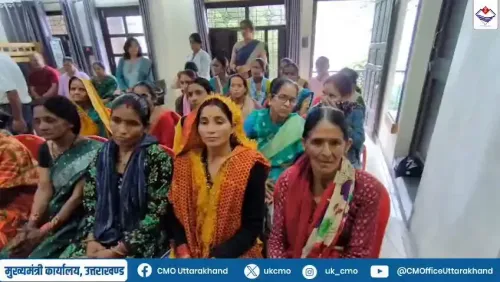
A poultry farm in Pabau development block, Pauri Garhwal, is quietly rewriting what economic opportunity looks like for rural women in the hills of Uttarakhand — and the Chief Minister's Office of Uttarakhand spotlighted the initiative on Tuesday, 29 September 2026, calling it a boost to self-employment for women in the region.
The post, shared in Hindi, stated: 'Paudhi Garhwal ke Vikas Khand Pabau mein poultry farm ne badhaye mahilaon ke liye swarozgar ke sadhan' — 'A poultry farm in the Pabau development block of Pauri Garhwal has expanded the means of self-employment for women.'
Why Pabau, and Why Poultry
Pauri Garhwal is one of Uttarakhand's predominantly rural, hilly districts where agriculture and animal husbandry have long formed the backbone of household income. Pabau, a development block within the district, reflects the broader challenge facing such terrain: limited formal employment, difficult connectivity, and persistent pressure on families to send members to cities for work.
Poultry units have emerged as a consistent answer to that pressure. Low in start-up cost, suited to the local climate, and manageable alongside domestic responsibilities, small-scale poultry farms fit the contours of hill life in ways that larger industrial models do not. Uttarakhand's rural development machinery has backed such models since the 2010s, channelling support through frameworks aligned with the National Rural Livelihoods Mission (NRLM).
Women's Economic Participation at the Centre
The emphasis on women as the primary beneficiaries is deliberate and consistent with a state-level pattern. Uttarakhand governments have repeatedly positioned micro-enterprise schemes — poultry, dairy, handicrafts — as instruments to raise women's financial autonomy in districts where male out-migration is high and women often manage households and farms alone.
A poultry cluster that generates supplementary income for women in Pabau is, in that context, not just a welfare story. It is a small but concrete counter to the out-migration cycle that has hollowed out many hill villages over decades.
What the Numbers Still Need to Tell
The CMO's post did not specify the number of women currently employed at the farm, the scale of production, or the funding channel behind the unit. Those details — beneficiary count, state budget allocation, and any plans to replicate the model across other blocks in Pauri Garhwal — will determine whether this is a replicable template or a standalone success story.
District-level reporting on those figures will be the real test of how far this initiative travels beyond Pabau.
For now, a poultry farm in a Garhwal hill block has a government spotlight on it — and the women running it have a reason to stay.
Point of View
Human-scale stories rather than policy abstractions. It fits a pattern where the state uses social media to showcase NRLM-aligned micro-enterprise wins, particularly those centred on women, ahead of periodic budget and scheme-review cycles. The initiative also speaks to a longer structural challenge — Uttarakhand's high male out-migration rate, which leaves women as de facto household economic managers, making women-targeted self-employment schemes both a welfare and a demographic stabilisation tool. Whether the Pabau model attracts replication funding or remains a one-off showcase will reveal how serious the state is about scaling this approach across Garhwal's other underserved blocks.
NationPress
29 Sept 2026
Frequently Asked Questions
What is the poultry farm initiative in Pabau, Pauri Garhwal?
A poultry farm in the Pabau development block of Pauri Garhwal district, Uttarakhand, has been highlighted by the state's Chief Minister's Office as an expanding source of self-employment for rural women in the area.
How does poultry farming help women in Uttarakhand's hill districts?
Poultry farming is considered a low-investment, climate-suited micro-enterprise that women in Uttarakhand's hilly terrain can manage alongside domestic responsibilities, providing supplementary household income without requiring migration to cities.
What government schemes support women's self-employment in Uttarakhand?
Uttarakhand has supported small-scale poultry and animal husbandry units for women since the 2010s through rural development frameworks aligned with the National Rural Livelihoods Mission (NRLM).
Why is Pauri Garhwal a focus area for women's livelihood programmes?
Pauri Garhwal is a predominantly rural, hilly district with limited formal employment and high male out-migration, making women-targeted micro-enterprise schemes especially relevant for sustaining household incomes.
How many women are employed at the Pabau poultry farm?
The Uttarakhand CMO's post did not disclose specific beneficiary numbers, production scale, or funding details for the Pabau poultry farm; those figures have not been publicly verified.