Uttarakhand CM Office Spotlights Bidoli Fish Farmer's Self-Reliance

Synopsis
The Chief Minister's Office of Uttarakhand has highlighted Shri Rajendra Chamoli of Bidoli village, Pabau block, Pauri Garhwal, as a self-reliance model who turned to fish farming for sustainable rural livelihood, spotlighting pisciculture as a viable path in Himalayan hill districts.
Key Takeaways
Shri Rajendra Chamoli of Bidoli village, Pabau block, Pauri Garhwal achieved self-reliance through fish farming, as highlighted by Uttarakhand's CMO on 24 September 2026 .
Pauri Garhwal's hilly terrain limits conventional agriculture, making allied sectors like pisciculture a practical livelihood alternative.
The spotlight aligns with the Atmanirbhar Bharat initiative launched in 2020 , which promoted rural entrepreneurship including fisheries.
Uttarakhand's CMO regularly profiles individual rural success stories to encourage replication across similar hill-district communities.
Naming a specific farmer in a specific village serves as grassroots behaviour-change communication, more effective than generic scheme promotion.
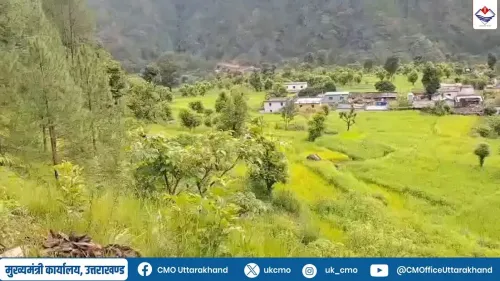
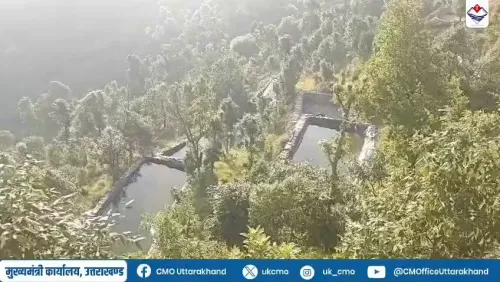
Deep in the hills of Pauri Garhwal, a quiet story of reinvention is unfolding — and the Chief Minister's Office of Uttarakhand wants the rest of the state to take note. On Thursday, 24 September 2026, the CMO highlighted Shri Rajendra Chamoli of Bidoli village in Pabau block as a model of rural self-reliance, achieved through fish farming in one of Uttarakhand's most terrain-constrained districts.
The post, shared in Hindi, reads: 'Pauri Garhwal ke Pabau block sthit Bidoli gaon ke Shri Rajendra Chamoli matsya palan kar bane atmanirbhar' — ('Shri Rajendra Chamoli of Bidoli village in Pabau block, Pauri Garhwal, became self-reliant through fish farming.') Simple words. But in a Himalayan district where conventional agriculture struggles against steep slopes and fragmented land, they carry real weight.
Why Pabau Block and Why Fish Farming
Pauri Garhwal is among Uttarakhand's hilly districts where limited arable land has historically driven outmigration and economic stagnation. Allied agriculture sectors — fisheries chief among them — have emerged as a practical alternative, allowing smallholders to generate income from water bodies that would otherwise sit idle. Pisciculture in such terrain requires modest infrastructure but yields consistent returns when managed well.
Uttarakhand's state authorities have periodically spotlighted individual farmers like Chamoli to demonstrate that the model works beyond policy paper — that a single household in a remote block can convert fish farming into a livelihood anchor. The state's broader push aligns with the Atmanirbhar Bharat initiative, announced in 2020, which specifically encouraged rural entrepreneurship across fisheries and allied sectors as a pathway to household self-sufficiency.
The Pattern Behind the Post
The CMO's outreach here is deliberate. By naming a specific person — Rajendra Chamoli — in a specific village — Bidoli — in a specific block — Pabau — the government plants a replicable reference point for neighbouring farmers. This is how behaviour-change communication works at the grassroots: not a scheme brochure, but a neighbour's name and a verifiable result.
The Uttarakhand government has used this storytelling format regularly, building a gallery of individual success cases across horticulture, dairy, and now fisheries. Each post functions as both documentation and invitation — proof that the ecosystem can work, and a nudge to others in similar blocks to explore the same path.
Rajendra Chamoli's story from Bidoli is one data point. But in Uttarakhand's hills, sometimes one visible example does more than a dozen government circulars ever could.
Point of View
Where state governments compete to produce visible, ground-level proof of self-reliance outcomes. For a district like Pauri Garhwal, which has struggled with outmigration for decades, each such spotlight also carries an implicit retention message: economic opportunity exists here, in your hills. Whether these individual cases translate into measurable aggregate shifts in fisheries adoption across Pabau block will be the harder test of the approach.
NationPress
24 Sept 2026
Frequently Asked Questions
Who is Rajendra Chamoli from Bidoli village Uttarakhand?
Shri Rajendra Chamoli is a resident of Bidoli village in Pabau block, Pauri Garhwal district, Uttarakhand, who adopted fish farming and achieved self-reliance, earning recognition from the Chief Minister's Office of Uttarakhand in September 2026.
What is fish farming or pisciculture in Uttarakhand hill districts?
Fish farming in Uttarakhand's hilly districts involves cultivating fish in ponds or water bodies as an alternative livelihood to conventional agriculture, which is limited by the state's steep and fragmented terrain.
How does fish farming support Atmanirbhar Bharat in Uttarakhand?
The Atmanirbhar Bharat initiative, announced in 2020, encourages rural self-reliance through sectors including fisheries. Uttarakhand has promoted pisciculture in hill districts like Pauri Garhwal as a practical, income-generating pathway aligned with this national goal.
Where is Pabau block Pauri Garhwal Uttarakhand?
Pabau block is an administrative block within Pauri Garhwal district in the Garhwal division of Uttarakhand. Bidoli village, home to Rajendra Chamoli, is located within this block.
Why does Uttarakhand government share individual farmer success stories?
Uttarakhand's state government periodically highlights specific farmers to demonstrate replicable livelihood models in hill districts, acting as grassroots behaviour-change communication that can encourage neighbouring communities to adopt similar approaches.