Uttarakhand CMO Spotlights Pauri Garhwal Youth's Self-Employment Win
Synopsis
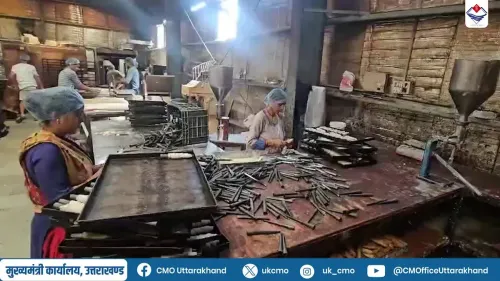
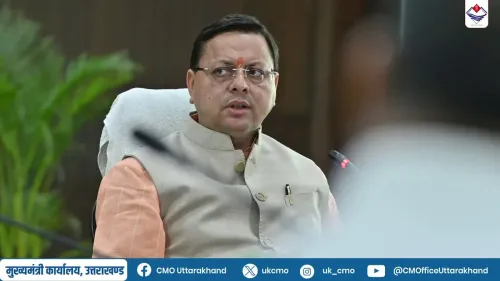
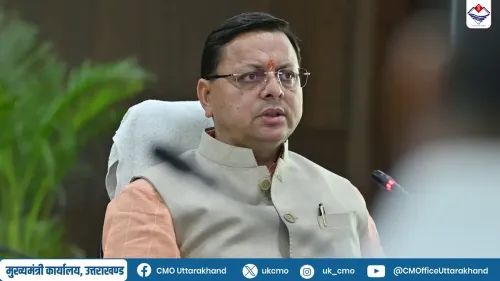
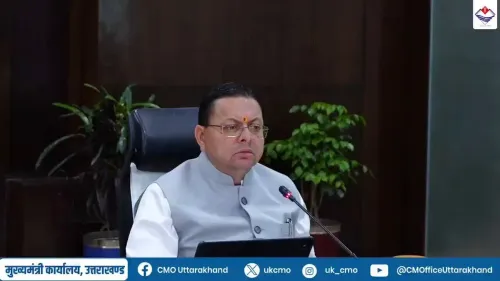
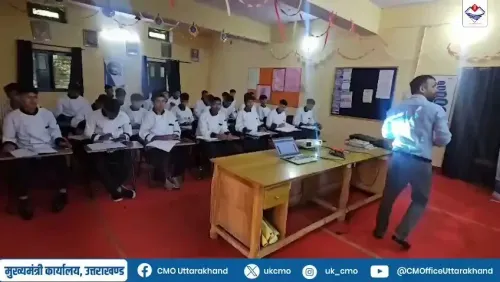
The Chief Minister's Office of Uttarakhand has spotlighted Deepak Nautiyal of Pauri Garhwal as a self-employment success, using his story to promote government welfare schemes and counter chronic out-migration from the hill district.
Key Takeaways
Deepak Nautiyal of Pauri Garhwal district has been cited by the Uttarakhand CMO as a self-employment success story on 2 November 2026 .
His achievement is attributed to a combination of government scheme support and personal effort.
Pauri Garhwal is a hill district with significant economic out-migration pressure, making local entrepreneurship especially significant.
The Prime Minister's Employment Generation Programme (PMEGP) is among the key central schemes targeting rural micro-enterprise development in Uttarakhand.
The CMO's outreach uses individual beneficiary stories to drive scheme awareness and encourage other rural youth to pursue self-employment.
From a hill district battling migration pressures to a model of local enterprise — Deepak Nautiyal of Pauri Garhwal, Uttarakhand, has carved out a self-employment success story that the Chief Minister's Office of Uttarakhand is holding up as a blueprint for rural youth on 2 November 2026.
The CMO's post — 'सरकारी योजनाओं की मदद और खुद की मेहनत से दीपक नौटियाल ने स्वरोजगार की नई मिसाल पेश की है' ('With the help of government schemes and his own hard work, Deepak Nautiyal has set a new example of self-employment') — is brief, but the signal is deliberate. Pauri Garhwal is a district where economic out-migration has long hollowed out the working-age population, making every local enterprise a small act of reversal.
Why Pauri Garhwal Makes This Story Matter
Pauri Garhwal sits in Uttarakhand's Garhwal division, a predominantly rural, hilly economy where agriculture and small enterprises form the backbone of livelihoods. Decades of migration to plains cities for work have thinned village economies, and successive state and central governments have identified the district as a priority zone for self-employment interventions. When a resident builds a viable micro-enterprise here, it lands differently than the same story from a well-connected urban centre.
The Scheme Ecosystem Behind Individual Success
The post credits government schemes alongside Nautiyal's personal effort — the standard combination that welfare outreach programmes are designed to create. Since the late 2000s, the Prime Minister's Employment Generation Programme (PMEGP) has been among the central government's principal tools for supporting micro-enterprises in rural and semi-urban areas, providing margin-money subsidies to first-generation entrepreneurs. Uttarakhand has channelled such central schemes alongside its own state-level self-employment initiatives to target hill districts specifically.
The state government's decision to highlight Nautiyal's story — through a video post from the official CMO handle — follows a well-established communication strategy: real beneficiary narratives drive scheme awareness and uptake more effectively than policy announcements alone. For a district where young people weigh the choice between staying and leaving, a visible local success can shift the calculus.
A Pattern the State Is Trying to Scale
Uttarakhand is not alone in this playbook, but the stakes in its hill districts are sharper than in most states. The combination of difficult terrain, limited industrial base, and proximity to urban pull-factors in Delhi-NCR makes self-employment schemes both more necessary and harder to sustain here. Deepak Nautiyal's story, as framed by the CMO, is the kind of proof-of-concept the government needs — not just for optics, but to demonstrate to the next aspiring entrepreneur in Pauri that the infrastructure for a local livelihood genuinely exists.
The real test, as policy watchers note, lies in the numbers behind the individual story: how many micro-enterprises in these hill districts are surviving past their first three years, and whether scheme budgets are keeping pace with demand.
Point of View
Where out-migration is a structural challenge, self-employment success stories carry political as well as developmental weight — they signal that state investment in rural enterprise is bearing fruit. However, individual spotlights are most meaningful when backed by aggregate data on scheme uptake and enterprise survival rates, which the post does not provide. The real policy question is whether Nautiyal's success reflects a replicable system or a one-off outcome.
NationPress
2 Nov 2026
Frequently Asked Questions
Who is Deepak Nautiyal from Pauri Garhwal?
Deepak Nautiyal is a resident of Pauri Garhwal district in Uttarakhand who has been highlighted by the state's Chief Minister's Office as a self-employment success story, having built a micro-enterprise with the support of government schemes and his own hard work.
Which government schemes support self-employment in Uttarakhand?
The Prime Minister's Employment Generation Programme (PMEGP) is among the key central schemes supporting rural micro-enterprises in Uttarakhand, alongside various state-level self-employment initiatives targeted at hill districts.
Why is self-employment important in Pauri Garhwal?
Pauri Garhwal faces significant economic out-migration, with young people often leaving for opportunities in plains cities. Local self-employment helps retain the working-age population and builds a sustainable rural economy.
What is PMEGP and how does it help rural entrepreneurs?
PMEGP — the Prime Minister's Employment Generation Programme — is a central government scheme that provides margin-money subsidies to first-generation entrepreneurs in rural and semi-urban areas, helping them set up viable micro-enterprises.
Why does the Uttarakhand government share individual success stories on social media?
State governments use real beneficiary narratives to raise awareness about welfare schemes, encourage uptake among eligible applicants, and demonstrate the tangible impact of policy spending — particularly in underserved hill districts.