CM Uttarakhand Office Hails Women's Permanent Commission in Army
Synopsis
The Chief Minister's Office of Uttarakhand on 10 June 2026 celebrated the grant of permanent commission to women in the Indian Army, linking the milestone to a twelve-year governance record. The policy, rooted in a 2019 Cabinet decision and a landmark 2020 Supreme Court order, gives women officers full career parity with male counterparts.
Key Takeaways
The Uttarakhand CMO posted on 10 June 2026 celebrating permanent commission for women in the Indian Army under the #12YearsofGaribKalyan campaign.
The Union Cabinet approved permanent commission for women officers across ten Army streams in February 2019 .
The Supreme Court of India in February 2020 directed time-bound implementation, calling differential treatment unconstitutional.
Women officers can now serve indefinitely, access full pension benefits, and compete for senior ranks on par with male officers.
The Ministry of Defence remains responsible for further notifications on command appointments and possible extension to additional branches or services.
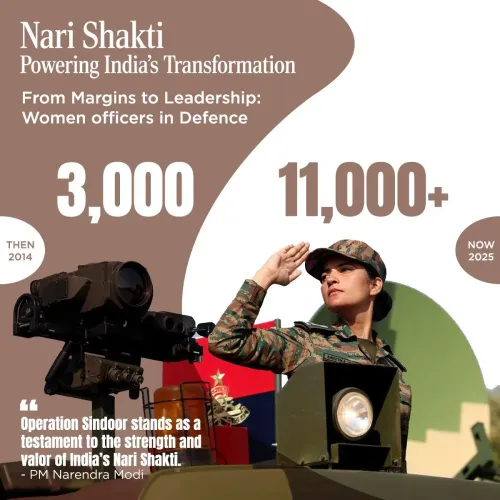
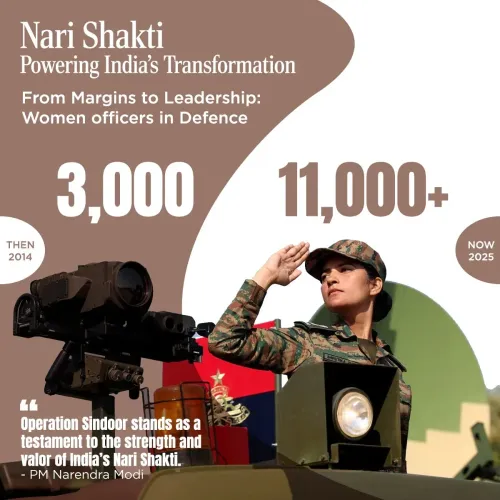
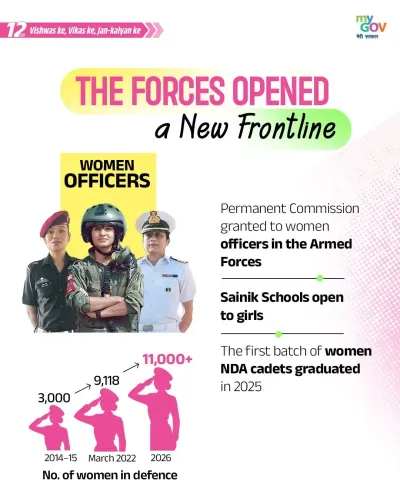
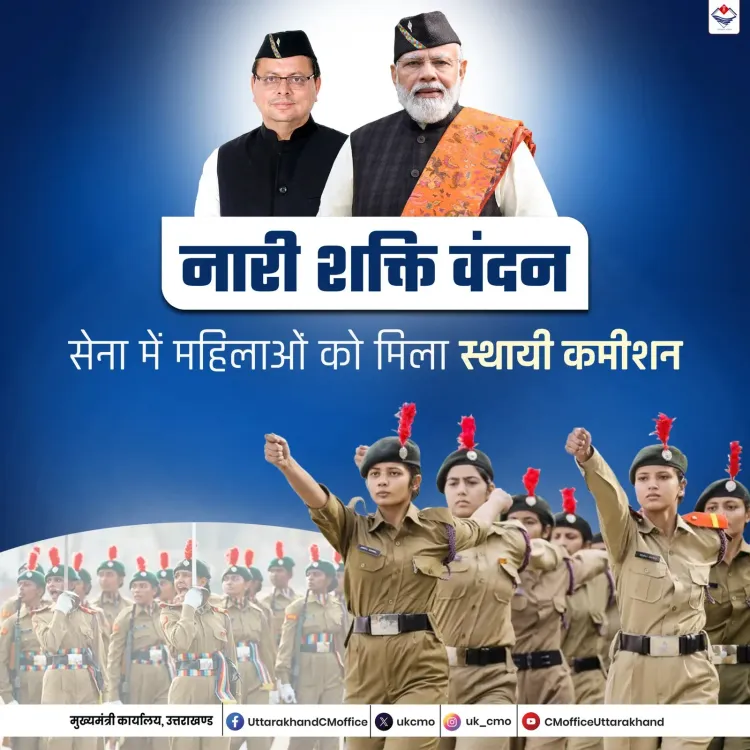
The Chief Minister's Office of Uttarakhand on Wednesday, 10 June 2026 shared a post celebrating the grant of permanent commission to women in the Indian Army, framing the development as an expression of Nari Shakti Vandan — a salute to women's power — under the hashtag #12YearsofGaribKalyan.
Context
The post, captioned 'Nari Shakti Vandan: Sena mein mahilaon ko mila sthayi commission' ('Salute to women's power: Women receive permanent commission in the Army'), marks a policy milestone that has been years in the making. The message was shared alongside an image, positioning the development as part of a broader welfare narrative tied to the ruling dispensation's twelve-year record.
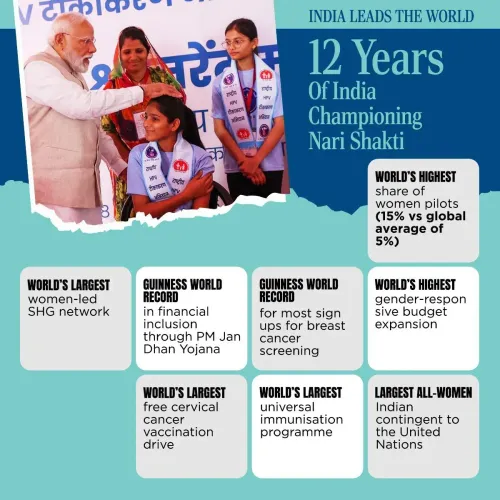
The hashtag #12YearsofGaribKalyan — roughly translating to '12 Years of Pro-Poor Governance' — signals that the post is part of a coordinated political communication campaign highlighting government achievements over a twelve-year period.
Policy Backdrop
The grant of Permanent Commission (PC) to women officers in the Indian Army has its roots in a February 2019 Union Cabinet decision that approved the policy in principle across ten streams of the Army. Until that point, women could only serve under Short Service Commissions — fixed-term engagements with no path to a permanent career.
The process was significantly accelerated when the Supreme Court of India in February 2020 upheld women officers' right to permanent commission and directed the Ministry of Defence to implement the order within a fixed timeline. The judgment rejected the argument that physiological differences or unit cohesion concerns justified differential treatment, marking a landmark moment for gender equality in the armed forces.
Implementation followed in phases, with eligible women Short Service Commission officers assessed and granted permanent status across branches including the Judge Advocate General, Army Education Corps, Signals, Engineers, Army Aviation, Army Air Defence, Electronics and Mechanical Engineers, Army Service Corps, Army Ordnance Corps, and Intelligence Corps.
Stakeholders and Impact
Women officers who had served under the uncertainty of short-term contracts now have access to full pension benefits, higher ranks, and long-term career progression on par with their male counterparts. This affects serving officers as well as future inductees who now enter with the prospect of a permanent career in uniform.
For the Indian Army as an institution, the policy broadens the talent pool available for senior appointments and specialist roles. Advocacy groups and veterans' organisations have pointed to the change as a necessary correction that aligns military service conditions with constitutional guarantees of equality.
The Ministry of Defence remains the nodal body responsible for any further notifications, including the extension of command appointments to women officers — a frontier that remains under watch by gender-equity advocates in the defence sector.
What's Next
Attention is now turning to whether permanent commission will be extended to additional branches, and whether women officers will be considered for independent command appointments — a category that has historically been restricted. Similar policy evolution in the Indian Navy and Indian Air Force is also being tracked, as each service has moved at its own pace on gender integration.
The Uttarakhand CMO's amplification of this milestone, tied to a twelve-year governance campaign, suggests the ruling party intends to keep women's empowerment in defence as a visible plank of its political messaging in the months ahead.
Point of View
Converting a judicial and administrative milestone into partisan messaging. Tying the permanent-commission achievement to #12YearsofGaribKalyan attempts to claim credit for a reform that was substantially driven by Supreme Court intervention rather than executive initiative alone. Nonetheless, the underlying policy change is substantive and consequential for women officers. The post signals that gender empowerment in the armed forces will remain a prominent communication theme as the ruling dispensation approaches election cycles.
NationPress
19 Sept 2026
Frequently Asked Questions
What is permanent commission for women in the Indian Army?
Permanent commission allows women officers to serve in the Indian Army indefinitely, with full pension rights and promotion prospects, instead of being limited to fixed-term Short Service Commissions. The policy was approved by the Union Cabinet in 2019 and upheld by the Supreme Court in 2020.
When did the Supreme Court order permanent commission for women army officers?
The Supreme Court of India delivered its landmark judgment in February 2020, directing the Ministry of Defence to grant permanent commission to eligible women Short Service Commission officers within a fixed timeline.
In which branches of the Indian Army can women get permanent commission?
Permanent commission for women was approved across ten streams, including the Judge Advocate General, Army Education Corps, Signals, Engineers, Army Aviation, Army Air Defence, Electronics and Mechanical Engineers, Army Service Corps, Army Ordnance Corps, and Intelligence Corps.
What is Nari Shakti Vandan in the context of the Indian Army?
'Nari Shakti Vandan' translates to 'Salute to Women's Power' and is used in government communication to celebrate milestones of women's empowerment, including the grant of permanent commission to women officers in the armed forces.
What is the #12YearsofGaribKalyan hashtag about?
#12YearsofGaribKalyan, meaning '12 Years of Pro-Poor Governance,' is a political communication campaign used by the ruling dispensation to highlight welfare and governance achievements over a twelve-year period.