CM Uttarakhand's Anti-Migration Scheme Boosts Dairy Jobs in Almora
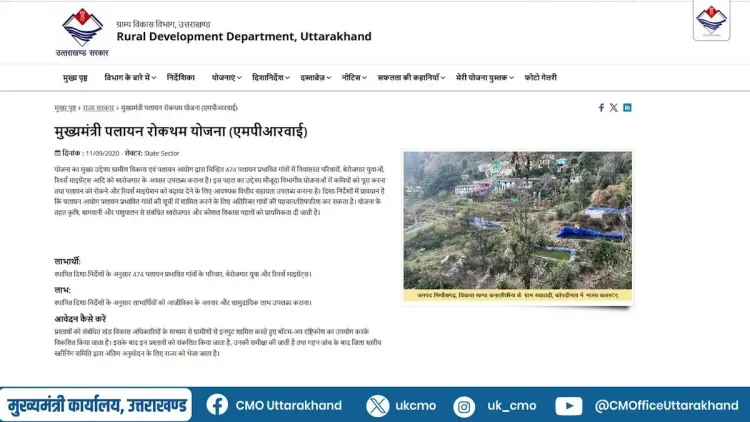
Synopsis
Uttarakhand's Mukhyamantri Palayan Roktham Yojana is creating dairy-based employment in migration-affected villages of Almora's Bhikiasain block, aiming to reverse chronic out-migration from the state's hill districts by anchoring rural households to stable local livelihoods.
Key Takeaways
The Mukhyamantri Palayan Roktham Yojana is Uttarakhand government's dedicated scheme to curb out-migration from hill villages.
Implementation is active in Bhikiasain development block of Almora district , one of Kumaon's most migration-affected areas.
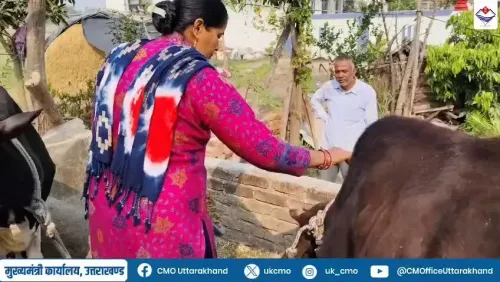
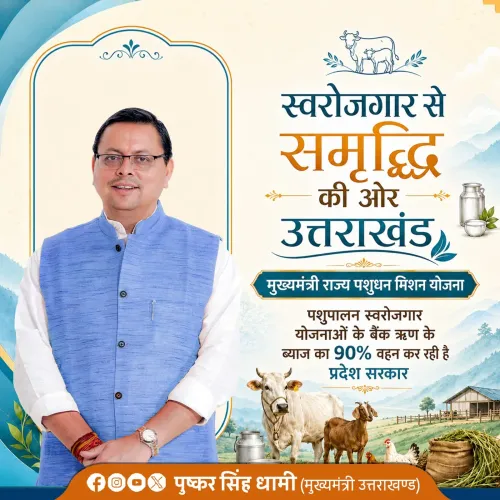
The scheme focuses on dairy-based livelihoods as a practical, scalable source of employment and self-employment in hill terrain.
Almora and broader Uttarakhand hill districts have faced decades of depopulation driven by lack of local income opportunities.
The initiative targets both wage employment and self-employment, with women dairy farmers among the key beneficiaries.
Policy watchers will track expansion to additional blocks and migration-rate data in upcoming state economic surveys.
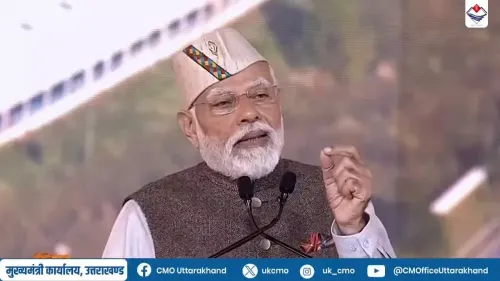
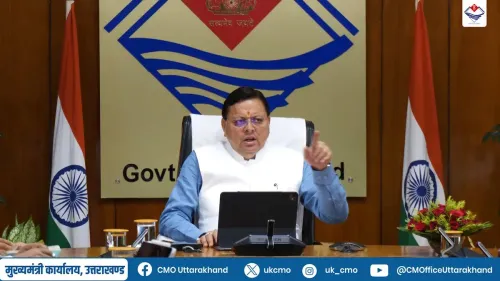
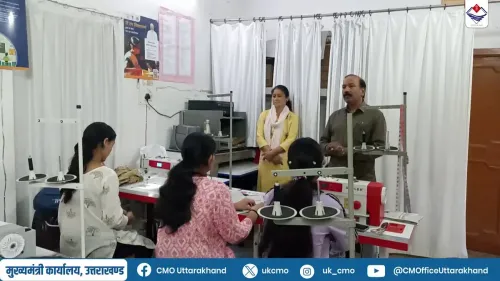
The Chief Minister's Office of Uttarakhand on Sunday, 31 May 2026, highlighted how the state government's Mukhyamantri Palayan Roktham Yojana is generating new employment and self-employment opportunities in migration-affected villages of Bhikiasain development block, Almora district, through dairy-based livelihood support.
The official post stated: 'palaayan prabhavit gaanvon mein dairy aadharit aajivika ko mazboot kar pahaadon mein rozgaar aur swarozgaar ke naye avsar paida kar rahi hai' — ('strengthening dairy-based livelihoods in migration-affected villages and creating new employment and self-employment opportunities in the hills').
Context
Uttarakhand, carved out of Uttar Pradesh in 2000, has long battled demographic hollowing of its hill districts. Almora, a Kumaon-division district with deeply rural terrain, figures among the districts most visibly affected by out-migration, with entire villages losing working-age populations to plains cities. The absence of stable local income has historically been the primary driver of this movement. The Mukhyamantri Palayan Roktham Yojana — literally the Chief Minister's Migration Prevention Scheme — was designed to directly address this structural problem by anchoring rural households to viable on-farm and allied livelihoods, with dairy farming identified as one of the most scalable interventions given the region's agro-climatic profile.Policy Backdrop
Since Uttarakhand's formation, successive state governments have launched rural livelihood programmes targeting hill out-migration, but results have been uneven. The current scheme represents a focused, block-level approach, targeting Bhikiasain development block as part of a broader roll-out across migration-sensitive geographies. Dairy-linked livelihoods are well-suited to the Himalayan hill economy: low land requirement, regular cash income through milk sales, and compatibility with existing animal husbandry practices make them a practical alternative to seasonal or migrant labour. State policy has repeatedly returned to this model as a cornerstone of village-economy strengthening.Stakeholders and Impact
The primary beneficiaries are small and marginal farming households in Almora's migration-affected villages — particularly women, who form the backbone of dairy operations in hill households. By formalising and financially supporting dairy activity, the scheme aims to convert subsistence-level animal husbandry into a reliable income stream. Broader community-level benefits include slowing the depopulation of villages, sustaining local agricultural land use, and preserving the social fabric of hill settlements that face the risk of becoming ghost villages. Local self-employment also reduces pressure on urban infrastructure in destination cities on the plains.What's Next
The state government's communication signals continued emphasis on the scheme's ground-level implementation in Almora. Analysts and policy observers will watch whether dairy infrastructure support — including cold-chain linkages, veterinary services, and cooperative tie-ups — is scaled to additional development blocks across other migration-prone districts such as Pauri Garhwal, Chamoli, and Bageshwar. State economic surveys that track migration-rate trends will be a key indicator of whether targeted livelihood interventions are translating into measurable demographic stabilisation in the hills.Point of View
Livelihood-specific interventions — a more granular approach than earlier state schemes. Dairy as a policy instrument is not new in the hills, but embedding it within an explicitly anti-migration framework signals an attempt to create measurable, locatable outcomes rather than diffuse welfare spending. The political calculus is also visible: Kumaon's hill districts carry electoral weight, and visible employment creation ahead of any state cycle strengthens the ruling dispensation's rural narrative. Whether the scheme achieves demographic impact will depend on supply-chain depth — milk procurement, cold storage, and veterinary support — none of which can be delivered by announcement alone.
NationPress
14 Oct 2026
Frequently Asked Questions
What is the Mukhyamantri Palayan Roktham Yojana in Uttarakhand?
The Mukhyamantri Palayan Roktham Yojana is an Uttarakhand state government scheme designed to prevent out-migration from hill villages by supporting local livelihoods such as dairy farming, providing employment and self-employment opportunities to rural households in migration-affected areas.
Which district is targeted under Uttarakhand's anti-migration dairy scheme?
The scheme is currently active in Bhikiasain development block of Almora district in Uttarakhand's Kumaon division, a region historically affected by high rates of rural out-migration.
Why do people migrate out of Uttarakhand's hill villages?
The primary driver is the absence of stable local employment and income. Hill terrain limits large-scale agriculture, and a lack of industry or formal jobs pushes working-age residents toward plains cities, leaving many villages depopulated.
How does dairy farming help prevent migration in Uttarakhand?
Dairy farming offers regular cash income through milk sales, requires minimal land, and builds on existing animal husbandry traditions in hill households, making it a viable alternative to seasonal or migrant labour for rural families.
Which other Uttarakhand districts face severe out-migration from hill areas?
Beyond Almora, districts such as Pauri Garhwal, Chamoli, and Bageshwar are among the most affected by rural out-migration in Uttarakhand, and are likely candidates for expansion of livelihood-focused anti-migration schemes.