AI regulation paper in a month: Vaishnaw flags deepfake danger
Synopsis
India is weeks away from a formal AI regulatory consultation, with Electronics and IT Minister Ashwini Vaishnaw placing deepfake danger and human safety at the top of the agenda. His call for a 'techno-legal solution' — rather than legislation alone — signals a co-regulatory model that will ask industry to own the first line of defence against AI-driven harm.
Key Takeaways
Electronics and IT Minister Ashwini Vaishnaw announced on 8 October 2026 that an AI regulation consultation paper will be released within one month .
The paper will focus on AI safety , skilling , and ensuring no one is left behind as AI advances.
Deepfakes were flagged as a major societal threat, with the minister warning they spread false narratives and mislead the public.
Vaishnaw called for a 'techno-legal solution' , arguing AI cannot be governed through legislation alone and that industry must take primary responsibility for AI risks.
The move builds on the government's India AI Governance Guidelines and the 'Safe & Trusted AI' pillar of the IndiaAI Mission .
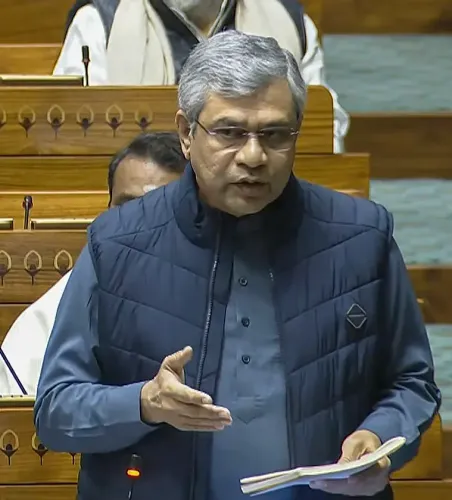
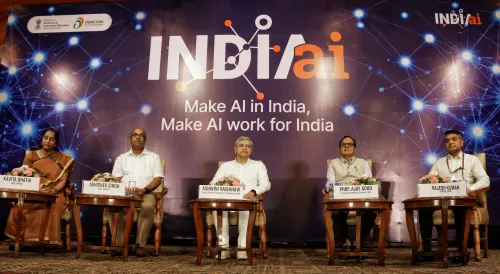
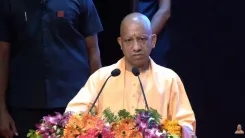
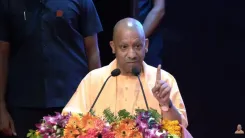
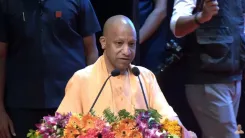
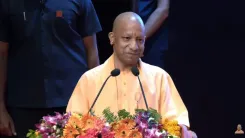
Electronics and IT Minister Ashwini Vaishnaw announced on Thursday, 8 October 2026, that the government will release a consultation paper on artificial intelligence (AI) regulations within a month, with safety and the threat posed by deepfakes at the centre of the regulatory agenda. The announcement was made at an industry event in New Delhi.
What the Consultation Paper Will Cover
'I will request the department to come out with a regulation-focused consultation paper, which focuses on safety. That's the most important point — safety related to AI use,' Vaishnaw said. Beyond safety, the paper will address skilling and ensuring that vulnerable sections of society are not left behind as AI technology advances rapidly.
The minister stressed that the human impact of AI must remain central to any regulatory framework the government designs.
Deepfakes: A Societal Menace, Says Minister
Vaishnaw singled out deepfakes as a particularly dangerous problem, warning that people believe fabricated content and are lured into acting on false information. 'It sets a totally wrong precedent. It sets out a totally wrong narrative, and people get lured into doing wrong things and believing wrong things,' he said.
The minister argued that the mounting menace of cyber attacks and deepfakes means the industry itself must take primary responsibility for managing AI-related risks, rather than leaving the burden entirely to the state.
A Techno-Legal Approach, Not Legislation Alone
Vaishnaw cautioned against relying solely on legislation to govern AI. 'We have to bring a techno-legal solution,' he said, calling for broad stakeholder engagement before any regulatory framework is finalised. This framing suggests the government is leaning toward a co-regulatory model where technology platforms, civil society, and policymakers share the compliance burden.
Existing Framework and IndiaAI Mission
The announcement builds on the government's India AI Governance Guidelines, released earlier this year, which outlined a principle-based approach centred on trust, people-first governance, and responsible AI innovation. The guidelines identified misinformation, deepfakes, algorithmic bias, and unintended societal harm as key risks, and recommended reviewing existing laws to identify regulatory gaps around liability, data protection, copyright, content authentication, and the misuse of generative AI.
Separately, the government has been working on deepfake detection and responsible AI initiatives under the 'Safe & Trusted AI' pillar of the IndiaAI Mission, encompassing deepfake detection, privacy-preserving AI, bias mitigation, and AI risk assessment. The guidelines also propose setting up an AI Governance Group, a Technology and Policy Expert Committee, and an AI Safety Institute.
With the consultation paper expected within weeks, the next step will be how the government balances the industry's demand for innovation-friendly rules against growing public concern over AI-driven misinformation and online fraud.
Point of View
But the government's 'techno-legal' framing is a double-edged proposition — it distributes responsibility to industry precisely when public accountability for AI harm is most needed. The India AI Governance Guidelines already exist as a principle-based document; a consultation paper is a step back toward process rather than forward toward enforcement. The deepfake threat Vaishnaw describes is real and accelerating, yet the gap between a consultation paper and binding rules with penalties can stretch into years. Whether the government moves from principle to enforceable standard before the next election cycle — or before the next high-profile deepfake scandal — is the critical question mainstream coverage is not yet asking.
NationPress
8 Oct 2026
Frequently Asked Questions
What is the AI regulation consultation paper announced by Ashwini Vaishnaw?
It is a government document on artificial intelligence regulations that Electronics and IT Minister Ashwini Vaishnaw said will be released within a month. The paper will focus on AI safety, deepfake curbs, skilling, and a 'techno-legal' governance approach rather than legislation alone.
Why is the government prioritising deepfakes in AI regulation?
Minister Vaishnaw described deepfakes as a societal menace that misleads people and spreads false narratives, making them one of the most urgent AI-related risks. The government has already identified deepfakes as a key threat in its India AI Governance Guidelines and is funding deepfake detection projects under the IndiaAI Mission.
What is the 'techno-legal solution' Vaishnaw referred to?
Vaishnaw used the term to argue that AI risks cannot be addressed through laws alone — technology-based safeguards must be built in alongside regulation. Under this model, the industry is expected to take primary responsibility for AI safety rather than waiting for government-imposed rules.
How does this announcement relate to India's existing AI governance framework?
The consultation paper will build on the India AI Governance Guidelines released earlier in 2026, which outlined principle-based governance focused on trust, safety, and responsible AI. The guidelines also proposed an AI Governance Group, a Technology and Policy Expert Committee, and an AI Safety Institute.
Who will be consulted before the AI regulation is finalised?
Vaishnaw indicated that broad stakeholder engagement is planned, including industry players, before any framework is finalised. The consultation paper itself is designed to solicit feedback from multiple stakeholders as part of a co-regulatory approach.