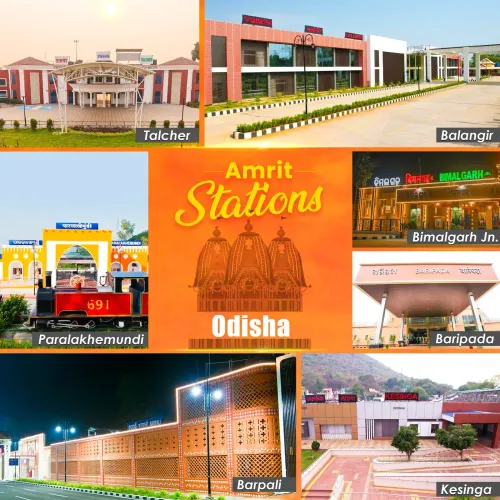
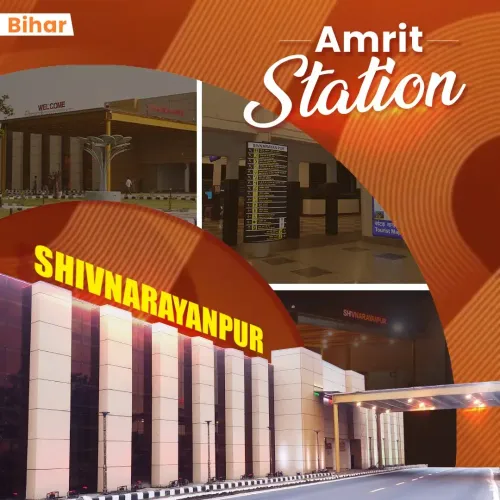
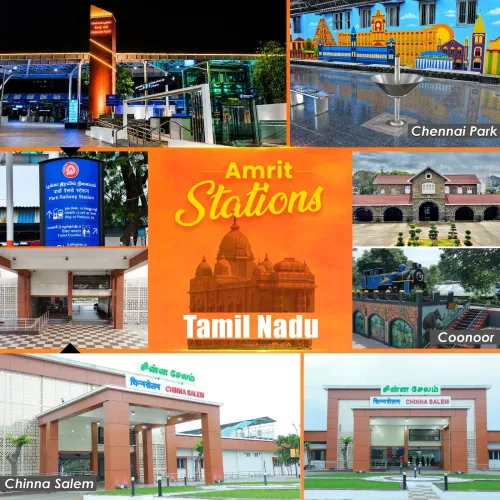
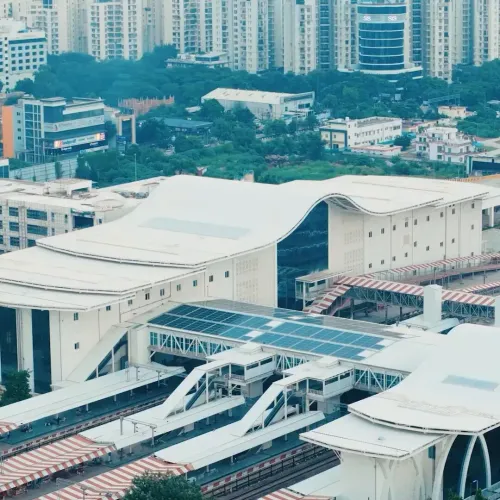
Vaishnaw flags 6 Kerala Amrit Bharat stations for world-class upgrade
Synopsis
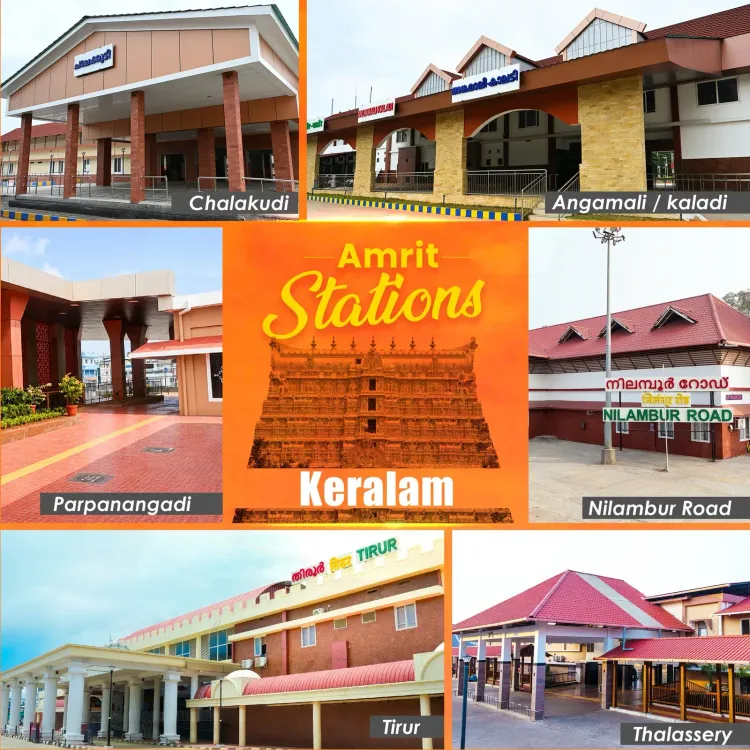
Union Minister Ashwini Vaishnaw has spotlighted six Kerala railway stations — Nilambur Road, Parappanangadi, Thalassery, Angamaly-Kalady, Chalakudy, and Tirur — for redevelopment under the Amrit Bharat Station Scheme, blending coastal, spiritual, and heritage themes with world-class passenger infrastructure.
Key Takeaways
Six Kerala stations — Nilambur Road, Parappanangadi, Thalassery, Angamaly-Kalady, Chalakudy, and Tirur — have been highlighted under the Amrit Bharat Station Scheme.
The redevelopment is designed to reflect Kerala's coastal beauty, spiritual heritage, and railway legacy while delivering modern passenger amenities.
The Amrit Bharat Station Scheme , launched in February 2023, targets redevelopment of 1,309 stations nationwide with culturally integrated design.
Angamaly-Kalady carries particular spiritual significance as it is near the birthplace of philosopher Adi Shankaracharya.
The selection includes smaller towns such as Parappanangadi and Nilambur Road , signalling the scheme's reach beyond major junctions.
Rail passengers, the Kerala tourism sector , and local communities are the primary beneficiaries of the upgrades.
Union Minister Ashwini Vaishnaw on Friday, 17 July 2026 highlighted six Kerala railway stations selected under the Amrit Bharat Station Scheme for redevelopment that integrates the state's coastal beauty, spiritual heritage, and railway legacy with modern passenger infrastructure.
Context
The minister's post, part of a thread on the scheme's Kerala rollout, named Nilambur Road, Parappanangadi, Thalassery, Angamaly-Kalady, Chalakudy, and Tirur as the six stations earmarked for transformation. In Malayalam, the post described the upgrades as ensuring a 'world-class travel experience' (ലോകോത്തര യാത്രാനുഭവം) for passengers while preserving local cultural identity. The stations span the northern Malabar coast, the central heartland, and the Ernakulam belt, covering a diverse cross-section of Kerala's geography.
Policy Backdrop
The Amrit Bharat Station Scheme was launched in February 2023 with a mandate to redevelop 1,309 railway stations across India, embedding state-specific architectural and cultural design motifs alongside upgraded amenities such as better lighting, roofing, circulating areas, and passenger facilities. Indian Railways is the executing agency, working with state governments and local bodies to finalise design themes. The scheme represents a shift from purely functional station upgrades to heritage-sensitive redevelopment that can also support regional tourism.
Kerala's selection reflects the Ministry of Railways' focus on southern India as a key corridor for passenger experience improvements. The six stations chosen carry distinct identities: Thalassery is associated with colonial-era heritage and cricket history; Angamaly-Kalady sits near the birthplace of philosopher Adi Shankaracharya, lending the spiritual dimension cited in the post; Nilambur Road serves a forest-fringe town known for teak; while Chalakudy, Tirur, and Parappanangadi are important commercial and cultural nodes in their respective districts.
Stakeholders and Impact
Rail passengers using these six stations stand to benefit most directly from upgraded waiting areas, improved sanitation, better signage, and aesthetically redesigned concourses that reflect local motifs. The Kerala tourism sector is an indirect beneficiary: stations redesigned around coastal, spiritual, and natural heritage themes can serve as entry-point experiences for visitors, reinforcing the state's brand as a premium travel destination. Local communities and small traders around station precincts typically see increased footfall following such redevelopments.
For Indian Railways, the Kerala cluster adds to a growing portfolio of culturally differentiated stations that the ministry has been using to demonstrate the scheme's breadth beyond major metro hubs. The inclusion of smaller towns such as Parappanangadi and Nilambur Road signals that the programme is not confined to high-traffic junctions alone.
What's Next
Attention will now turn to construction timelines and inauguration schedules for the six stations. Further phases of station selection in Kerala and neighbouring southern states are expected as the nationwide Amrit Bharat rollout continues. State-level inauguration events, often attended by central ministers, have become a feature of the scheme's political and administrative calendar, and Kerala's stations are likely to follow that pattern once redevelopment reaches completion.
Point of View
The Ministry of Railways generates sustained, localised media attention for a single centrally-funded scheme. Kerala, a state where the BJP has historically struggled electorally, is a pointed choice — infrastructure visibility in such states is a long-running central government tactic to build goodwill ahead of assembly cycles. The emphasis on cultural and spiritual identity in the station designs also reflects a broader pattern of the current dispensation weaving heritage narratives into infrastructure delivery, framing development not merely as construction but as civilisational restoration.
NationPress
17 Jul 2026
Frequently Asked Questions
Which Kerala stations are included in the Amrit Bharat Station Scheme?
Six Kerala stations have been named: Nilambur Road, Parappanangadi, Thalassery, Angamaly-Kalady, Chalakudy, and Tirur. Union Minister Ashwini Vaishnaw announced these stations on 17 July 2026 as part of the scheme's Kerala rollout.
What is the Amrit Bharat Station Scheme?
The Amrit Bharat Station Scheme is a central government programme launched in February 2023 to redevelop 1,309 railway stations across India. It focuses on modernising passenger facilities while incorporating state-specific architectural and cultural design elements.
What facilities will the upgraded Kerala stations have?
The redeveloped stations are intended to offer world-class passenger amenities alongside design elements reflecting Kerala's coastal beauty, spiritual traditions, natural landscapes, and railway heritage. Specific facility details for each station are subject to final design approvals.
Why is Angamaly-Kalady significant among the six stations?
Angamaly-Kalady is located near Kalady, the birthplace of the eighth-century philosopher Adi Shankaracharya, giving the station a strong spiritual heritage dimension that aligns with the scheme's goal of embedding local cultural identity into station design.
When will the Kerala Amrit Bharat stations be completed?
Exact completion timelines for the six Kerala stations have not been officially announced. Progress on construction schedules and any state-level inauguration events are expected to be communicated by the Ministry of Railways as redevelopment advances.