Vaishnaw in Kolkata: Rail, Media & SRFTI on Agenda
Synopsis
Union Minister Ashwini Vaishnaw spent June 6 in Kolkata reviewing rail infrastructure, engaging with Akashvani and SRFTI, and pushing centrally funded projects in West Bengal — a state governed by the opposition Trinamool Congress.
Key Takeaways
Union Minister Ashwini Vaishnaw visited Kolkata on June 6, 2026 , covering his Railways and Information & Broadcasting portfolios in a single day.
The visit focused on strengthening rail connectivity and advancing infrastructure projects that affect millions of West Bengal residents.
Akashvani (public radio) and the Satyajit Ray Film and Television Institute were among the institutions he engaged with.
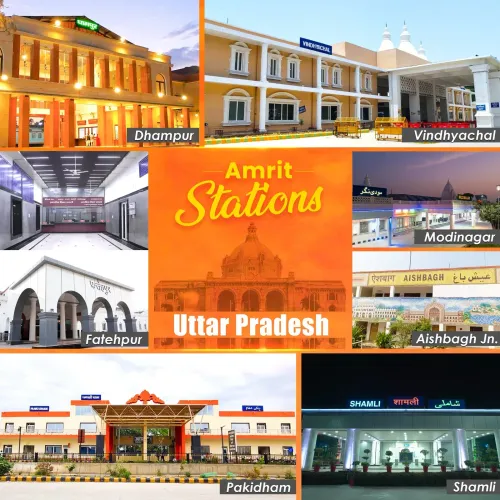
The Amrit Bharat Station Scheme (launched 2023) and cabinet-approved rail doubling projects form the policy backdrop for railway discussions in the state.
West Bengal is governed by the opposition Trinamool Congress ; ministerial visits are a standard route for advancing centrally funded projects.
Next Union Budget allocations and parliamentary-session announcements will indicate follow-through on commitments from the visit.
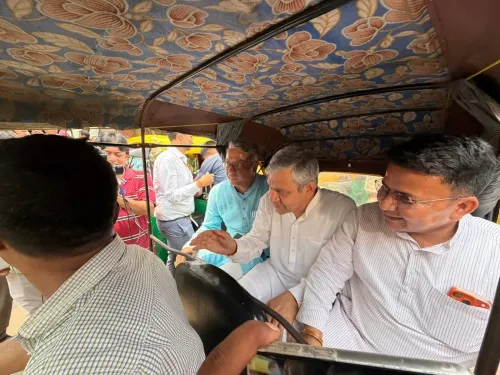
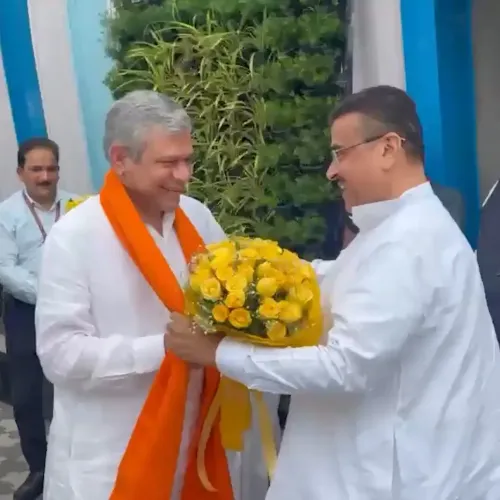
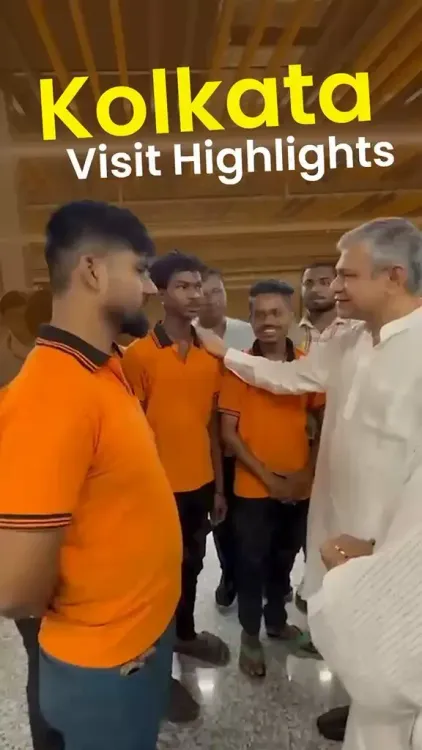
Union Minister Ashwini Vaishnaw visited Kolkata on Saturday, June 6, 2026, dedicating the day to strengthening rail connectivity, advancing infrastructure projects, and engaging with key institutions under his ministerial portfolios — Akashvani and the Satyajit Ray Film and Television Institute (SRFTI).
Context
Vaishnaw described the visit as oriented toward a 'developed West Bengal,' underlining the central government's push to channel infrastructure investment into the eastern state. His engagements spanned two of his three ministries — Railways and Information & Broadcasting — making it an unusually broad single-day itinerary. Kolkata, home to two of the country's busiest rail terminals, Howrah and Sealdah, sits at the centre of Indian Railways' eastern network modernisation drive.
Policy Backdrop
The visit fits squarely within a sustained policy framework. The Amrit Bharat Station Scheme, launched in 2023, includes redevelopment of multiple stations across West Bengal, while cabinet approvals in 2021–22 sanctioned several rail doubling and new-line projects in the state. On the media side, Akashvani — the public service radio broadcaster formerly known as All India Radio — and SRFTI, the national film school established in 1995, have both seen periodic budgetary increases for infrastructure upgrades since 2019 under the Ministry of Information and Broadcasting. The broader PM Gati Shakti programme continues to provide a policy umbrella for multimodal connectivity in eastern states.
Stakeholders and Impact
The stakeholders are wide-ranging: rail passengers across West Bengal stand to benefit from faster project execution on doubling and new-line works, while Kolkata commuters are directly affected by station-redevelopment timelines. Students and faculty at SRFTI — one of India's two premier national film schools — have a direct interest in infrastructure grants that determine campus facilities and equipment. Listeners across the state depend on Akashvani's network for public-interest broadcasting, particularly in rural and semi-urban areas where terrestrial radio remains the primary medium. Such ministerial visits to states governed by the opposition — West Bengal is led by the Trinamool Congress — are also a regular mechanism through which centrally funded projects are reviewed and accelerated independent of state-government politics.
What's Next
The immediate focus will be on whether specific project approvals, funding releases, or memoranda of understanding emerge from the day's meetings. Observers will watch the next Union Budget cycle for West Bengal rail allocations and any parliamentary-session announcements on SRFTI or Akashvani infrastructure grants. With the central government consistently framing eastern India as a growth frontier, Vaishnaw's Kolkata visit signals that the region will remain a priority across both physical and cultural infrastructure — a convergence that reflects the integrated oversight his three-portfolio brief uniquely enables.
Point of View
Public broadcasting, and film education in Kolkata is a reminder that his three-portfolio brief gives the Centre unusual leverage to bundle infrastructure and soft-power investments in a single visit. Conducting such a review in a Trinamool-governed state underscores the BJP's strategy of demonstrating central delivery independent of state-level political alignment. The framing — 'towards a developed West Bengal' — mirrors the language used ahead of state elections, suggesting the visit carries both administrative and political signalling weight. Whether concrete project milestones follow will be the true measure of the day's outcomes.
NationPress
20 Sept 2026
Frequently Asked Questions
Why did Ashwini Vaishnaw visit Kolkata in June 2026?
Vaishnaw visited Kolkata on June 6, 2026, to review rail connectivity projects, advance infrastructure works, and engage with Akashvani and the Satyajit Ray Film and Television Institute under his Railways and Information and Broadcasting portfolios.
What is the Satyajit Ray Film and Television Institute?
SRFTI is a national film school based in Kolkata, established in 1995 under the Ministry of Information and Broadcasting. It is one of India's two premier government film institutes and has received periodic infrastructure grants in recent years.
What rail projects are planned for West Bengal?
West Bengal has several ongoing centrally funded rail projects, including station redevelopments under the Amrit Bharat Station Scheme launched in 2023 and rail doubling and new-line works approved by the Cabinet in 2021–22.
What is Akashvani and why is it relevant to this visit?
Akashvani is India's public service radio broadcaster, formerly known as All India Radio, operating under the Ministry of Information and Broadcasting. Vaishnaw, as the minister overseeing I&B, engaged with the Akashvani setup in West Bengal as part of his Kolkata visit.
Does the central government have a special infrastructure programme for eastern India?
Yes. The PM Gati Shakti national master plan provides a policy framework for multimodal connectivity across India, including eastern states like West Bengal, and is a key driver behind the rail and infrastructure projects being advanced in the region.