Vande Bharat trains reach Sabarmati depot without shunting engine after RRCS install
Synopsis
For the first time on Western Railway, a retractable overhead conductor system now lets Vande Bharat trains roll directly into Ahmedabad's Sabarmati depot on electric power — no diesel shunting engine needed. The 620-metre RRCS installation cuts emissions, speeds up coach turnaround, and could become a blueprint for depot electrification across the zone.
Key Takeaways
Western Railway has installed a Retractable Rigid Overhead Conductor System (RRCS) at Sabarmati Integrated Coaching Depot in Ahmedabad — the first such installation on the zone.
The system spans 620 metres and allows Vande Bharat Express trains to enter the depot under electric traction without a diesel shunting engine.
The conductor can be mechanically retracted to provide clearance for roof-level maintenance, with earthing provisions to reduce electrical hazard risk.
The installation is expected to cut coach turnaround time by removing the step of arranging a separate shunting locomotive.
Western Railway said the RRCS reduces diesel dependence, lowers emissions and noise, and improves safety at the depot.
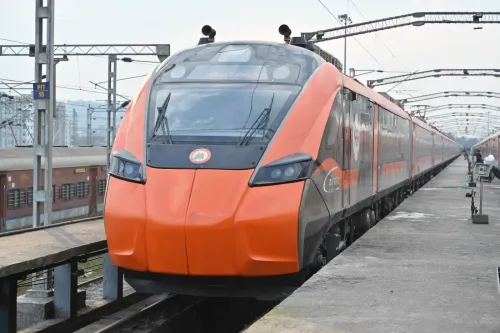
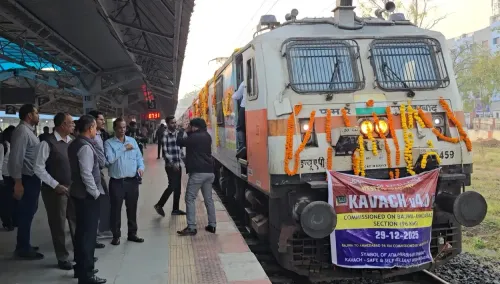
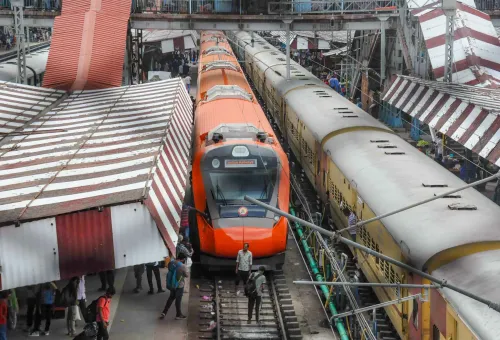
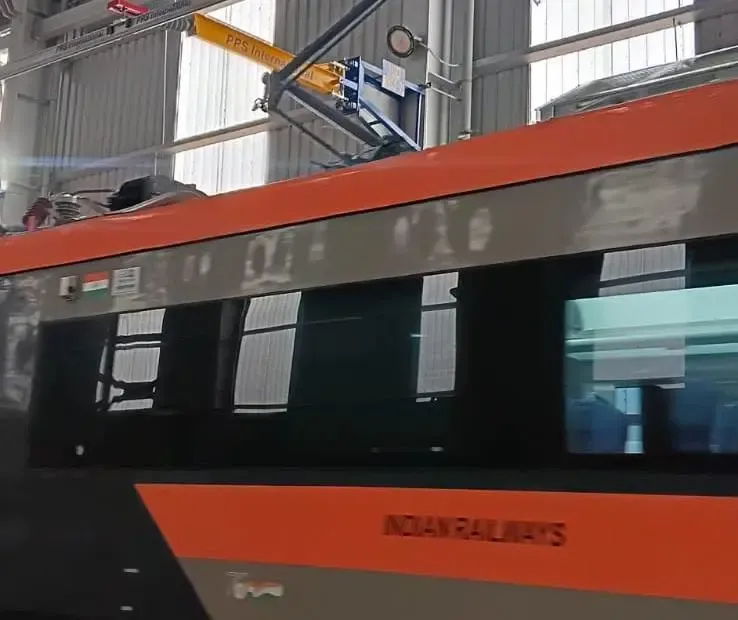
Western Railway has commissioned a first-of-its-kind Retractable Rigid Overhead Conductor System (RRCS) at the Sabarmati Integrated Coaching Depot (SBT) in Ahmedabad, allowing Vande Bharat Express trains to move directly into the depot under electric traction — eliminating the need for a separate diesel shunting engine. The system, installed over a total length of 620 metres, marks the first deployment of the RRCS technology on Western Railway.
What the RRCS Technology Does
The motorised, pit-mounted overhead conductor system supplies traction power directly to electric rolling stock within the coaching depot. Its defining feature is the ability to mechanically retract the conductor rail when additional overhead clearance is needed — for instance, during roof-level maintenance work on coaches. The system includes earthing provisions designed to reduce electrical hazards and minimise the risk of accidental electric shock for maintenance staff.
Once the overhead equipment is de-energised and isolated, personnel can safely access coach rooftops, making the arrangement compatible with both stabling and hands-on maintenance activities. The retractable design thus offers operational flexibility that a fixed OHE layout cannot provide.
Reducing Diesel Dependence at the Depot
Previously, moving coaches within the depot required arranging a dedicated diesel shunting engine — a process that introduced delays, added noise, and generated exhaust emissions inside the facility. Under the new arrangement, coaches can be repositioned directly using electric power, removing the logistical step of sourcing a shunting locomotive. Western Railway said the installation is aimed at reducing the depot's dependence on diesel-powered shunting and improving overall operational efficiency.
The move is consistent with Indian Railways' broader push to electrify traction across its network and progressively phase out diesel operations on mainline and depot movements alike.
Impact on Turnaround Time and Safety
The new system is expected to cut coach turnaround time at Sabarmati depot, since rakes can be directed to maintenance lines without the added process of arranging diesel shunting. Faster preparation of coaches for service has implications for the punctuality and availability of Vande Bharat Express trains operating out of Ahmedabad. Safety improvements are another stated benefit: the earthing provisions and the ability to fully de-energise the conductor before roof-access work address key occupational hazards at electrified depots.
Significance for Western Railway
This is the first RRCS installation on the Western Railway zone, and officials indicated it could serve as a reference model for similar deployments at other coaching depots across the zone. The system is also applicable to electrified loco sheds and loading sidings beyond coaching depots, suggesting a wider rollout is technically feasible. The installation reflects a continuing effort to modernise depot infrastructure in step with the expansion of the semi-high-speed Vande Bharat fleet across India's rail network.
Point of View
The depot itself. Indian Railways has electrified the vast majority of its broad-gauge route kilometres, yet diesel shunters have persisted inside yards and depots by default. Every RRCS-style intervention chips away at that residual diesel footprint. The real test will be replication speed: if Western Railway can roll out similar systems across its major coaching depots within a defined timeline, the efficiency and emissions gains compound. A single 620-metre installation is a proof of concept; a zonal or national programme would be a genuine shift.
NationPress
4 Oct 2026
Frequently Asked Questions
What is the Retractable Rigid Overhead Conductor System (RRCS) installed at Sabarmati depot?
The RRCS is a motorised, pit-mounted overhead conductor that supplies electric traction power to rolling stock inside a depot, allowing trains to move without a diesel shunting engine. At Sabarmati, it has been installed over 620 metres and is the first such system on Western Railway. The conductor can be mechanically retracted when maintenance staff need roof access or additional overhead clearance.
Why did Vande Bharat trains previously need a diesel shunting engine at Sabarmati?
Conventional coaching depots typically lack energised overhead equipment, so electric multiple units like Vande Bharat cannot draw traction power once inside. A separate diesel shunting locomotive was needed to physically move coaches to maintenance lines. The RRCS eliminates this dependency by extending electric power supply into the depot itself.
How does the RRCS improve safety for maintenance workers?
The system can be fully de-energised and isolated before maintenance begins, allowing staff to work safely on coach rooftops. Built-in earthing provisions further reduce the risk of accidental electric shock. The retractable design means the conductor can be withdrawn entirely when additional clearance is required during maintenance operations.
What impact will this have on Vande Bharat train availability?
By removing the need to arrange a diesel shunting engine, the RRCS is expected to speed up the preparation of Vande Bharat rakes for service, reducing turnaround time at Sabarmati depot. Faster coach readiness can improve on-time departure rates for Vande Bharat services operating out of Ahmedabad.
Could the RRCS be deployed at other railway depots across India?
Western Railway has indicated the Sabarmati installation could serve as a reference model for similar deployments at other coaching depots on the zone. The technology is also applicable to electrified loco sheds and loading sidings, making a broader rollout technically feasible as Indian Railways continues its push to phase out diesel traction.