NAMASTE Day 2025: Virendra Kumar to honour sanitation workers in Kolkata
Synopsis
For the third year running, India's Social Justice Ministry is taking NAMASTE Day beyond New Delhi — hosting the flagship event in Kolkata, with a Chief Minister in attendance and parallel welfare drives across every Urban Local Body in the country. The choice of venue and scale signals a deliberate push to move sanitation worker dignity from policy paper to public square.
Key Takeaways
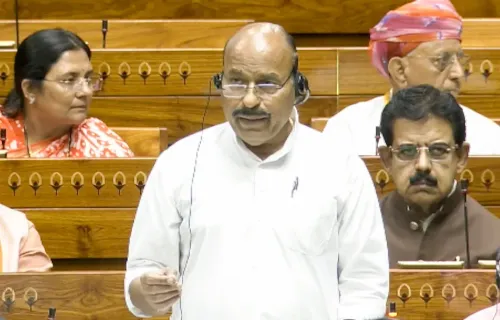
Union Minister Virendra Kumar will preside over the 3rd NAMASTE Day event at Rabindra Sadan, Kolkata on Tuesday, 15 July 2025 .
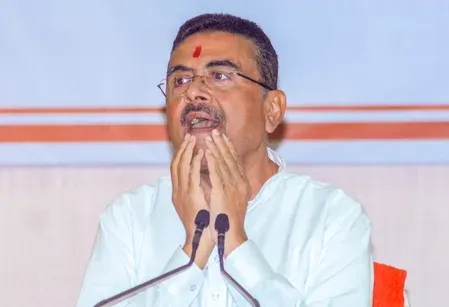
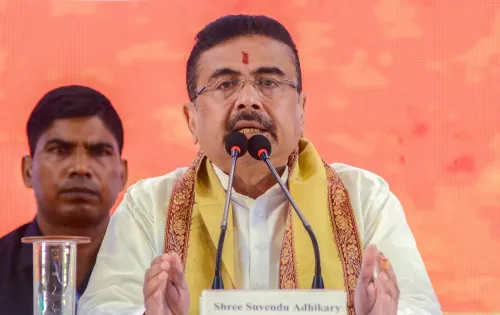
West Bengal Chief Minister Suvendhu Adhikari is expected to attend, alongside MPs, MLAs, and senior central and state officials.
Urban Local Bodies nationwide will hold occupational safety training , health check-up camps , and mechanised equipment demonstrations on the day.
The NAMASTE Scheme , launched in 2023-24 , targets zero fatalities in sanitation work and elimination of direct human contact with faecal matter.
The scheme empowers workers through Self-Help Groups , entrepreneurship support, and strengthened Emergency Response Sanitation Units (ERSUs) .
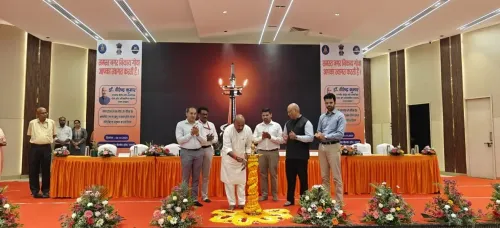
Union Social Justice and Empowerment Minister Virendra Kumar will honour sanitation workers and mark the 3rd National Action for Mechanised Sanitation Ecosystem (NAMASTE) Day at a flagship event in Kolkata on Tuesday, 15 July 2025. The central celebration will be held at Rabindra Sadan in West Bengal, with parallel programmes running simultaneously across Urban Local Bodies (ULBs) nationwide, according to an official statement.
Key Developments at the Kolkata Event
West Bengal Chief Minister Suvendhu Adhikari is expected to attend the Kolkata event alongside Union Minister Kumar. The gathering will also include Members of Parliament, MLAs, senior officials from the Centre and the state, district administration representatives, and the National Safai Karamcharis Finance and Development Corporation (NSKFDC), among other dignitaries. A Divya Kala Mela will run alongside the main event at Rabindra Sadan.
What Urban Local Bodies Will Do on NAMASTE Day
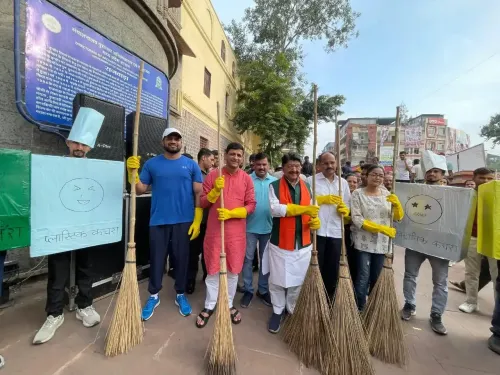
Across the country, ULBs will organise a range of activities focused on sanitation worker welfare. These include occupational safety training, health check-up camps, facilitation of government entitlements, live demonstrations of mechanised sanitation equipment and safety gear, and formal recognition of sanitation workers for their contributions to public health.
The day is dedicated to honouring sewer and septic tank workers, waste pickers, and former manual scavengers — communities that have historically faced both physical risk and social marginalisation in their work.
About the NAMASTE Scheme
The Department of Social Justice and Empowerment launched the NAMASTE Scheme in 2023-24 with the stated goal of ensuring dignity, safety, and social security for sanitation workers. The scheme's intended outcomes include zero fatalities in sanitation work, the elimination of direct human contact with faecal matter, and a mandate that all cleaning operations be carried out using safety devices and skilled workers.
The scheme also aims to strengthen Emergency Response Sanitation Units (ERSUs) for mechanised service delivery, and to empower workers through Self-Help Groups and entrepreneurship pathways. This is the third consecutive year the day has been observed since the scheme's launch, signalling the government's intent to institutionalise the commemoration.
Broader Significance
India's sanitation workforce has long operated in conditions that carry serious health and safety risks, with manual scavenging — though legally banned — persisting in pockets. The NAMASTE framework represents an attempt to close the gap between policy intent and ground reality by tying mechanisation, skilling, and livelihood support into a single programme. Notably, the choice of Kolkata as the host city brings the spotlight to a state where urban sanitation infrastructure faces its own set of challenges.
The government has framed the observance as a platform not just for recognition, but for raising public awareness of sanitation workers' rights — a signal that the programme is as much about social norm change as it is about equipment and training. How effectively ULBs translate the day's activities into sustained welfare outcomes will be the real measure of progress.
Point of View
The government's instinct to commemorate is clear — but commemoration is not the same as transformation. Manual scavenging remains a documented reality despite a legal ban, and the scheme's own benchmark of zero fatalities in sanitation work has yet to be publicly verified against field data. Hosting the flagship event in Kolkata is a politically loaded choice: West Bengal has its own complex record on urban sanitation and labour rights. The real test of NAMASTE Day is not the number of health camps held on 15 July, but whether ERSU capacity, mechanisation uptake, and SHG formation data are independently audited and published — year on year.
NationPress
12 Oct 2026
Frequently Asked Questions
What is NAMASTE Day and why is it observed?
NAMASTE Day, or National Action for Mechanised Sanitation Ecosystem Day, is an annual observance dedicated to honouring sanitation workers — including sewer and septic tank workers, waste pickers, and former manual scavengers — for their role in public health. It was introduced alongside the NAMASTE Scheme launched in 2023-24 to promote mechanised sanitation, worker safety, and dignified livelihoods.
Where is the 3rd NAMASTE Day event being held?
The flagship event for the 3rd NAMASTE Day is being held at Rabindra Sadan in Kolkata, West Bengal, on 15 July 2025. Parallel programmes are also taking place across Urban Local Bodies nationwide.
Who is attending the Kolkata NAMASTE Day event?
Union Social Justice and Empowerment Minister Virendra Kumar will lead the event. West Bengal Chief Minister Suvendhu Adhikari is expected to attend, along with MPs, MLAs, senior central and state officials, NSKFDC representatives, and other dignitaries.
What activities are planned across Urban Local Bodies on NAMASTE Day?
ULBs across India will organise occupational safety training, health check-up camps, facilitation of government entitlements, demonstrations of mechanised sanitation equipment and safety gear, and formal recognition of sanitation workers for their contributions.
What are the key goals of the NAMASTE Scheme?
The NAMASTE Scheme, launched in 2023-24, aims to achieve zero fatalities in sanitation work, eliminate direct human contact with faecal matter, and ensure all cleaning operations use safety devices and skilled workers. It also seeks to strengthen Emergency Response Sanitation Units and empower workers through Self-Help Groups and entrepreneurship.