Wadettiwar Pressures Fadnavis to Implement SC Ruling on Teacher Recruitment
Synopsis
In a bold move, Congress leader Vijay Wadettiwar has urged Chief Minister Devendra Fadnavis to act swiftly on a Supreme Court ruling that impacts thousands of teacher candidates from backward classes. This call to action seeks to rectify injustices in the TAIT 2022 recruitment process.
Key Takeaways
Immediate action is needed to implement the Supreme Court ruling.
Approximately 8,000 candidates are affected by unjust recruitment practices.
The Supreme Court decision mandates inclusion of high-scoring reserved candidates in the open merit list.
Four key demands have been made to rectify the recruitment process.
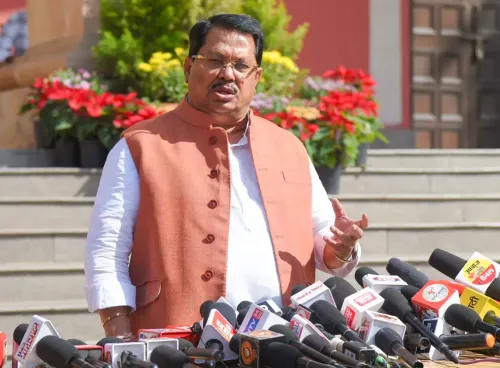
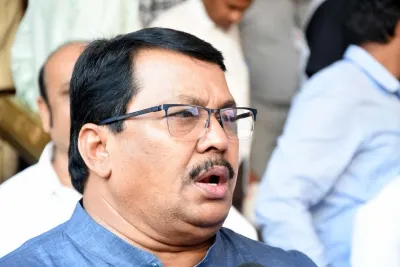
Nagpur, April 9 (NationPress) - Congress Legislative Party Leader Vijay Wadettiwar has formally addressed a letter to Chief Minister Devendra Fadnavis, urging the swift enactment of a Supreme Court ruling concerning the Teacher Aptitude and Intelligence Test (TAIT) 2022 teacher recruitment process.
This initiative aims to rectify the perceived inequity experienced by candidates from backward classes.
Wadettiwar pointed out that due to erroneous decisions made by the state’s Education Department, around 8,000 candidates from the Other Backward Class have been unjustly excluded from the hiring process, despite demonstrating the necessary merit.
This issue arises from candidates who received a 5% relaxation in the Teacher Eligibility Test (TET) but went on to achieve superior results in the TAIT compared to those in the open category.
Previously, these high-achieving candidates from the reserved category were prohibited from vying for open-category positions, a decision Wadettiwar condemned as “unconstitutional and unjust.”
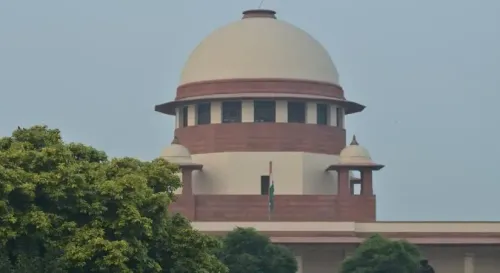
In the case of Chhaya and Others vs. State of Maharashtra, the Supreme Court issued its conclusive ruling on March 23, 2026, affirming that reserved category candidates who surpass the last candidate in the open category should be added to the open merit list.
Wadettiwar emphasized that preventing merit-based reserved candidates from transitioning to the open category is both illegal and unconstitutional.
He clarified that the TET serves solely as a qualifying examination; any allowances made during it do not diminish a candidate’s merit in the subsequent recruitment phase (TAIT).
Wadettiwar presented four key demands to ensure justice for the impacted educators:
- Conduct an immediate review of the entire TAIT-2022 merit list and publish a revised, corrected merit list without delay.
- Integrate high-scoring reserved-category candidates into the open category and allocate any resulting vacancies in reserved categories to the next eligible candidates from the Other Backward Class and backward classes.
- “The state government must provide clear and prompt directives to the relevant departments to adhere to the Supreme Court’s decision and deliver justice to these deserving candidates,” Wadettiwar stressed in his correspondence.
Point of View
The ongoing debate surrounding the implementation of the Supreme Court's decision on teacher recruitment highlights significant issues of equity and justice within the education system. The actions taken by political leaders are crucial for ensuring that all deserving candidates receive fair treatment, regardless of their background.
NationPress
19 Sept 2026
Frequently Asked Questions
What is the purpose of the letter written by Vijay Wadettiwar?
Wadettiwar's letter demands the immediate implementation of a Supreme Court ruling regarding the TAIT 2022 teacher recruitment process to ensure justice for candidates from backward classes.
How many candidates from Other Backward Classes have been affected?
Approximately 8,000 Other Backward Class candidates have been excluded from the recruitment process despite having the required merit.
What did the Supreme Court rule regarding reserved category candidates?
The Supreme Court ruled that reserved category candidates who score higher than the last candidate in the open category must be included in the open merit list.
What are the four key demands made by Wadettiwar?
Wadettiwar's demands include reviewing the TAIT-2022 merit list, integrating high-scoring reserved category candidates into the open category, and ensuring justice for affected educators.
Why does Wadettiwar consider the current rules unconstitutional?
He deems the exclusion of high-scoring reserved category candidates from open-category competition as unconstitutional and unjust.