Wanted Maoist couple surrenders in Kolkata, hands over AK-47 and INSAS rifles
Synopsis
A most-wanted Maoist couple — carrying bounties of ₹5 lakh and ₹2 lakh — walked into Kolkata Police headquarters on 23 October and handed over an AK-47 and an INSAS rifle. Their surrender, coming months after another Maoist leader gave himself up, signals a near-complete dismantling of the West Bengal–Jharkhand Maoist network that once sheltered under Kishenji's command.
Key Takeaways
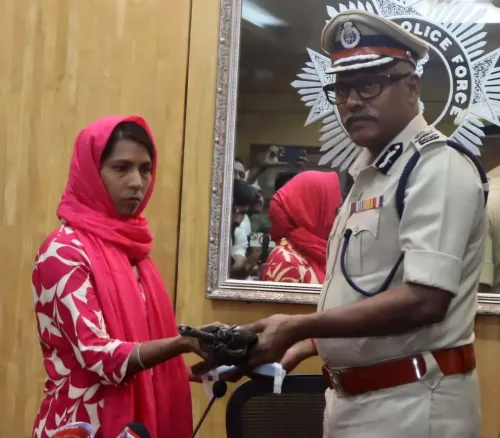
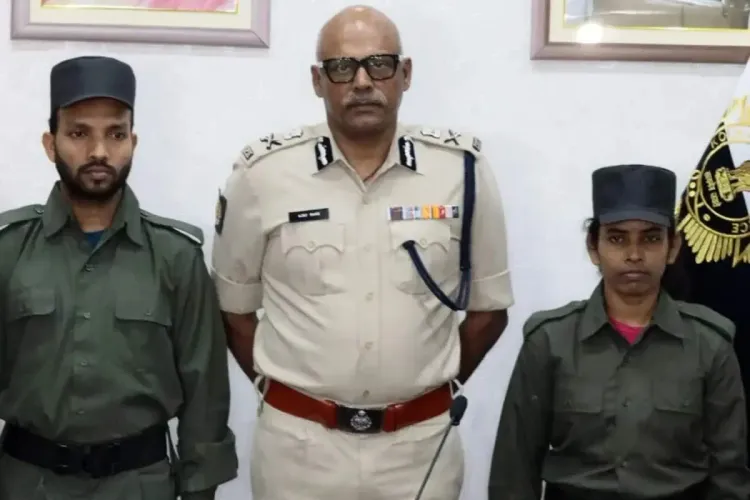
Mangal and Malati , a most-wanted Maoist couple, surrendered before Kolkata Police Commissioner Ajay K.
Nand at Lalbazar on 23 October 2026 .
They handed over an AK-47 rifle and an INSAS rifle at the time of surrender.
Authorities had announced rewards of ₹5 lakh for Mangal and ₹2 lakh for Malati.
Mangal joined the Maoist movement around 2010 and was reportedly close to slain Maoist leader Kishenji , killed in November 2011 .
The duo's surrender follows recent arrests of three Maoists in Jharkhand and the earlier surrender of wanted leader Pushpa in Kolkata.
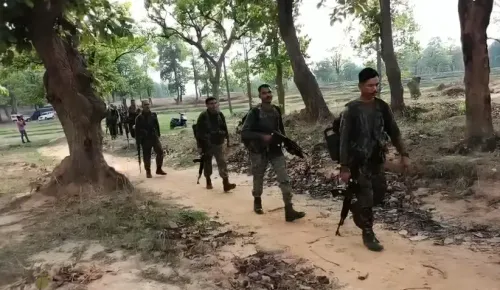
Security forces' sustained pressure on the Saranda forest belt is credited with forcing Maoists to abandon the region earlier this year.
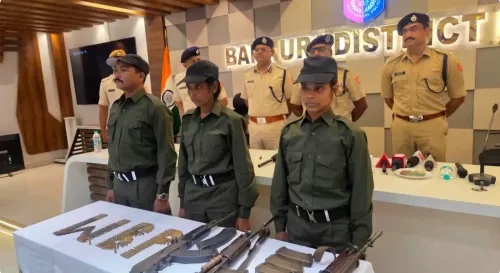
A most-wanted Maoist couple — identified as Mangal and Malati — wanted by security forces in both West Bengal and Jharkhand, surrendered before Ajay K. Nand, Commissioner of Kolkata Police headquarters at Lalbazar, on Friday, 23 October 2026, officials confirmed. The couple also handed over an AK-47 rifle and an INSAS rifle to the police at the time of surrender.
Who Are Mangal and Malati
Mangal hails from Salboni in West Midnapore, while Malati is a native of Gopiballabhpur in Jhargram district — both residents of West Bengal. Despite their origins, their Maoist operations were largely confined to Jharkhand, with only occasional activity inside West Bengal.
Mangal first became involved in left-wing extremism in the Dalma area and subsequently operated in Saranda, both in Jharkhand. According to the Kolkata Police Commissioner, Mangal joined the Maoist movement around 2010 and relocated to Jharkhand after 2011–12. He was reportedly close to the late Maoist leader Koteshwar Rao, also known as Kishenji, who was killed in a police encounter in November 2011. Malati joined the movement after Mangal, with her role almost entirely confined to Jharkhand from the outset.
Why They Decided to Surrender
Authorities noted that Maoists had begun withdrawing from the Saranda forest area in Jharkhand earlier this year, citing relentless pressure from security forces that made sustained operations increasingly untenable.
Speaking to reporters after the surrender, Mangal said he had come to recognise the limits of armed struggle. 'Both of us have decided to abandon the path of violence and return to the mainstream of society. That is why we came here and surrendered,' he said.
Reward Money and Security Background
Authorities had announced a reward of ₹5 lakh for Mangal and ₹2 lakh for Malati, reflecting the threat level each was assessed to pose. The duo's surrender marks a further thinning of the Maoist network linked to West Bengal.
According to police, there were about 13 Maoists from West Bengal on the security forces' wanted list. Most have since been accounted for — arrested over time or, more recently, surrendering voluntarily. Three Maoists were arrested in Jharkhand recently, and another wanted Maoist leader, Pushpa, had surrendered in Kolkata a few months prior to this latest development.
Significance for Anti-Maoist Operations
The back-to-back surrenders and arrests signal a decisive contraction of the Maoist footprint across the West Bengal–Jharkhand corridor, an area that once formed part of the so-called 'Red Corridor.' Security forces and the Kolkata Police have credited sustained operational pressure for breaking the organisation's ability to shelter and regroup in forest zones. The surrender of a couple carrying two military-grade weapons — including an AK-47 — underscores the arsenal that even a diminished network had maintained.
With Mangal and Malati now in custody, security agencies are expected to mine their intelligence for leads on any remaining active cadres in the region.
Point of View
Once the heartland of Maoist regrouping after Kishenji's killing in 2011, has been progressively hollowed out by sustained security operations over 15 years. What is notable is the pattern: voluntary surrenders, not just arrests, suggest that the movement's ideological hold has weakened alongside its operational capacity. The handing over of military-grade weapons, including an AK-47, also raises a quiet question about supply chains that enabled such armament — one that security agencies would do well to pursue even as they take credit for the surrenders.
NationPress
23 Oct 2026
Frequently Asked Questions
Who are Mangal and Malati, the Maoist couple that surrendered in Kolkata?
Mangal and Malati are a most-wanted Maoist couple from West Bengal — Mangal from Salboni in West Midnapore and Malati from Gopiballabhpur in Jhargram district. They were wanted by security forces in both West Bengal and Jharkhand for left-wing extremist activities primarily conducted in the Dalma and Saranda areas of Jharkhand.
What weapons did the Maoist couple hand over during their surrender?
Mangal and Malati surrendered an AK-47 rifle and an INSAS rifle to the Kolkata Police at the time of their surrender on 23 October 2026. The handover of these military-grade weapons was confirmed by officials at Lalbazar police headquarters.
What rewards had been announced for Mangal and Malati?
Authorities had announced a reward of ₹5 lakh for Mangal and ₹2 lakh for Malati, reflecting the assessed threat level of each individual. The rewards were in place prior to their voluntary surrender before the Kolkata Police Commissioner.
Why did the Maoist couple decide to surrender?
Mangal stated that he had concluded armed struggle could not bring about social change, saying both he and Malati had decided to abandon violence and return to mainstream society. Police also noted that mounting security force pressure on the Saranda forest area in Jharkhand had made Maoist operations increasingly difficult earlier this year.
How significant is this surrender in the context of anti-Maoist operations?
The surrender is part of a broader pattern of attrition in the West Bengal–Jharkhand Maoist network. Of about 13 West Bengal-linked Maoists on the security forces' wanted list, most have been arrested or surrendered, including leader Pushpa a few months ago and three others recently arrested in Jharkhand. Mangal and Malati are among the last to give themselves up.