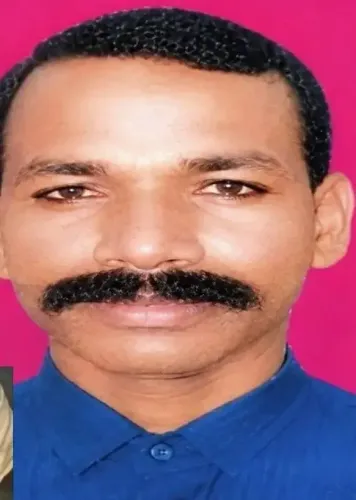
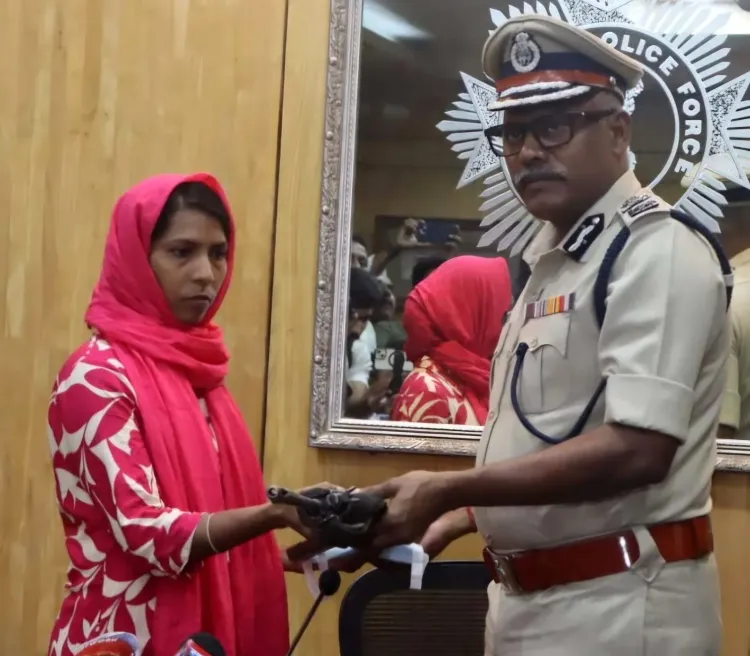
Maoist leader Shakuntala Mahato alias Pushpa surrenders at Kolkata Police HQ
Synopsis
A top CPI (Maoist) zonal committee member who joined the outfit at age 10 and operated under four aliases across Jharkhand and West Bengal has walked into Kolkata Police headquarters and handed over her weapons — a striking symbol of the movement's shrinking hold in eastern India.
Key Takeaways
Shakuntala Mahato alias Pushpa , a CPI (Maoist) zonal committee member, surrendered at Lalbazar Police HQ, Kolkata on 17 June .
She handed over arms and 46 rounds of ammunition and carried a bounty of ₹10 lakh .
Mahato had fled the Saranda forest, Jharkhand during a joint security forces operation before reportedly sheltering in West Bengal.
She joined the Maoist movement at age 10 and operated under aliases Pari , Barsha , Pushpa , and Lutun across Jhargram , Jharkhand , and surrounding areas.
She married Area Commander Atul Mahato in 2005 and worked with the Eastern Regional Bureau of CPI (Maoist).
Her surrender is part of a broader Centre-led operation that has seen multiple Maoists arrested, killed, or surrendered across the affected belt.
Shakuntala Mahato, alias Pushpa, a senior CPI (Maoist) zonal committee member and one of the most wanted Maoist leaders in eastern India, surrendered before the Kolkata Police at Lalbazar headquarters on Wednesday, 17 June, officials confirmed. She handed over arms and 46 rounds of ammunition at the time of surrender, and carried a bounty of ₹10 lakh on her head.
The Surrender
Mahato had reportedly fled the Saranda forest in Jharkhand during a joint security forces operation, with speculation mounting that she had taken refuge in West Bengal. Her surrender on Wednesday afternoon at Lalbazar marked a significant breakthrough for West Bengal law enforcement.
At the time of surrendering, she appealed to her former comrades still in the jungles. 'Those of our party who are still isolated should try to return to the mainstream. The current government is doing a lot of good work. It is good for everyone to give up arms and join the development,' she said.
Background: A Lifetime in the Maoist Movement
Mahato hails from Mechua village under the Belpahari police station area in Jhargram district, West Bengal. She joined the Maoist organisation at the age of just 10, dropping out before reaching high school. Over the years, she operated under multiple aliases — Pari, Barsha, and Pushpa — while being known locally as Lutun.
During the Left Front regime in Bengal, intensified police pressure forced her relocation to the Pareshnath hills in present-day Jharkhand. She was later brought back to West Bengal for organisational work.
Organisational Rise and Marriage
In 2003, while serving in the squad in Jhargram, Mahato met Area Commander Atul Mahato. Following the formal formation of CPI (Maoist) in 2004, the two married in 2005 in the Tamar jungle of Jharkhand. She subsequently operated across a wide belt — Belpahari, Dalma, Ghatshila, Gotashila, Parshnath Pahar, Bundu-Tamar, and Saranda — on orders from the Eastern Regional Bureau of CPI (Maoist).
During the Left era, she reportedly worked alongside the late Kishanji in the Lalgarh movement in Jhargram. After 2012, as the Bengal Brigade moved into Jharkhand, the outfit faced increasing pressure from security forces on both sides of the border.
Broader Anti-Maoist Drive
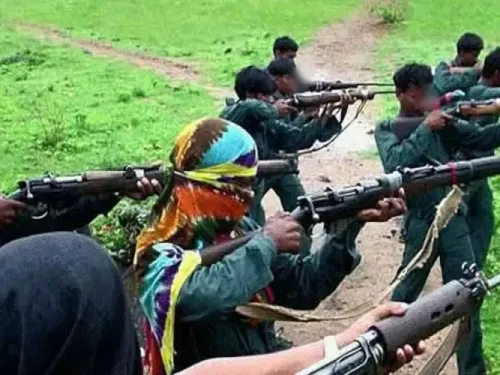
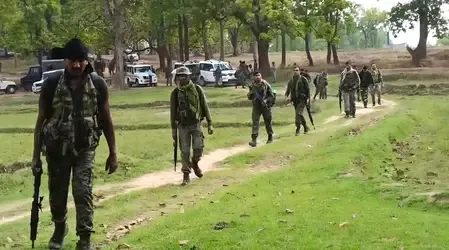
Mahato's surrender comes in the backdrop of a large-scale operation launched by the Centre to eradicate Maoist and Naxal activities across India. The ongoing offensive has resulted in multiple arrests, eliminations, and surrenders across the Maoist-affected belt. According to officials, Mahato was considered a mastermind of several Maoist operations in the region.
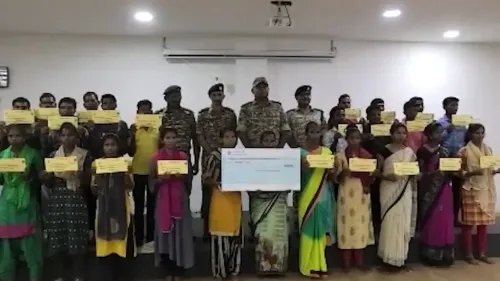
Her decision to come in from the cold is being seen as a further sign of the movement's shrinking operational space. Authorities are expected to follow the standard rehabilitation process for surrendered Maoists under the state's policy framework.
Point of View
But the more telling detail is her biography: recruited at 10, never reached high school, married within the cadre, and deployed across a vast jungle corridor for decades. The Maoist movement in eastern India has long run on exactly this kind of deep social recruitment from marginalised communities in Jhargram and Jharkhand. Security operations have clearly degraded the outfit's territorial control — but surrenders also reflect the state's rehabilitation incentives, and how durable those incentives prove for former cadres re-entering civilian life is a question that rarely gets the scrutiny it deserves.
NationPress
20 Sept 2026
Frequently Asked Questions
Who is Shakuntala Mahato alias Pushpa?
Shakuntala Mahato, also known as Pushpa, Pari, Barsha, and Lutun, is a senior CPI (Maoist) zonal committee member from Mechua village in Jhargram, West Bengal. She joined the Maoist movement at the age of 10 and was considered a mastermind of several Maoist operations across eastern India.
Where and when did Shakuntala Mahato surrender?
She surrendered at the Kolkata Police headquarters in Lalbazar on Wednesday, 17 June, handing over arms and 46 rounds of ammunition. She had a bounty of ₹10 lakh on her head at the time.
Why did she surrender?
Mahato reportedly fled the Saranda forest in Jharkhand during a joint security forces operation and was believed to be hiding in West Bengal. Officials have not detailed the precise circumstances leading to her decision, but she publicly appealed to remaining cadres to give up arms and join the mainstream.
What is the significance of her surrender?
As a CPI (Maoist) zonal committee member and alleged mastermind of multiple operations, her surrender is a major intelligence and morale setback for the outfit. It comes amid a sustained Centre-led drive that has significantly degraded Maoist operational capacity in eastern India.
What happens to surrendered Maoists in West Bengal?
Surrendered Maoists are typically processed under the state government's rehabilitation policy, which may include legal proceedings for past offences alongside support for reintegration into civilian life. The specific terms applicable to Mahato have not yet been officially disclosed.