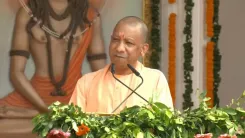
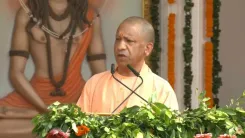
Pralhad Joshi Blasts Karnataka Congress Over Bus Fare Hike

Synopsis
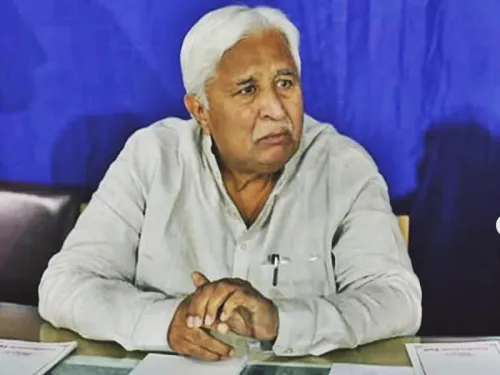
Union Minister Pralhad Joshi accused the Karnataka Congress government of driving KSRTC, BMTC and two other transport corporations to financial ruin through unscientific free-travel guarantees, then hiking bus fares and KMF Nandini dairy prices to plug the fiscal hole.
Key Takeaways
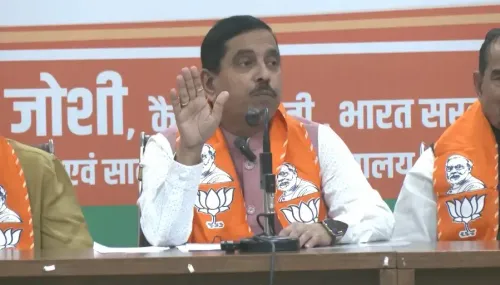
Union Minister Pralhad Joshi posted a sharp attack on the Karnataka Congress government on 4 November 2026 , alleging fiscal mismanagement.
He charged that all four state transport corporations — including KSRTC and BMTC — have been pushed to financial bankruptcy within three-and-a-half years of Congress rule.
The government allegedly owes the corporations thousands of crores of rupees in unpaid dues under free-travel guarantee schemes, leaving them unable to fund diesel purchases.
A large-scale bus ticket fare hike was implemented with midnight effect, hitting daily-wage workers, students, and low-income commuters hardest.
KMF Nandini milk and curd prices were also raised in what Joshi described as the biggest hike in the brand's history.
The post is tagged #CongressFailsKarnataka , indicating a coordinated BJP political messaging campaign against the state government.
Karnataka's public bus commuters — the daily-wage workers, students, and low-income families who depend on the state's transport network — woke up to sharply higher ticket prices, and Union Minister Pralhad Joshi has gone straight for the jugular of the Congress government in Bengaluru, calling the fare hike a midnight ambush on ordinary people bankrolled by years of reckless freebies.
The 'free travel' promise that broke the bank
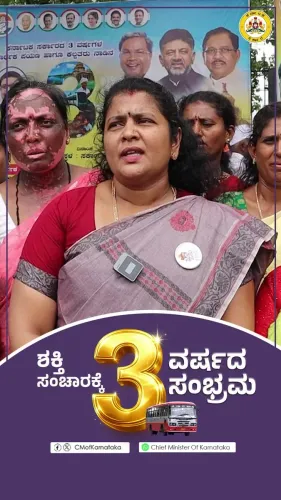
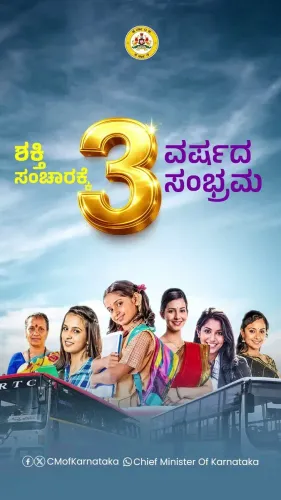
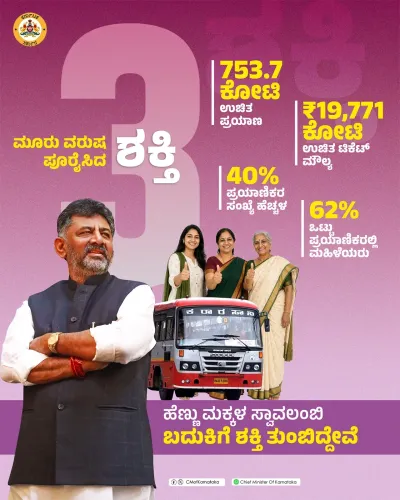
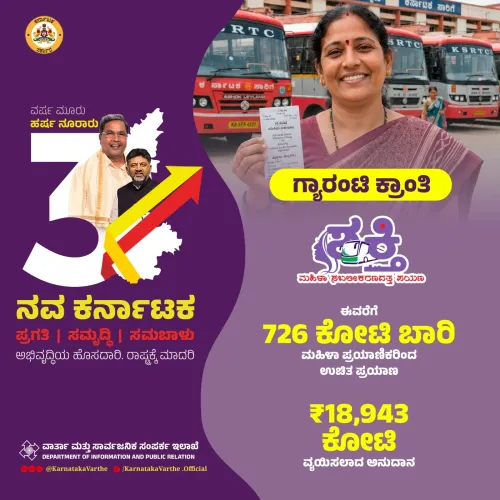
When the Congress party swept to power in Karnataka in May 2023, its flagship 'Shakti' scheme promised free bus travel for women — a headline-grabbing guarantee that became the centrepiece of its welfare pitch. Joshi's post, written in Kannada, charges that the government 'thundered about free travel to grab publicity' and then systematically drained all four state transport corporations — KSRTC and BMTC among them — to the point where they reportedly cannot afford diesel for their buses.
The minister frames it as a classic political sleight of hand: promise something free on one hand, then quietly raise the price of everything essential on the other. 'ಒಂದೆಡೆ ಉಚಿತ ಎಂದು ಹೇಳಿ ಇನ್ನೊಂದೆಡೆ ಬೆಲೆ ಏರಿಸಿ' — 'talk free on one side, hike prices on the other' — is the core accusation.
KSRTC and BMTC: from profit to insolvency in three-and-a-half years
Karnataka's transport corporations have historically operated under financial pressure, relying on state subsidies to cover operational costs. Joshi argues that what were once 'profitable and successfully running' institutions — a source of state pride — have been driven into 'complete financial bankruptcy' within three-and-a-half years of Congress rule. The specific allegation that the corporations lack funds even for diesel payments is striking; it has not been independently verified, but it reflects a wider pattern in which expanded free-travel entitlements strain subsidy reimbursement timelines.
The minister directly connects the welfare overspend to the midnight fare hike: thousands of crores of dues allegedly left unpaid to the corporations, pushing them into loss, and the resulting fiscal hole now being patched by charging commuters more.
KMF Nandini milk hike adds to the political charge sheet
Joshi does not stop at bus fares. He also points to what he calls 'the biggest price hike in history' for KMF Nandini brand milk and curd — products from the Karnataka Milk Federation that sit on the daily shopping list of millions of households. The pairing of a dairy price revision with a bus fare increase sharpens his political argument: that the cumulative cost of 'freebies' is being silently transferred to consumers through hikes in essential goods and services.
The hashtag #CongressFailsKarnataka appended to the post signals this is part of a coordinated BJP messaging push, not an isolated remark. As a senior BJP leader from Karnataka who now holds a Union Cabinet berth, Joshi carries both the credibility of a home-state voice and the amplification of a national platform.
The freebie debate Karnataka is now being forced to have
India's 'revdi politics' debate — the dispute over whether pre-election welfare guarantees amount to fiscally responsible governance or populist vote-buying — has played out loudly at the national level for years. Karnataka is now the BJP's sharpest exhibit. The state's finances, the fate of its transport corporations, and the sequencing of a free-travel promise followed by a fare hike hand the opposition a ready-made narrative heading into future electoral cycles in the state.
Whether the Congress government's guarantee model ultimately delivers net benefit to Karnataka's poor — or leaves them paying more in indirect costs than they received in direct freebies — is the defining question this episode forces into the open.
Point of View
And by linking it directly to the Shakti free-travel scheme, Joshi frames the Congress welfare model as a closed loop where voters pay back every rupee of a 'freebie' through higher essential-service costs. If the transport corporation finances are as distressed as alleged, the Congress government faces a genuine governance crisis, not just a political one — defending a welfare architecture that visibly strains public utilities will be difficult. The KMF Nandini dairy price hike layered on top gives the opposition a kitchen-table argument that extends well beyond the commuter class.
NationPress
4 Nov 2026
Frequently Asked Questions
Why did Karnataka hike bus fares in November 2026?
The Karnataka government implemented a bus fare hike to address severe financial losses in the state's transport corporations, including KSRTC and BMTC. BJP leaders like Union Minister Pralhad Joshi argue the losses stem from unpaid government dues under free-travel guarantee schemes.
What is the Shakti scheme and how does it relate to KSRTC losses?
The Shakti scheme, launched by the Karnataka Congress government after its May 2023 election win, provides free bus travel for women. Critics, including Joshi, allege the government failed to fully reimburse KSRTC and other corporations for the subsidised trips, leaving them with mounting losses.
What did Pralhad Joshi say about KSRTC and BMTC?
Joshi alleged on X that KSRTC, BMTC, and two other Karnataka transport corporations have been driven to complete financial bankruptcy within three-and-a-half years of Congress rule, with corporations reportedly lacking funds even for diesel.
Has KMF Nandini milk also become more expensive in Karnataka?
Yes. Joshi's post claims the Congress government carried out the biggest-ever price hike on KMF Nandini milk and curd, compounding the burden on households already facing higher bus fares.
What is the BJP's political argument about freebie schemes in Karnataka?
The BJP argues that unscientific free-guarantee schemes drain state finances and ultimately force governments to raise prices on essential goods and services, meaning citizens end up paying more than the value of the freebies they received.