Partition Horrors Day: CM Sarma vows India will never forget 1947's scars
Synopsis
On Partition Horrors Remembrance Day, Assam CM Himanta Biswa Sarma invoked the Muslim League’s role in the 1947 division, calling the scars of Partition a permanent part of India’s collective memory — and framing historical remembrance as an active call for national unity and vigilance today.
Key Takeaways
Assam CM Himanta Biswa Sarma paid tribute to 1947 Partition victims on Partition Horrors Remembrance Day, 14 August .
Sarma stated India must never forget ‘the scars of the forced partition which the Muslim League inflicted on Maa Bharti.’ The 1947 Partition triggered one of the largest mass migrations in history, displacing an estimated 1.5 crore people amid widespread communal violence.
The Chief Minister called for national unity and vigilance, urging citizens to protect India from forces threatening its security.
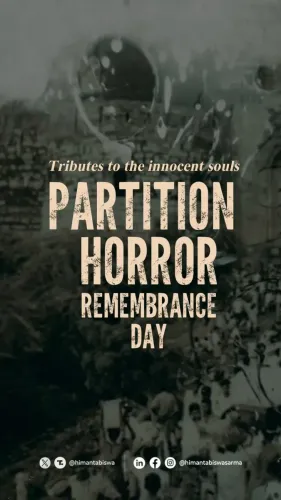
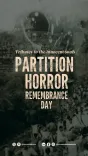
Sarma shared a social media post and image reaffirming that the memory of Partition must remain alive in the national consciousness.
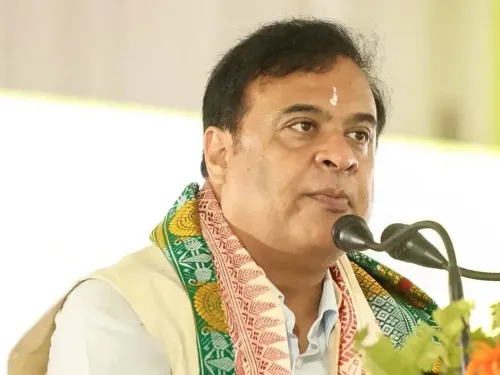
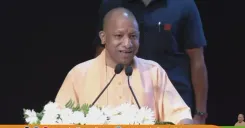
Assam Chief Minister Himanta Biswa Sarma on 14 August 2025 paid solemn tribute to the victims of the 1947 Partition, declaring that India must never allow the memory of that trauma to fade. Speaking on Partition Horrors Remembrance Day, Sarma called the division of the subcontinent one of the most devastating episodes in modern history and urged the nation to draw enduring lessons from it.
What CM Sarma Said
“We will never forget the scars of the forced partition which the Muslim League inflicted on Maa Bharti, taking the lives of countless innocent souls,” Sarma wrote in a social media post. The Chief Minister also shared an image underscoring that the wounds of Partition remain alive in the national consciousness.
Sarma said the day provides an opportunity to honour those who perished during one of the most traumatic upheavals in the history of the Indian subcontinent, and to renew the collective pledge that such a tragedy must never recur.
The Human Cost of 1947
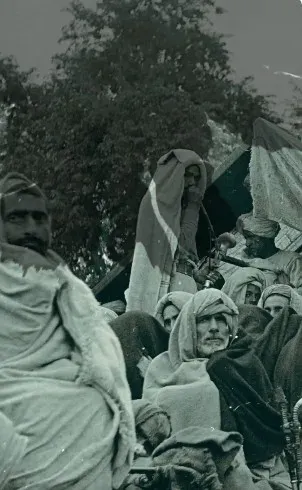
The Partition of 1947 triggered one of the largest mass migrations in recorded history. Millions were uprooted amid widespread communal violence; families were torn apart, ancestral homes abandoned, and entire communities displaced across newly drawn borders. Historians estimate that between 10 and 20 lakh people perished in the violence that accompanied Partition, while upwards of 1.5 crore were forced to relocate.
This is the context in which Partition Horrors Remembrance Day — observed every year on 14 August — was instituted, dedicated to recalling the human cost of that division and honouring its survivors and victims.
Call for National Unity and Vigilance
Beyond remembrance, Sarma’s message carried a forward-looking dimension. He called upon citizens to remain committed to protecting the nation from forces that could threaten its unity and security, framing the memory of Partition as both a moral obligation and a political warning.
The Chief Minister stressed that the sacrifices of those who lost their lives should remain a permanent fixture in the country’s collective memory, ensuring that the suffering of ordinary people — many of whom were forced to rebuild their lives from nothing — is never reduced to a footnote.
Broader Significance of the Observance
In recent years, Partition Horrors Remembrance Day has gained renewed political salience as a platform to highlight the experiences of displaced communities and to anchor debates around national identity and security. Sarma’s remarks from Guwahati are consistent with a pattern of senior leaders using the occasion to draw connections between historical memory and contemporary concerns about national cohesion.
As India marks another year of remembrance, the Chief Minister’s appeal for vigilance and unity reflects a broader national conversation about how the subcontinent’s most painful chapter should be taught, remembered, and applied to the present.
Point of View
With senior leaders increasingly using it to draw explicit lines between historical actors and current fault lines. The sharper question — whether this framing advances genuine historical accountability or deepens communal polarisation — remains largely unasked.
NationPress
14 Aug 2026
Frequently Asked Questions
What is Partition Horrors Remembrance Day?
Partition Horrors Remembrance Day is observed every year on 14 August to honour the victims of the 1947 Partition of India, which displaced an estimated 1.5 crore people and killed between 10 and 20 lakh amid widespread communal violence. The day was instituted to ensure the human cost of Partition remains part of India’s collective memory.
What did Assam CM Himanta Biswa Sarma say on Partition Horrors Remembrance Day?
CM Sarma declared that India will never forget ‘the scars of the forced partition which the Muslim League inflicted on Maa Bharti, taking the lives of countless innocent souls.’ He made the remarks in a social media post accompanied by an image underlining that Partition’s wounds remain alive.
Why does CM Sarma’s statement reference the Muslim League?
Sarma attributed the Partition directly to the Muslim League, the political party that championed the creation of Pakistan in 1947. His remarks are consistent with a political narrative that holds the League responsible for the violence and displacement that accompanied Partition.
Who was affected by the 1947 Partition?
The Partition affected millions across the Indian subcontinent, with an estimated 1.5 crore people displaced across the newly formed borders of India and Pakistan. Communities in Punjab, Bengal, and Sindh bore the heaviest toll, with families separated and ancestral homes abandoned amid communal violence.
What broader message did CM Sarma convey beyond remembrance?
Beyond honouring Partition victims, Sarma called for national unity and vigilance, urging citizens to remain committed to protecting India from forces that could threaten its security — framing historical memory as an active, present-day responsibility.