CM Yogi marks Partition Horrors Remembrance Day in Lucknow
Synopsis
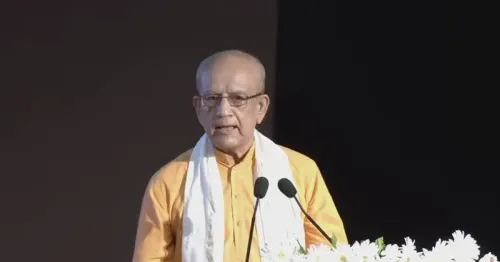
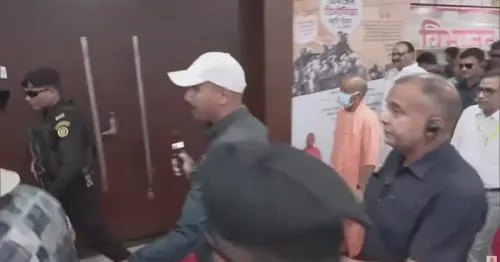
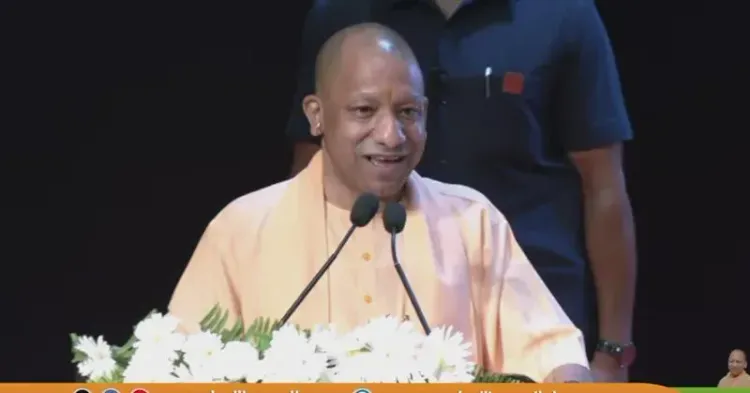
Uttar Pradesh Chief Minister Yogi Adityanath attended the state-level Partition Horrors Remembrance Day event in Lucknow on 14 August 2026, marking the annual national observance instituted in 2021 to honour victims of the 1947 partition of India.
Key Takeaways
CM Yogi Adityanath attended the Partition Horrors Remembrance Day event in Lucknow on 14 August 2026 .
The day was declared a national observance by the Government of India in 2021 , marked annually on 14 August .
The observance honours victims of the 1947 partition of India , one of the largest forced migrations in human history.
Uttar Pradesh has held state-level commemorative programmes as part of this national framework since the day's institution.
The date — the eve of Independence Day — was chosen to ensure the human cost of partition is not overshadowed by Independence Day celebrations.
Seventy-nine years after one of history's most traumatic forced migrations, Uttar Pradesh Chief Minister Yogi Adityanath stood in Lucknow on 14 August 2026 to lead the state's official observance of Partition Horrors Remembrance Day — a solemn annual reckoning with the human cost of 1947.
A day born from the wounds of 1947
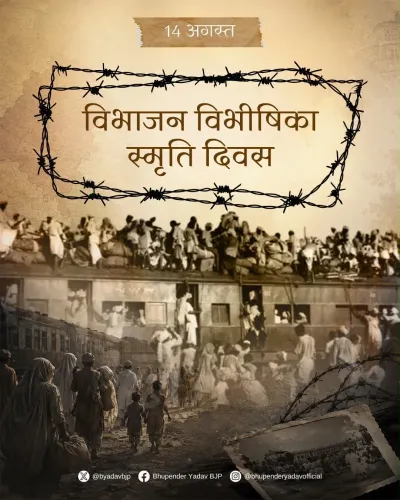
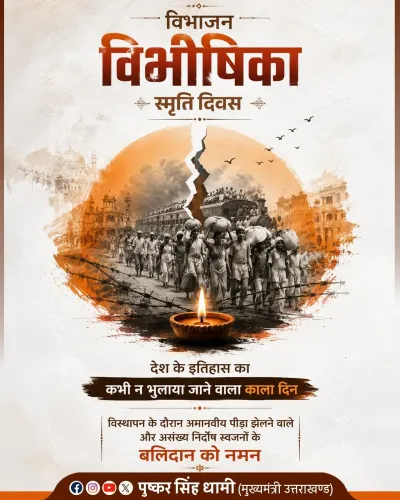
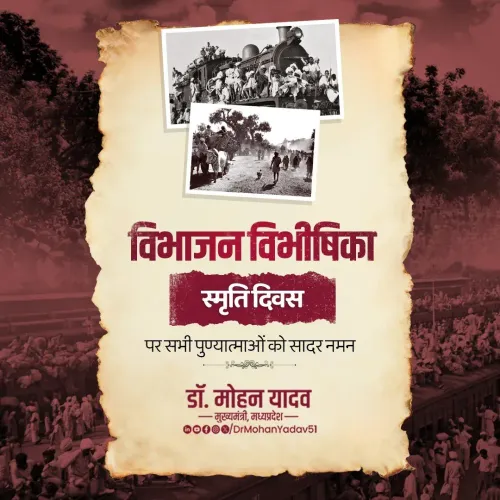
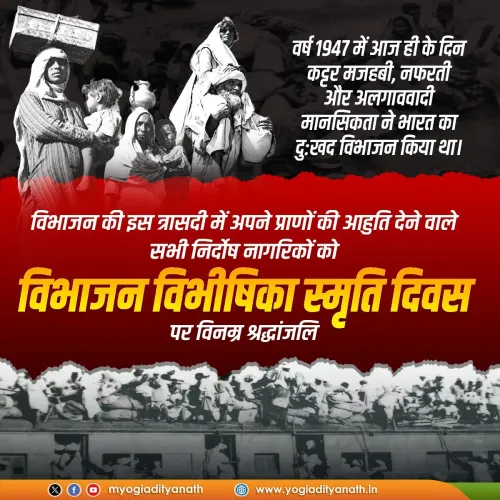
The observance traces its origin to a 2021 declaration by the Government of India, which designated 14 August — the eve of Independence Day — as Partition Horrors Remembrance Day (Vibhajan Vibhishika Smriti Diwas). The date was chosen deliberately: the day the subcontinent was cleaved in two, displacing an estimated 10 to 20 million people and claiming hundreds of thousands of lives in sectarian violence. The government's intent was to ensure that the scale of that suffering is not subsumed by the celebrations of the following day.
Lucknow as the site of UP's state-level tribute
The Lucknow event is part of a pattern of state and central commemorations held each year since the day's institution. Uttar Pradesh, home to one of the largest populations descended from partition-era migrants, has held state-level programmes under the present government as part of this national framework. CM Adityanath's attendance signals the continued political and moral weight the state government attaches to the observance.
The families of those who crossed the border in 1947 — often with nothing but the clothes on their backs — remain the living thread connecting this annual remembrance to lived memory. As that generation passes, official events like the one in Lucknow take on added urgency as institutional acts of collective recall.
As long as the partition's survivors and their children carry those memories, the 14th of August will carry two meanings at once — and India's official calendar now makes room for both.
Point of View
Yet adjacent to, Independence Day. For the BJP-led government in Uttar Pradesh, participation in such events also reinforces a political narrative around the consequences of the subcontinent's division. As the generation of direct survivors dwindles, state-led commemorations become the primary mechanism for transmitting that history to younger Indians. The Lucknow event underscores how partition memory continues to function as both a moral imperative and a politically resonant act of remembrance.
NationPress
14 Aug 2026
Frequently Asked Questions
What is Partition Horrors Remembrance Day?
Partition Horrors Remembrance Day, observed on 14 August each year, was declared by the Government of India in 2021 to commemorate the suffering of millions displaced and killed during the 1947 partition of India.
Why is Partition Horrors Remembrance Day observed on 14 August?
14 August was chosen because it marks the day the subcontinent was partitioned in 1947, the eve of India's Independence Day, ensuring the human cost of partition is remembered alongside the celebration of freedom.
What did CM Yogi Adityanath do on 14 August 2026?
CM Yogi Adityanath attended the state-level Partition Horrors Remembrance Day event held in Lucknow, Uttar Pradesh, on 14 August 2026.
When was Partition Horrors Remembrance Day instituted in India?
The Government of India declared 14 August as Partition Horrors Remembrance Day in 2021.
How many people were displaced during the 1947 partition of India?
The 1947 partition is estimated to have displaced between 10 and 20 million people and claimed hundreds of thousands of lives in sectarian violence, making it one of the largest forced migrations in history.