CM Himanta backs Modi's High-Level Panel on Illegal Immigration

Synopsis
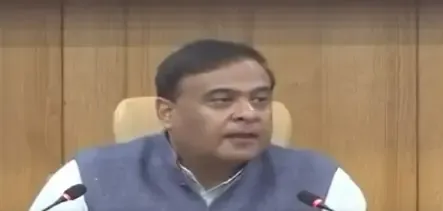
Assam Chief Minister Himanta Biswa Sarma has endorsed PM Narendra Modi's announcement of a High-Level Committee to study illegal infiltration and demographic change nationwide, saying the panel — to function under Home Minister Amit Shah — will strengthen national security and protect indigenous communities in border states.
Key Takeaways
CM Himanta Biswa Sarma publicly backed a High-Level Committee announced by PM Narendra Modi to study demographic change across India.
The committee will function under the supervision of Union Home Minister Amit Shah and is expected to present concrete solutions.
CM Sarma described illegal infiltration as a national — not merely state-level — challenge affecting security, cultural identity and social balance.
Assam 's history with the Assam Accord (1985) and the NRC (published 2019) makes it the most directly affected state in this debate.
The initiative is framed as a protection measure for indigenous communities, tribal groups and original residents of border states.
The committee's composition, mandate and timeline are yet to be formally announced.
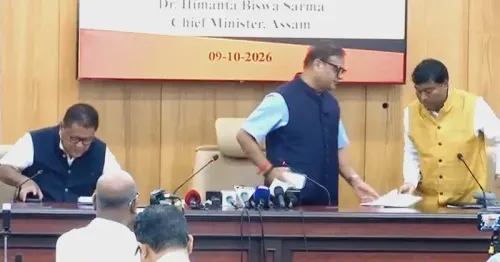
Assam Chief Minister Himanta Biswa Sarma on Tuesday, 26 May 2026, publicly backed a High-Level Committee announced by Prime Minister Narendra Modi to study abnormal demographic changes across India, calling it a 'visionary and decisive step' in addressing illegal infiltration as a national security challenge.
Context
Posting in Hindi on X, CM Sarma stated that illegal infiltration and abnormal demographic change are not confined to any single state but are a 'serious matter linked to India's national security, cultural identity and social balance' ('राष्ट्रीय सुरक्षा, सांस्कृतिक पहचान और सामाजिक संतुलन से जुड़ा गंभीर विषय'). He said the proposed committee, to function under the supervision of Union Home Minister Amit Shah, would study abnormal demographic shifts taking place across the country and present concrete solutions.
Assam has faced documented pressures from cross-border migration since the 1970s, making it the state most directly associated with this debate at the national level. CM Sarma specifically noted that the initiative would help protect 'cultural heritage, tribal communities and the rights of indigenous residents' of the state.
Policy Backdrop
The concern over illegal immigration in Assam has a formal legislative and administrative history stretching back four decades. The Assam Accord of 1985 set 24 March 1971 as the cut-off date for identifying and deporting illegal immigrants, and the National Register of Citizens (NRC) — updated between 2015 and 2019 — was designed to operationalise that commitment.
The Citizenship Amendment Act (CAA) of 2019 added a parallel track by creating a fast-route to citizenship for non-Muslim migrants from Afghanistan, Bangladesh and Pakistan who entered India before 2014. Border fencing along the India–Bangladesh frontier has also been an ongoing central government project. The proposed High-Level Committee would represent a shift from these state-specific or community-specific tools toward a comprehensive, country-wide policy study.
Stakeholders and Impact
Indigenous Assamese communities and tribal groups across the Northeast are the constituencies most directly referenced in CM Sarma's statement. These groups have long argued that unchecked demographic change threatens land rights, linguistic identity and political representation in border districts.
Residents of other border states — including West Bengal, Tripura and Meghalaya — are also stakeholders in any national-level framework that emerges from the committee's findings. The elevation of the issue to a central government body under Home Minister Shah's oversight signals that the BJP-led government intends to move beyond piecemeal state-level responses.
What's Next
The immediate questions are the committee's formal composition, its terms of reference and the timeline it has been given to submit recommendations. Any report it produces could feed into central legislation, amendments to existing border-management protocols or new state-level action plans coordinated through the North-East Democratic Alliance (NEDA), which CM Sarma convenes.
If the committee's recommendations are tabled in Parliament, they would likely reignite debate over citizenship, border security and demographic data — issues that have consistently shaped electoral and policy discourse in Northeast India and beyond.
Point of View
CM Sarma is helping the BJP nationalise a concern that has historically been confined to Northeast India's electoral politics. The invocation of Home Minister Amit Shah's oversight lends institutional weight to what could otherwise be dismissed as a political signal. If the committee produces actionable recommendations, it would mark a significant escalation from the state-centric NRC model to a pan-India demographic-security framework — one with potentially wide legislative consequences. The timing also reinforces CM Sarma's role as the BJP's key interlocutor for Northeast concerns on the national stage.
NationPress
10 Oct 2026
Frequently Asked Questions
What is the High-Level Committee on demographic change announced by PM Modi?
Prime Minister Narendra Modi announced a High-Level Committee to study abnormal demographic changes and illegal infiltration across India. According to CM Himanta Biswa Sarma, the committee will function under Home Minister Amit Shah's supervision and is expected to present concrete policy solutions. Its formal composition and terms of reference are yet to be officially released.
Why is Assam particularly concerned about illegal immigration and demographic change?
Assam has faced documented cross-border migration pressures since the 1970s. The Assam Accord of 1985 set 24 March 1971 as the cut-off for identifying illegal immigrants, and the National Register of Citizens updated in 2019 was designed to implement that commitment. Indigenous communities and tribal groups in the state have long raised concerns about land rights, cultural identity and political representation.
What did CM Himanta Biswa Sarma say about the new committee?
CM Sarma called the committee a 'visionary and decisive step,' saying illegal infiltration and demographic change are not just Assam's problem but a serious issue linked to India's national security, cultural identity and social balance. He expressed confidence that the committee would play a major role in securing India's future.
What is the NRC and how does it relate to this committee?
The National Register of Citizens (NRC) is an Assam-specific citizenship registry updated between 2015 and 2019 to identify illegal residents under the Assam Accord framework. The proposed High-Level Committee is seen as an attempt to move beyond this state-level mechanism toward a comprehensive, country-wide policy study on demographic change.
What happens next after the High-Level Committee is formed?
The key developments to watch are the official announcement of the committee's membership, its terms of reference and its reporting timeline. Any recommendations it produces could lead to new central legislation, changes to border-management protocols, or coordinated state-level action plans, and would likely be debated in Parliament.