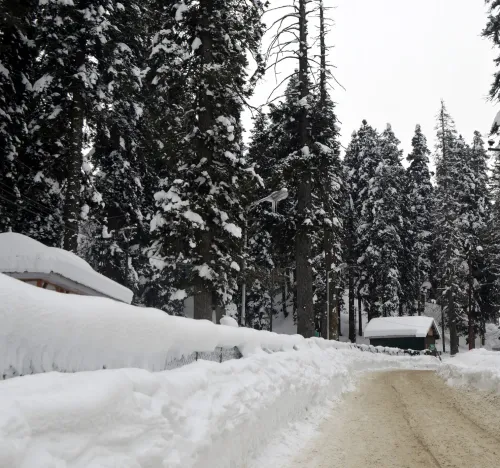
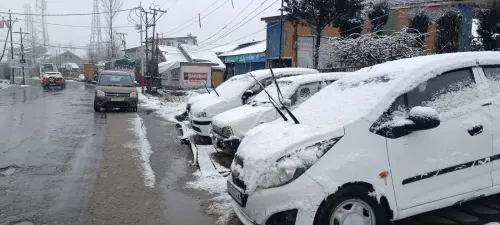
How is the weather impacting Jammu and Kashmir?
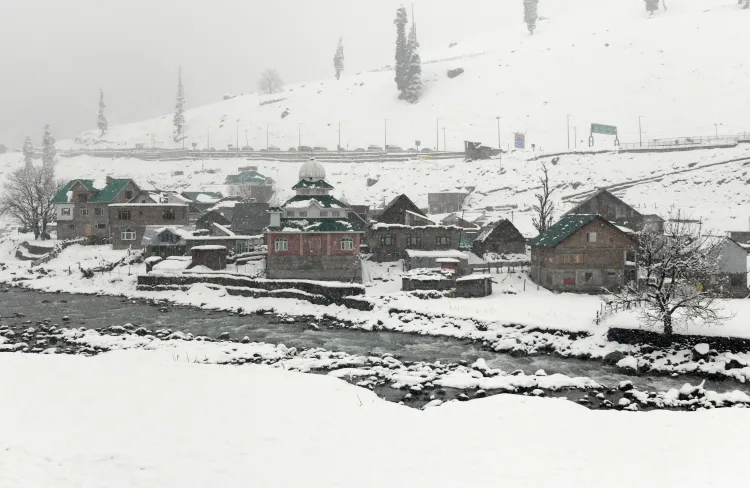
Synopsis
Srinagar has experienced a rise in temperatures due to overnight cloud cover, leading to rainfall and snowfall in Jammu and Kashmir. This weather change impacts agricultural operations and travel plans across the region. The Meteorological Department's forecasts indicate continued precipitation, emphasizing the need for caution among residents and travelers.
Key Takeaways
Minimum temperatures have risen above freezing in Srinagar.
Rain and snow are affecting travel and agricultural activities.
Precautions are advised for residents in avalanche-prone areas.
Expect continued precipitation in the coming days.
Travelers should check road conditions before setting out.
Srinagar, February 1 (NationPress) – A continuous cloud cover overnight has caused the minimum temperature in Srinagar to rise above freezing, coinciding with rainfall and snowfall across Jammu and Kashmir on Sunday. The city recorded a minimum temperature of 2 degrees Celsius, while renowned tourist spots Gulmarg and Pahalgam experienced temperatures of minus 7 and minus 1.4 degrees Celsius, respectively.
In Jammu, the minimum temperature was reported at 9.9 degrees Celsius, followed by Katra at 9.6, Batote at 4.2, Banihal at 2.4, and Bhaderwah at 0.9 degrees Celsius.
The daytime temperatures have seen an uptick in both the Valley and the Jammu division, with maximum temperatures reaching 10.8 degrees Celsius in Srinagar and 19.8 degrees Celsius in Jammu on Saturday.
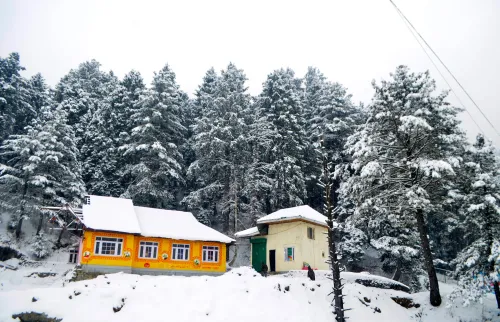
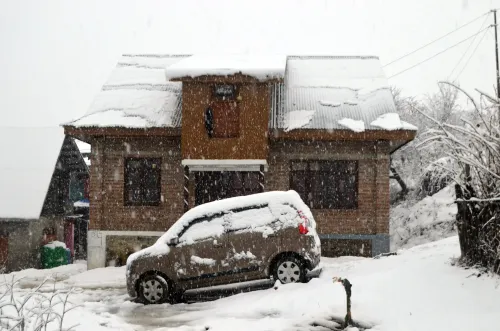
Over the past 12 hours, the region has witnessed rain and snow. The Meteorological (MeT) Department has predicted continued cloudy weather with rain and snow in elevated areas, alongside potential thunder and gusty winds in various locations. Forecasts for February 2 indicate light rain and snow at higher altitudes during the night, with scattered occurrences expected on February 3.
Farmers are advised to halt agricultural activities for the next six days, and residents in avalanche-prone areas of Kupwara, Bandipora, and Ganderbal districts should exercise extreme caution.
Travelers and transporters are urged to check with traffic department control rooms for the latest updates on the Srinagar-Jammu national highway before embarking on journeys.
Currently, the Srinagar-Leh road and the Mughal Road remain closed for vehicular traffic as snow-clearing operations are underway to restore these routes.
Despite enduring most of the 40 days of severe winter known locally as 'Chillai Kalan', which commenced on December 21 and concluded on January 30 without significant precipitation, the end witnessed moderate to heavy snowfall in the region.
This snowfall has brought joy to the locals, as it contributes to the longevity of water bodies during the hot summer months.
Point of View
I emphasize that the recent weather changes in Jammu and Kashmir warrant attention. With the rise in temperatures and ongoing precipitation, it's vital that the community remains informed and prepared. Farmers must heed warnings, and travelers should prioritize safety by checking road conditions. Our commitment is to provide accurate and timely updates for the benefit of all.
NationPress
18 Oct 2026
Frequently Asked Questions
What is the current weather condition in Jammu and Kashmir?
The current weather includes rain and snow with temperatures varying across regions, notably 2 degrees Celsius in Srinagar and colder in tourist destinations.
What precautions should residents take during this weather?
Residents, especially in avalanche-prone areas, should exercise caution and avoid unnecessary travel. Farmers are advised to suspend operations.
When will the weather improve?
The Meteorological Department forecasts light rain and snow in higher areas over the next few days, with no significant improvement expected immediately.