Record Women Voter Turnout in Assam, Kerala & Puducherry Elections 2026

Synopsis
April 9, 2026: The Assembly elections in Assam, Kerala, and Puducherry saw an extraordinary voter turnout, particularly among women, highlighting a significant democratic engagement. Explore the record-breaking statistics and the peaceful execution of the elections.
Key Takeaways
Record voter turnout: Assam 85.38%, Kerala 78.03%, Puducherry 89.83%.
Women voters: Surpassed men in all three regions.
Innovative voting initiatives: Introduced for improved voter experience.
Peaceful elections: Minimal disturbances reported.
Upcoming phases: Elections in Tamil Nadu and West Bengal on April 23.
Thiruvananthapuram/Guwahati/Puducherry, April 9 (NationPress) The Assembly elections held on Thursday in Assam, Kerala, and Puducherry witnessed an unprecedented voter turnout, with a remarkable number of women participating more than their male counterparts in exercising their right to vote.
The voting process was predominantly peaceful, supported by a significant presence of security forces, with only a few isolated incidents reported.
Assam and Puducherry achieved record-breaking voter participation, with turnout rates of 85.38% and 89.83%, respectively. Previously, the highest turnout in Assam had been 84.67% during the 2016 Assembly elections, while Puducherry saw 86.19% in 2011. Kerala reported a turnout of 78.03%.
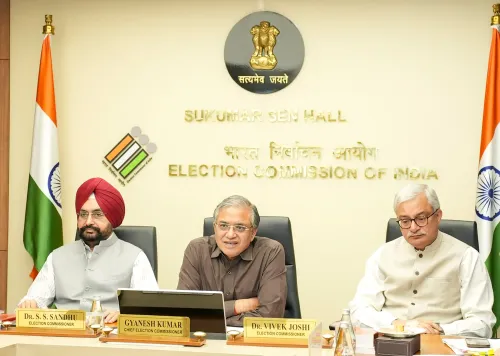
Chief Election Commissioner Gyanesh Kumar welcomed the high turnout in this initial phase of the Assembly elections, which may be the highest in five decades. He commended voters and election officials, noting that these impressive figures reflect a strong faith in democracy.
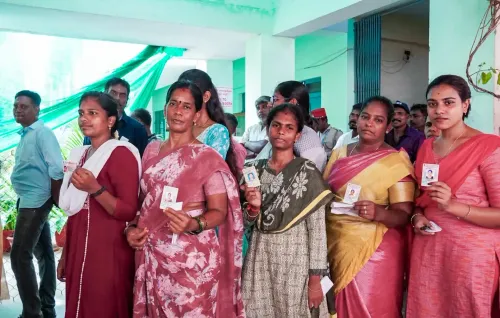
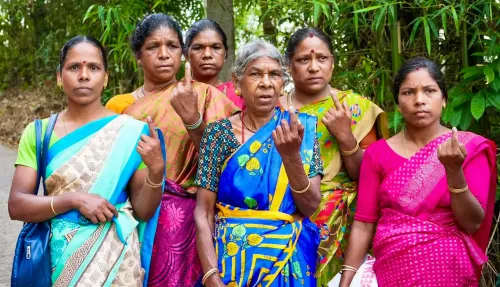
Notably, female voters surpassed their male counterparts in all three regions. In Assam, the turnout for women was 85.96%, compared to 84.80% for men. Kerala recorded 80.86% for women and 75.01% for men, while Puducherry had 91.33% for women and 88.09% for men. Puducherry also reported a remarkable turnout of 91.81% among electors from the third gender, compared to 36.84% in Assam and 91.81% in Kerala.
A total of 296 Assembly Constituencies across the two states and one Union Territory of Puducherry participated in this election, involving an electorate exceeding 5.31 crore. Additionally, by-elections were conducted in Bagalkot and Davanagere South in Karnataka, Koridang in Nagaland, and Dharmanagar in Tripura.
Voter-friendly initiatives introduced this election included clear color photographs of candidates on EVM ballot papers, a Mobile Deposit Facility (MDF), newly designed Voter Information Slips (VIS) for improved readability, and a limit of 1,200 electors per polling station.
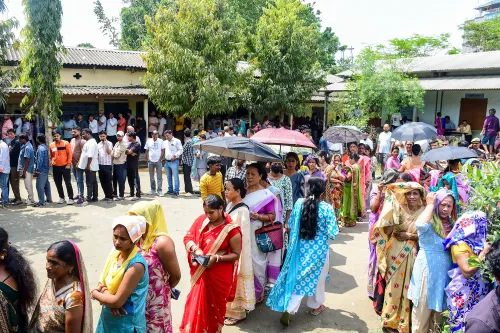
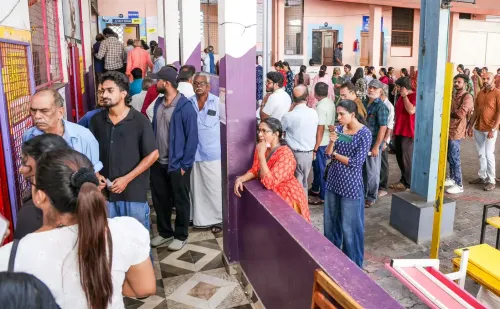
Throughout the day, turnout gradually increased after moderate participation in the morning, with long queues observed at various booths. Specially-abled individuals also actively participated in the voting process.
In a notable event, a recently married couple cast their votes at the HMT School polling station in Kalamasseri, Ernakulam, Kerala.
In Thiruvananthapuram, first-time voters received sweet treats from CEO Dr. Rathan U. Kelkkar as part of the Vote Sweetened Kerala campaign.
In Thrissur, a woman named Akshaya faced an initial setback when she was denied voting due to a bandage on her left index finger from an injury. However, the Chief Electoral Officer intervened and issued a written order allowing her to vote.
An unusual sight also surfaced on social media, showing a robot welcoming voters at the VOC Government School Higher Secondary School in Puducherry’s Raj Bhavan constituency. The robot, moving along a corridor, carried a tray of petals and greeted attendees, encouraging them to vote.
The election covered 140 seats in Kerala, 126 in Assam, and 30 in Puducherry during this phase. Upcoming polls in Tamil Nadu and West Bengal are scheduled for April 23, with vote counting set for May 4.
Election authorities, along with state governments, implemented extensive security measures—deploying paramilitary forces and local police reinforcements—along with model polling booths to ensure a smooth voting experience across urban and rural areas.
Efforts were concentrated on preventing booth capturing, intimidation, and illegal campaigning near polling sites. Only a few isolated disturbances were recorded throughout the day.
Reports primarily highlighted routine seizures of illegal materials, complaints regarding EVM malfunctions, and disruptions in queues, all followed by swift police action; no significant law and order issues were reported by evening.
Election officials emphasized the strict enforcement of the model code of conduct and swift resolution mechanisms, with special teams monitoring sensitive constituencies in Assam and urban areas in Kerala.
Assam saw high turnout from rural and tribal areas, with many booths witnessing long lines and palpable enthusiasm among first-time voters.
This election followed a mandatory silent period, characterized by a vibrant campaign filled with political flags, banners, and rallies focused on local issues such as migration, land rights, and development.
Voting occurred from 7 a.m. to 5 p.m., with individuals who were in line before closing allowed to cast their votes.
High-stakes narratives involving regional identity in Assam, development versus anti-incumbency in Kerala, and local issues in Puducherry contributed to robust voter turnout, supported by favorable weather and weekend scheduling in many districts.
While the National Democratic Alliance governments in both Assam and Puducherry seek re-election, Kerala's political landscape is defined by a contest between the incumbent Left Democratic Front, led by the Communist Party of India-Marxist, and the Congress-led United Democratic Front alliance.
Point of View
The impressive voter turnout in the Assembly elections across Assam, Kerala, and Puducherry signals a robust faith in democratic processes. The active participation of women voters is particularly noteworthy, marking a significant shift in electoral engagement. This trend deserves close attention as it shapes future political landscapes.
NationPress
23 Sept 2026
Frequently Asked Questions
What was the voter turnout in the recent elections?
Assam had a turnout of 85.38%, Kerala 78.03%, and Puducherry 89.83%, marking record participation.
How did women's voter turnout compare to men's?
Women outperformed men in voting, with Assam's women at 85.96% compared to men's 84.80%, and similar trends in Kerala and Puducherry.
What measures were taken to ensure a smooth voting process?
Election authorities implemented extensive security measures and introduced voter-friendly initiatives like mobile deposit facilities and clear ballot papers.
When will the counting of votes take place?
Counting of votes is scheduled for May 4, following the election phases in Tamil Nadu and West Bengal.
What were the key issues influencing voter turnout?
Key issues included regional identity in Assam, development versus anti-incumbency in Kerala, and local matters in Puducherry.