World Bank's Neelkanth Mishra slams India GDP critics as 'ill-educated and egregiously wrong'
Synopsis
A pointed public clash over India's GDP credibility: World Bank Executive Director Neelkanth Mishra, barely six weeks into his role, took to X to call out critics — apparently including former Finance Secretary Subhash Chandra Garg — who argued the 7.8% Q1 FY27 growth figure was a statistical sleight of hand. His rebuttal, backed by vehicle sales, credit, and tax data, reframes the debate as one of methodology literacy, not government manipulation.
Key Takeaways
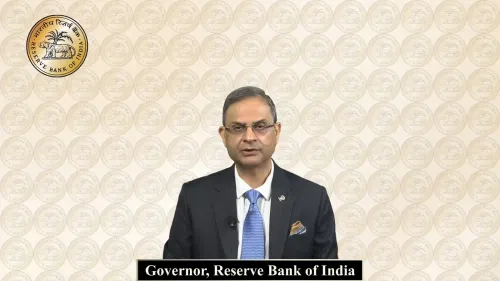
Neelkanth Mishra , India's World Bank Executive Director , called critics of India's 7.8% Q1 FY27 GDP growth figure 'ill-educated and egregiously wrong' in a post on X on 3 September .
His remarks were apparently aimed at former Finance Secretary Subhash Chandra Garg , who questioned the growth figure citing a base-year change.
The new GDP series, introduced in February 2026 , uses 2022–23 as the base year, replacing the old 2011–12 series; MOSPI says the two series cannot be directly compared.
High-frequency indicators cited by Mishra: personal vehicle dispatches up 35% YoY in August, commercial vehicle dispatches up more than 40% , two-wheeler growth above 20% .
Mishra acknowledged 'slack in the economy' reflected in weak real-wage growth, warning it may take 'several quarters of above-trend growth' to tighten.
Neelkanth Mishra, India's Executive Director at the World Bank, on Thursday, 3 September sharply rebuked critics who claimed that India's GDP growth of 7.8 per cent for Q1 FY27 (April–June 2026) was artificially inflated due to a change in the base year. Mishra, posting on social media platform X, called such assertions 'ill-educated and egregiously wrong,' in remarks that were apparently directed at former Finance Secretary Subhash Chandra Garg.
The Controversy at a Glance
Garg had publicly questioned the 7.8 per cent GDP growth figure, arguing that it warranted closer scrutiny because the base year used for the calculation had been revised. The crux of his argument: had the original June 2025 quarter base been retained, the growth number would have been significantly lower.
Mishra rejected that framing outright. He explained that the new GDP series, introduced in February 2026, 'cleaned up the data and also significantly improved the methodology.' He noted that for professionals who track national accounts closely, 'the downward revision in the base was known in March' — implying the revision was neither sudden nor opaque.
Why the Base-Year Change Is Valid
The Ministry of Statistics and Programme Implementation (MOSPI) has also weighed in, clarifying that Q1 FY27 GDP has been estimated using the new series with 2022–23 as the base year and therefore cannot be directly compared with the earlier figure of ₹86 lakh crore for Q1 FY26, which belonged to the old series anchored to 2011–12. A valid like-for-like comparison, MOSPI stated, must use the revised Q1 FY26 figure of ₹80 lakh crore under the new base. The government has specifically refuted the claim that the base was manipulated to make current-year growth appear stronger.
Mishra added that the new series 'increased credibility of estimates of real output,' framing the revision as a methodological upgrade rather than a political manoeuvre.
High-Frequency Data Backs the Growth Story
Beyond the statistical debate, Mishra pointed to a range of real-economy indicators to argue that the growth momentum is genuine. Personal vehicle dispatches — cars and SUVs — grew 35 per cent year-on-year in August, even after stripping out a relatively modest 9 per cent growth in exports. Two-wheeler growth exceeded 20 per cent, though aided by strong exports. Commercial vehicle dispatches surged more than 40 per cent.
'Tax collection growth has picked up meaningfully. This is as real as it gets,' Mishra wrote. He also highlighted that credit growth continues to surprise on the upside — though on a low base — and that construction indicators remain robust. He noted that last year's weak credit growth, widely attributed to a demand shortfall, was in his view a supply-side problem that 'has for now been addressed.'
Slack Remains Despite Strong Numbers
Mishra was not entirely sanguine. He acknowledged that 'there is still a slack in the economy, as seen in weak real-wage growth.' He cautioned that it may take 'several quarters of above-trend growth' for that slack to tighten and for sticky inflation pressures to return. On private investment, he noted that mounting evidence of capital expenditure should quiet those who have been asking why private sector investment remains weak.
Broader Implications
This exchange reflects a recurring tension in India's economic discourse: how to assess growth figures when statistical series are periodically revised. The debate over base-year changes is not new — similar controversies arose during the 2015 revision from 2004–05 to 2011–12 as the base year. Notably, Mishra himself was, until recently, a prominent private-sector economist tracking these very metrics before his appointment to the World Bank. His intervention carries the weight of both institutional authority and technical familiarity with the data. How the government and independent economists navigate this credibility contest will shape how India's growth story is received globally in the quarters ahead.
Point of View
Which makes his dismissal of the base-year critique harder to brush aside as official spin. Yet the underlying concern is legitimate: India has now changed its GDP base year twice in a decade, and each revision has generated political controversy precisely because the methodology changes and the political incentives are never fully separable. The real gap in this debate is independent, real-time verification of the high-frequency indicators Mishra cites — vehicle dispatches and tax collections are suggestive, not conclusive. Until India builds a more transparent, arm's-length statistical architecture, these credibility contests will recur every time a strong number lands.
NationPress
3 Sept 2026
Frequently Asked Questions
What did Neelkanth Mishra say about India's GDP growth critics?
Mishra, India's Executive Director at the World Bank, called critics who argued India's 7.8% Q1 FY27 GDP growth was inflated 'ill-educated and egregiously wrong' in a post on X on 3 September. He defended the new GDP series as a genuine methodological improvement, not a manipulation of the base year.
Why did Subhash Chandra Garg question India's 7.8% GDP growth figure?
Former Finance Secretary Subhash Chandra Garg argued that the GDP growth figure needed closer scrutiny because the base year used for calculation had changed. He suggested that using the original June 2025 quarter base would have produced a much lower growth number.
What is the new GDP base year and why was it changed?
India's new GDP series, introduced in February 2026, uses 2022–23 as the base year, replacing the earlier 2011–12 base. MOSPI has clarified that the two series are not directly comparable, and that the revised Q1 FY26 figure of ₹80 lakh crore — not the old ₹86 lakh crore — is the valid comparator for Q1 FY27.
What real-economy data did Mishra cite to support the GDP growth figure?
Mishra pointed to personal vehicle dispatches growing 35% year-on-year in August, commercial vehicle dispatches rising more than 40%, two-wheeler growth exceeding 20%, strong tax collection growth, and robust construction indicators. He said credit growth also continues to surprise on the upside.
Did Mishra acknowledge any weaknesses in India's economic outlook?
Yes. Mishra noted that 'there is still a slack in the economy, as seen in weak real-wage growth,' and cautioned that it may take several quarters of above-trend growth before that slack tightens and inflationary pressures return.