CM Mohan Yadav Pitches Simhastha-2028 as Sanatan Mahaparv

Synopsis
Madhya Pradesh Chief Minister Dr. Mohan Yadav has described Simhastha-2028 in Ujjain as a mahaparv of Sanatan culture, pledging an unprecedented organisation that centuries will remember. He linked the 12-yearly Kumbh on the Kshipra to the Viksit Madhya Pradesh vision and projected it as a global spiritual and developmental showcase.
Key Takeaways
CM Mohan Yadav called Simhastha-2028 a 'mahaparv of Sanatan culture' in a post on 3 June 2026.
The event is the 12-yearly Kumbh held on the Kshipra river in Ujjain, Madhya Pradesh.
The 2016 Simhastha in Ujjain drew an estimated five crore pilgrims.
Kumbh Mela was inscribed by UNESCO in 2017 as Intangible Cultural Heritage of Humanity.
The post ties the mela to the #ViksitMadhyaPradesh development pitch.
Infrastructure, riverfront and transport upgrades in Ujjain are expected in the run-up to 2028.
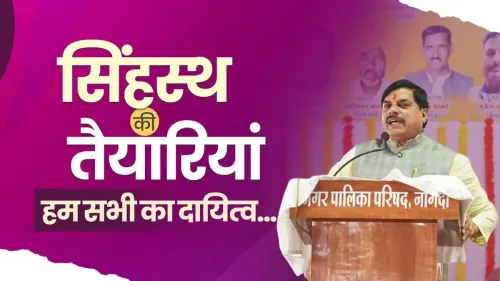
Madhya Pradesh Chief Minister Dr. Mohan Yadav on Wednesday, 3 June 2026, framed the upcoming Simhastha-2028 at Ujjain as a 'mahaparv of Sanatan culture' and pledged an 'unprecedented' organisation that 'centuries will remember'. In a post on X tagged #ViksitMadhyaPradesh, the chief minister linked the once-in-12-years pilgrimage to the state's wider development pitch and positioned it as a global spiritual draw.
'India's social fabric, spirituality and contemplative tradition are otherworldly,' Dr. Yadav wrote, adding that 'devotees and citizens coming from across the world will find here a new vision of life'. The accompanying video underscored the government's intent to project the 2028 gathering as both a religious milestone and a showcase of state capacity.
Context
The Simhastha Kumbh Mela is one of four Kumbh observances in India, held on the banks of the Kshipra river in Ujjain every 12 years. The previous edition in 2016 drew an estimated five crore pilgrims to the temple city, making it among the largest religious congregations the state has hosted.
Ujjain, home to the Mahakaleshwar Jyotirlinga, occupies a central place in Shaivite tradition and has been a node of pilgrimage for centuries. The chief minister's framing of Simhastha-2028 as a 'mahaparv' draws on that lineage while signalling a sharper political-cultural emphasis under the current administration.
Policy backdrop
The Kumbh Mela was inscribed by UNESCO in 2017 as an Intangible Cultural Heritage of Humanity, a recognition that successive state governments have used to scale up planning and international outreach. Dr. Yadav, who took charge as chief minister in December 2023, has consistently linked religious tourism to the broader Viksit Bharat and Viksit Madhya Pradesh frameworks.
The state's approach mirrors a wider trend of treating Kumbh-class events as platforms that combine spiritual outreach with infrastructure-led growth. Roads, sanitation, ghats and crowd-management systems built for such melas typically remain civic assets long after the pilgrimage ends.
Stakeholders and impact
For pilgrims and akharas, the chief minister's early framing signals that the state intends to engage seers and traditional stakeholders well in advance. For Ujjain residents, the run-up to 2028 is likely to mean sustained construction activity, land-use decisions and a temporary reordering of city life.
The tourism and hospitality sector across Madhya Pradesh stands to gain from anticipatory investment in hotels, homestays and transport. Smaller temple towns on the Kshipra and Narmada circuits could see spillover footfall as itineraries expand around the main bathing dates.
What's next
Attention now turns to formal notifications on bathing dates, the constitution of the mela authority, and budget allocations from both the state and the Centre. Riverfront works on the Kshipra, road widening in and around Ujjain, and upgrades to rail and air connectivity are expected to dominate the preparatory phase.
Dr. Yadav's promise that the event will be 'remembered for centuries' sets a high public benchmark. How the administration translates that rhetoric into delivery — on crowd safety, environmental management and pilgrim experience — will shape both the legacy of Simhastha-2028 and the political dividend the ruling dispensation hopes to draw from it.
Point of View
High-pitch framing of Simhastha-2028 reflects a now-familiar template in which Indian states use Kumbh-class events as both spiritual showcases and infrastructure accelerators. By yoking the mela to the Viksit Madhya Pradesh slogan, Dr. Yadav is signalling that cultural soft power and development politics are meant to move together. The bar he has set — an event 'centuries will remember' — is rhetorically powerful but operationally demanding. Execution on crowd safety, river health and pilgrim experience will determine whether the political messaging holds up.
NationPress
14 Sept 2026
Frequently Asked Questions
When will Simhastha 2028 be held in Ujjain?
Simhastha-2028 will be held in Ujjain, Madhya Pradesh, as part of the 12-yearly Kumbh cycle on the Kshipra river. Exact bathing dates are yet to be formally notified by the state government.
What did CM Mohan Yadav say about Simhastha-2028?
Dr. Mohan Yadav called Simhastha-2028 a 'mahaparv of Sanatan culture' and said the organisation will be unprecedented and remembered for centuries. He linked it to the Viksit Madhya Pradesh development vision.
Where is the Simhastha Kumbh Mela held?
The Simhastha Kumbh Mela is held in Ujjain, Madhya Pradesh, on the banks of the Kshipra river. Ujjain is one of the four traditional Kumbh sites in India.
How many pilgrims attended the last Ujjain Simhastha?
The last Simhastha Kumbh Mela in Ujjain, held in 2016, drew an estimated five crore pilgrims. It remains one of the largest religious gatherings hosted by Madhya Pradesh.
Why is Kumbh Mela considered globally significant?
Kumbh Mela was inscribed by UNESCO in 2017 as an Intangible Cultural Heritage of Humanity. The recognition acknowledged its spiritual depth, scale and centuries-old social traditions.