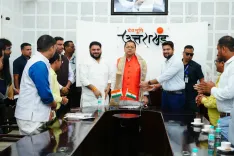
Yadav Hands Over First PRAMAAN Forest Certificates in New Delhi
Synopsis
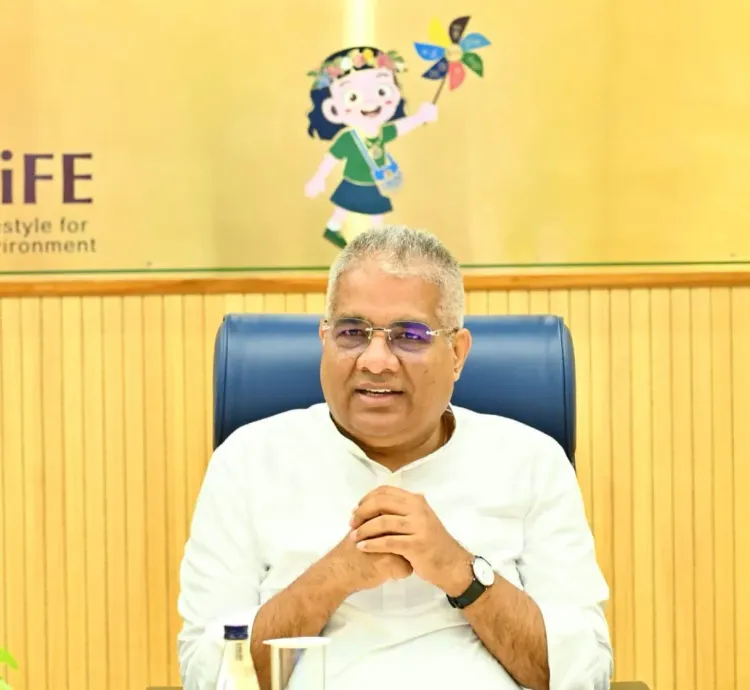
Union Environment Minister Bhupender Yadav presented India's first PRAMAAN certificates under the Indian Forest and Wood Certification Scheme in New Delhi on 29 September 2026 — to Andhra Pradesh's state forest corporation for 33,000 hectares and to an Odisha bamboo farmer, opening premium market access for forest-dependent communities.
Key Takeaways
India's first PRAMAAN certificates under the Indian Forest and Wood Certification Scheme (IFWCS) were handed over on 29 September 2026 in New Delhi.
The Andhra Pradesh Forest Development Corporation (APFDC) was certified for sustainably managed plantations across 33,000 hectares .
Shri Govind Mohapatra , a smallholder farmer affiliated with the Odisha Bamboo Development Agency , received the scheme's first individual producer certificate.
The scheme is designed to connect rural, tribal, and forest-dependent communities to premium and compliant markets without increasing the compliance burden on small producers.
The event was organised by the Indian Institute of Forest Management (IIFM), Bhopal , an autonomous institute under the Ministry of Environment.
Minister Yadav linked PRAMAAN to India's Viksit Bharat@2047 goal of combining economic growth with ecological stewardship.
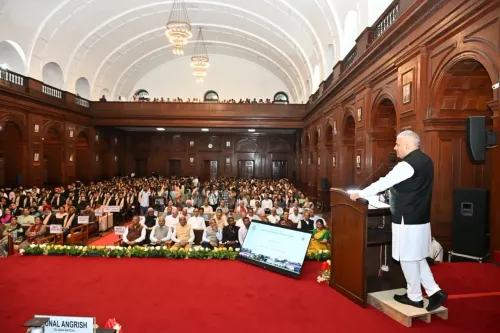
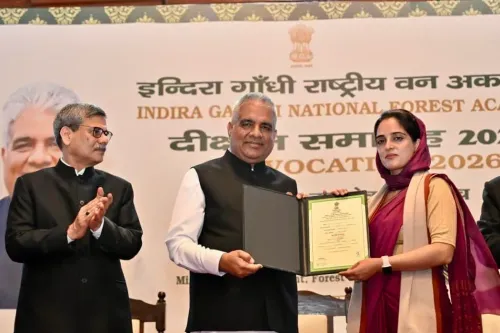
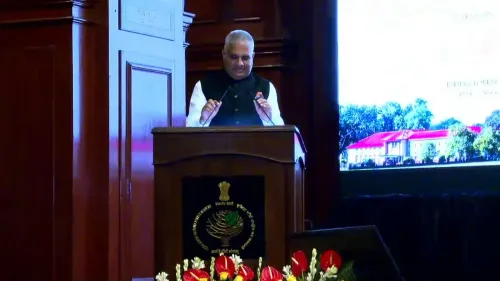
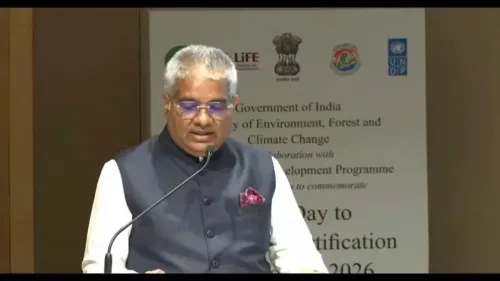
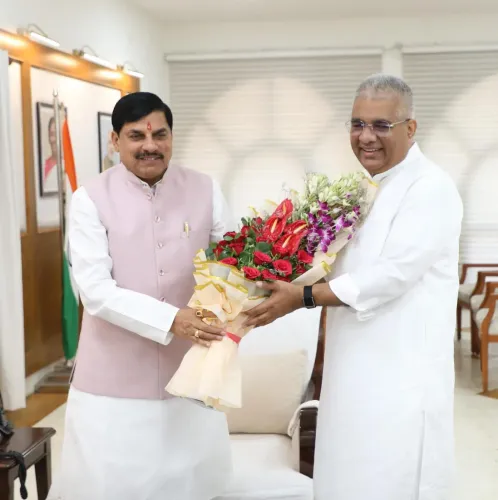
A 33,000-hectare plantation in Andhra Pradesh and a single bamboo farmer from Odisha walked into Indian forestry history on Tuesday, 29 September 2026 — the first two recipients of the PRAMAAN certificate under India's new Indian Forest and Wood Certification Scheme (IFWCS). Union Environment Minister Bhupender Yadav presented the inaugural certificates at an event in New Delhi organised by the Indian Institute of Forest Management (IIFM), Bhopal, signalling a structural shift in how India values and markets its forest resources.
Who got the first certificates — and why it matters
The Andhra Pradesh Forest Development Corporation (APFDC) received its PRAMAAN certificate for sustainably managed plantations spanning 33,000 hectares — a scale that immediately establishes the scheme's institutional credibility. Alongside it, Shri Govind Mohapatra, a smallholder farmer linked to the Odisha Bamboo Development Agency (OBDA), received a certificate that signals something equally important: this is not a scheme built only for large state corporations.
The pairing is deliberate. Placing a state corporation and a single rural farmer on the same inaugural stage sends an unambiguous message about who PRAMAAN is designed for — tribal communities, forest-dependent households, and smallholder growers who have historically been locked out of premium, compliance-driven wood and bamboo markets.
What PRAMAAN actually unlocks for rural producers
Under the IFWCS framework, a PRAMAAN certificate verifies that forests and plantations are managed in accordance with ecological standards — making certified wood and bamboo eligible for premium-priced markets, both domestic and potentially international. Minister Yadav underlined that the scheme is designed to 'open new income pathways to compliant and premium markets without adding to the compliance burden on producers.'
That last clause matters enormously at the grassroots level. Forest-dependent communities and small farmers have long found that certification systems — however well-intentioned — arrive with paperwork loads they cannot absorb. The IFWCS is explicitly framed as structured and verifiable while staying accessible, though the real test will come as more producers apply.
PRAMAAN, Viksit Bharat, and India's forest policy arc
India's forest policy lineage runs deep. The National Forest Policy 1988 first embedded community participation in sustainable forest management. The Forest Rights Act 2006 granted legal resource rights to tribal and traditional forest-dwelling communities. The Forest (Conservation) Amendment Act 2023 pushed further, actively encouraging private plantations and afforestation.
PRAMAAN sits at the convergence of all three threads — adding a market-linkage layer that was previously absent. By creating a certification trail, India also quietly advances its Paris Agreement commitments on carbon sequestration and biodiversity conservation: certified, verifiably sustainable forests are a measurable contribution to national climate targets.
Yadav framed the scheme explicitly within the Viksit Bharat@2047 vision — a developed India that does not trade ecological health for economic growth, but builds one through the other. The next signals to watch are state-level adoptions beyond Andhra Pradesh and Odisha, and whether India pursues mutual recognition with international frameworks such as the Forest Stewardship Council (FSC), which would open certified Indian wood to European and North American buyers.
India's forests have long been managed as a conservation obligation. PRAMAAN is the first serious attempt to make them a certified economic asset — for the people who live inside them.
Point of View
The government is signalling that the scheme's architecture is inclusive rather than institutional-only, addressing a long-standing criticism of certification systems in developing economies. If mutual recognition with international standards follows, India could position certified bamboo and timber as a climate-aligned export commodity — directly monetising its Paris Agreement commitments. The scheme's real credibility test, however, will be the pace of grassroots adoption and whether income gains for tribal and rural producers are independently tracked and published.
NationPress
29 Sept 2026
Frequently Asked Questions
What is the PRAMAAN certificate under IFWCS?
PRAMAAN is a forest and wood certification issued under India's Indian Forest and Wood Certification Scheme (IFWCS). It verifies that forests or plantations are managed sustainably, allowing certified producers to access premium domestic and international markets for wood and bamboo products.
Who received the first PRAMAAN certificates?
The first PRAMAAN certificates were presented to the Andhra Pradesh Forest Development Corporation (APFDC) for its plantations over 33,000 hectares, and to Shri Govind Mohapatra, a farmer associated with the Odisha Bamboo Development Agency (OBDA).
What is the Indian Forest and Wood Certification Scheme (IFWCS)?
IFWCS is a central government scheme under the Ministry of Environment, Forest and Climate Change that certifies sustainably managed forests and wood products. It aims to bring rural and tribal producers into structured, verifiable certification that opens access to compliant and premium markets.
How does PRAMAAN benefit tribal and rural communities?
PRAMAAN is designed to integrate smallholder farmers, tribal communities, and forest-dependent households into a structured certification system without adding heavy compliance burdens. Certification enables them to sell produce at premium prices in markets that require sustainability credentials.
What is the connection between PRAMAAN and Viksit Bharat 2047?
Union Environment Minister Bhupender Yadav described PRAMAAN as part of India's Viksit Bharat@2047 journey — the national vision of a developed India by 2047 that achieves economic growth while maintaining ecological stewardship, including meeting climate commitments under the Paris Agreement.