Yadav Highlights India's Shifting Energy Journey

Synopsis
Union Environment Minister Bhupender Yadav spotlighted India's evolving energy journey on X, invoking the country's COP26 pledges, the International Solar Alliance, and the National Green Hydrogen Mission as markers of a deliberate transition that balances clean-energy ambition with development realities.
Key Takeaways
Bhupender Yadav posted on October 13, 2026 highlighting India's 'changing energy journey,' sharing a video on the country's transition.
PM Modi pledged 500 GW of non-fossil fuel capacity by 2030 and net-zero emissions by 2070 at COP26 in Glasgow in 2021 .
India launched the National Green Hydrogen Mission in 2023 to position the country as a global green hydrogen production hub.
The International Solar Alliance , launched in 2015 , gives India multilateral leadership in solar energy across the Global South.
India continues to balance renewable expansion with coal use to meet rising electricity demand from industrial and rural growth.
The implementation pace of the Green Hydrogen Mission and renewable capacity additions remain key metrics ahead of the next budget cycle and COP.
India's energy story is being rewritten — and Union Environment Minister Bhupender Yadav wants the world to read it closely. On Tuesday, October 13, 2026, the senior BJP leader posted on X, flagging what he called 'Bharat ki badalti hui Energy Journey' — India's changing energy journey — accompanied by a video that underscores the scale of the country's ongoing transition away from fossil-fuel dependence.
From Glasgow Pledges to Ground Reality
The backdrop to Yadav's post is a set of commitments India has been racing to deliver on. At COP26 in Glasgow in 2021, Prime Minister Narendra Modi placed two numbers on the table that shifted the global climate conversation: 500 GW of non-fossil fuel electricity capacity by 2030, and net-zero emissions by 2070. Those pledges — part of what the government branded the 'Panchamrit' strategy — turned India from a passive recipient of climate pressure into an active architect of its own transition narrative.
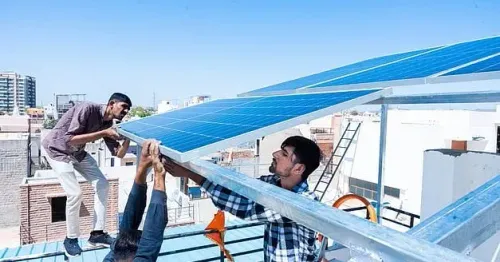
The minister's invocation of a 'changing journey' sits squarely within that arc. India has methodically expanded its renewable energy footprint — solar in particular — while simultaneously keeping coal in the mix to power surging industrial and rural electricity demand. It is a balancing act that defines the country's position in every international climate negotiation: development cannot be sacrificed at the altar of decarbonisation.
Solar, Hydrogen, and the Alliance India Anchors
Two pillars stand out in India's energy transition architecture. The International Solar Alliance, the India-led multilateral initiative launched in 2015, has positioned New Delhi as a convener of solar ambition across the Global South — giving the country diplomatic leverage that goes well beyond its domestic installations. Then, in 2023, the government launched the National Green Hydrogen Mission, a bid to make India a global production and export hub for green hydrogen — the fuel widely seen as critical for decarbonising heavy industry and long-haul transport.
Together, these initiatives reflect a deliberate strategy: frame India's energy transition not merely as a compliance exercise under the Paris Agreement, but as an economic opportunity and a geopolitical play for clean-energy leadership.
Coal's Shadow and the Honest Arithmetic
The 'changing journey' framing is powerful — but honest storytelling demands the full picture. Coal-dependent states remain deeply invested in the fuel for jobs, revenue, and grid stability. Renewable capacity additions have been impressive, yet the absolute demand for electricity is climbing fast enough that coal consumption has not meaningfully declined. India's energy transition is real and accelerating, but it is running alongside continued fossil-fuel use, not replacing it overnight.
That tension — ambition versus arithmetic — is precisely what makes every ministerial signal worth watching. As upcoming budget sessions and the next COP cycle approach, the pace of green hydrogen implementation and the trajectory of renewable additions will tell whether the 'changing journey' is gathering speed or holding steady.
India's energy transition has the pledges, the missions, and now the narrative. The next chapter depends on whether the numbers keep up with the story.
Point of View
Reinforcing the BJP government's 'India as climate leader' positioning before international audiences. It reflects a broader communications strategy that frames the energy transition as a national achievement story rather than an externally imposed obligation. The tension between the country's ambitious renewable targets and its continued reliance on coal, however, is the fault line every analyst will probe. Whether the ministerial narrative is matched by on-ground capacity data will shape India's credibility at the negotiating table.
NationPress
13 Oct 2026
Frequently Asked Questions
What is India's energy transition target by 2030?
India has pledged to achieve 500 GW of non-fossil fuel electricity capacity by 2030 , a commitment made by PM Modi at COP26 in Glasgow in 2021 as part of the Panchamrit strategy.
What is India's net-zero emissions target?
India has committed to reaching net-zero carbon emissions by 2070 , a target announced by Prime Minister Narendra Modi at the 2021 Glasgow climate summit .
What is the National Green Hydrogen Mission?
The National Green Hydrogen Mission , launched in 2023 , aims to scale up production and use of green hydrogen in India, positioning the country as a global hub for this clean fuel.
What is the International Solar Alliance and India's role in it?
The International Solar Alliance is an India-led global initiative launched in 2015 to accelerate solar energy adoption, giving New Delhi significant diplomatic influence in global clean-energy discussions.
Why does India still use coal despite its renewable energy push?
India retains coal for energy security and to meet rapidly rising electricity demand from industrial and rural growth, even as it aggressively expands renewable capacity — a balancing act central to its climate and development policy.