Bhupender Yadav: Science and Technology Must Serve Humanity
Synopsis
Union Environment Minister Bhupender Yadav posted on X that India's core belief is that science and technology must serve humanity — a statement rooted in India's S&T policy tradition and its advocacy for equitable climate technology at global forums.
Key Takeaways
Bhupender Yadav , Union Environment Minister, declared on October 27, 2026 that India views science and technology as instruments to serve humanity.
The statement aligns with India's Science, Technology and Innovation Policy 2020 , which stressed inclusive development as the goal of S&T.
India has consistently advocated at multilateral forums that climate and environmental technologies must be accessible to developing nations.
The framing carries specific weight coming from the minister overseeing the Ministry of Environment, Forest and Climate Change , where technology transfer is a live policy issue.
Indian institutions such as ISRO and CSIR labs have increasingly oriented missions toward measurable public impact, reflecting this philosophy in practice.
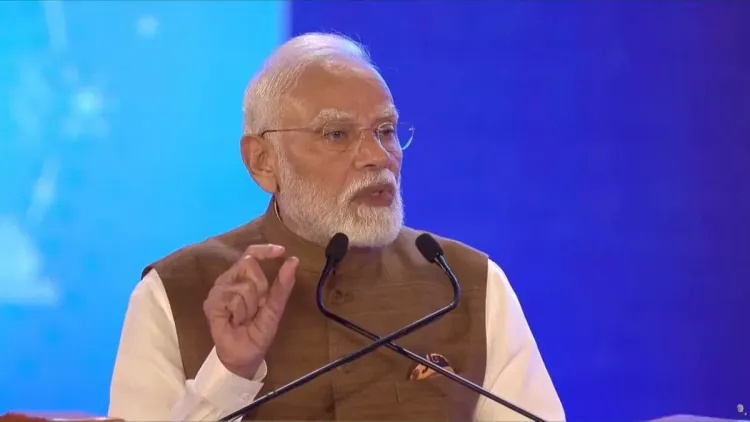
India's philosophy on science and technology is not just about innovation — it is about purpose. Union Environment Minister Bhupender Yadav stated this sharply on Tuesday, October 27, 2026, posting on X that India's conviction is clear: science and technology are instruments in service of humanity.
In his post, Yadav wrote: 'भारत की सोच है - Science और Technology मानवता की सेवा का माध्यम है।' — 'India's belief is that Science and Technology are a means to serve humanity.'
A Principle Rooted in India's Innovation Policy
This is not a new chord — but it is one India has struck with growing confidence. India's Science, Technology and Innovation Policy 2020 explicitly anchored S&T within the framework of inclusive development and addressing societal challenges. The philosophy: breakthroughs matter most when they reach the last mile, not just the laboratory. Yadav's framing extends that logic beyond domestic borders. At multilateral climate and technology forums, India has consistently argued that cutting-edge environmental technologies must be accessible to developing nations — that ethical innovation cannot be a privilege of the wealthy. For a minister who sits at the intersection of environment and climate action, 'humanity's service' carries a very specific weight.Why the Environment Ministry's Voice Matters Here
The statement lands with added significance coming from the head of the Ministry of Environment, Forest and Climate Change. Climate technology — clean energy transitions, carbon capture, climate-resilient agriculture — is precisely the domain where the gap between scientific capability and human benefit is most consequential. India's position at global forums has long been that technology transfer to the Global South is not charity; it is a shared obligation. Yadav's post is a crisp articulation of that moral frame. Science without equity, the argument goes, is incomplete science. India's scientific institutions — from ISRO to the network of IITs and CSIR labs — have increasingly been directed toward missions with measurable public impact: affordable vaccines, space-based crop monitoring, air quality tracking. The minister's words reflect a governance philosophy that judges technological success not by patents filed, but by lives improved. The real test of this philosophy will come in how the environment ministry integrates it into programme design and upcoming science budget deliberations. Words are a start — delivery is the measure.Point of View
People-first framework rather than a purely competitive one. For the BJP government, it serves a dual purpose: domestically, it frames the administration's S&T investments as welfare-oriented; internationally, it reinforces India's longstanding argument that global technology governance must prioritise equity and access for the developing world. Coming from the environment minister, it also subtly pressures developed nations on climate technology transfer — a perennial friction point in climate negotiations. The real policy test is whether this stated philosophy translates into concrete budget allocations and ministry programme design in the months ahead.
NationPress
27 Oct 2026
Frequently Asked Questions
What did Bhupender Yadav say about science and technology?
Bhupender Yadav posted on X that India's belief is that science and technology are a means to serve humanity — framing S&T as tools of public welfare, not just national advancement.
What is India's Science Technology and Innovation Policy 2020?
India's Science, Technology and Innovation Policy 2020 directed scientific research toward inclusive development and societal challenges, emphasising that innovation must benefit all sections of society.
Why is Bhupender Yadav's statement significant for climate technology?
As Union Environment Minister, Yadav's framing directly connects to India's position in global climate negotiations, where India argues that advanced environmental technologies must be transferred to developing nations as a matter of shared obligation.
What Indian institutions reflect the 'science for humanity' philosophy?
Institutions like ISRO, the IITs, and CSIR laboratories have increasingly oriented their work toward public-impact missions — from affordable healthcare to space-based agricultural monitoring — embodying the principle Yadav articulated.
Is Bhupender Yadav a senior BJP leader?
Yes. Bhupender Yadav is a senior BJP leader and serves as Union Minister of Environment, Forest and Climate Change in the Indian government.