Yogi Adityanath launches weekly Chaupals at block level to fix IGRS, CM Helpline complaints
Synopsis
Yogi Adityanath's weekly Chaupal order is more than a grievance-redressal tweak — it is a direct signal to district bureaucracy that IGRS and CM Helpline complaints will no longer be rubber-stamped as closed. Paired with sweeping Bakrid and Ganga Dussehra directives covering namaz sites, animal sacrifice locations, and illegal slaughterhouses, the review meeting reveals an administration tightening its grip ahead of a politically sensitive festival season.
Key Takeaways
CM Yogi Adityanath ordered weekly 'Chaupals' at every development block in Uttar Pradesh to resolve public grievances from IGRS and CM Helpline .
District-level officials' attendance at Chaupals has been made mandatory ; a detailed SOP is to be issued at the government level.
On Bakrid , animal sacrifice in public places is banned ; Namaz must be offered only at traditional sites — road-blocking not permitted.
Flag marches ordered in sensitive districts including Aligarh , Bijnor , Saharanpur , Rampur , and Sambhal ahead of festivals.
A zero-tolerance drive launched against illegal mining and vehicles without number plates; action against the land mafia to be intensified.
Under the Gyan Bharatam Mission , 1.2 million manuscripts across UP have been identified and catalogued so far.
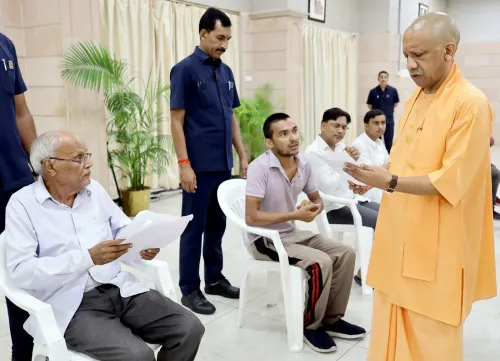
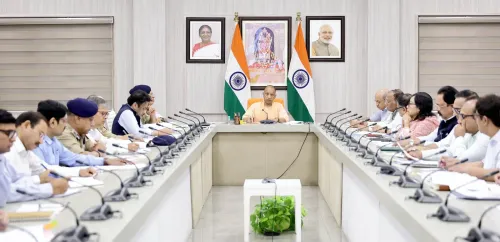
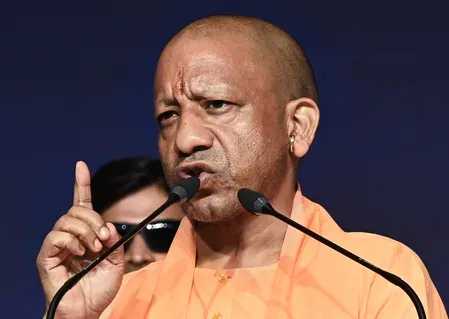
Uttar Pradesh Chief Minister Yogi Adityanath has ordered the launch of weekly 'Chaupals' at every development block across the state, aimed at ensuring time-bound resolution of public grievances received through the Integrated Grievance Redressal System (IGRS) and the CM Helpline. The directive was issued during a law-and-order and administrative review meeting conducted via video conferencing on Sunday, 25 May 2025, with senior officials across all divisions attending.
What the Chaupal System Entails
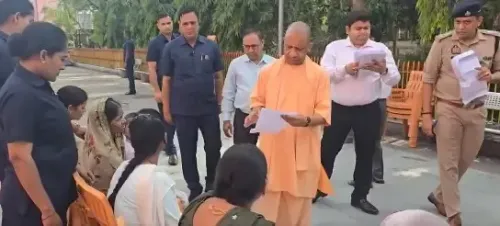
The block-level Chaupals are designed to bring government closer to citizens by addressing disputes that often remain unresolved at the local level — including revenue-related conflicts, domestic violence, extortion, and unregistered police complaints. Eligible beneficiaries who have been excluded from government welfare schemes will also be enrolled through these sessions.
The Chief Minister directed that a detailed Standard Operating Procedure (SOP) be issued at the government level for conducting these Chaupals. Attendance by district-level officials has been made mandatory. Adityanath emphasised that the objective is not a mere formal closure of complaints, but ensuring that the aggrieved party receives actual, tangible relief.
Festival Security: Bakrid and Ganga Dussehra Directives
With Ganga Dussehra and Bakrid (Eid al-Adha) approaching, the Chief Minister issued explicit security and conduct guidelines. He stated that animal sacrifice will not be permitted in public places on Bakrid and that a complete ban on the sacrifice of prohibited animals will be enforced. Sacrifices are to be conducted exclusively at pre-designated sites.
He further directed that Namaz be offered only at traditional sites, and that permission to offer Namaz by blocking roads or public thoroughfares must not be granted under any circumstances. A structured waste disposal system following ritual sacrifices must be put in place in every district. The open sale of meat is to remain prohibited, and illegal slaughterhouses must not be allowed to operate. Even licensed slaughterhouses must not exceed prescribed animal capacity.
The Chief Minister directed flag marches in sensitive areas ahead of the festivals and continuous foot patrolling around religious sites. He personally interacted with District Magistrates and Superintendents of Police of sensitive districts including Aligarh, Bijnor, Saharanpur, Rampur, and Sambhal, directing that past incidents be analysed and preventive action taken against potential disruptive elements.
Ganga Ghat Preparations and Heatwave Safety
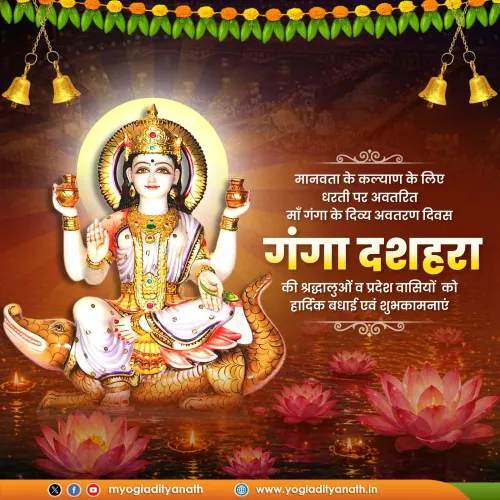
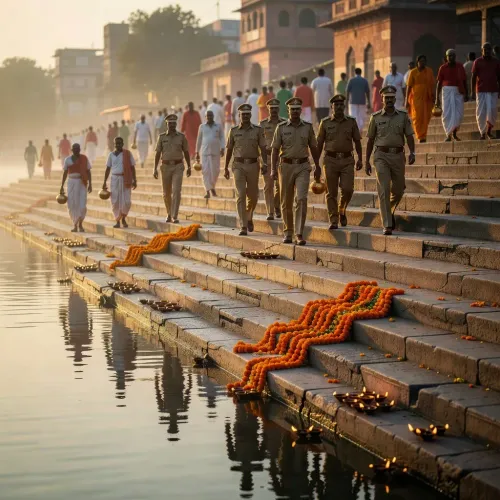
Reviewing Ganga Dussehra arrangements, Adityanath directed officials in Prayagraj, Varanasi, Ayodhya, Chitrakoot, Hapur, Muzaffarnagar, and Amroha to ensure proper sanitation, barricading, ambulance deployment, shade provision, and parking management at Ganga ghats. Given the intense heat, the safety and comfort of devotees was accorded the highest priority.
Zero-Tolerance on Illegal Mining, Road Safety, and Land Mafia
The Chief Minister issued orders for a special drive against vehicles without number plates and directed the constitution of task forces to take the strictest action against illegal mining. He explicitly instructed officials to act under a zero-tolerance policy, free from external pressure or recommendations, while cautioning that common citizens must not be harassed in the name of investigations.
Action against the land mafia is to be intensified further. He also directed that immediate appointments be made in districts where the post of Chief Medical Officer (CMO) is currently vacant.
Gyan Bharatam Mission Update
During the meeting, Chief Secretary reported that under the 'Gyan Bharatam Mission', 1.2 million manuscripts across Uttar Pradesh have been identified and catalogued to date. The Director General of Police briefed the Chief Minister on police preparations for the upcoming festivals and examinations.
All senior officials — including Divisional Commissioners, District Magistrates, Police Commissioners, Additional Directors General of Police, Inspectors General of Police, Senior Superintendents of Police, and Superintendents of Police — participated in the video conferencing session.
Point of View
But its success will hinge entirely on whether district officials treat it as a genuine redressal forum or another box-ticking exercise — a pattern that has plagued UP's grievance machinery for years. The Bakrid directives, while framed as law-and-order measures, carry a political edge: specifying namaz sites and sacrifice locations in the same breath as peace committee meetings sends a message that goes beyond logistics. Sensitive districts like Sambhal and Rampur have histories of communal tension, and the instruction to compile lists of 'potential disruptive elements' warrants scrutiny over due-process safeguards. The zero-tolerance order on illegal mining is welcome, but task forces have been announced before — what is absent, again, is a public accountability mechanism.
NationPress
20 Sept 2026
Frequently Asked Questions
What is the weekly Chaupal system announced by Yogi Adityanath?
It is a block-level public grievance forum that Uttar Pradesh CM Yogi Adityanath has ordered to be held weekly at every development block in the state. The Chaupals are designed to resolve complaints received through the IGRS and CM Helpline, covering issues such as revenue disputes, domestic violence, and unregistered police complaints.
What are the rules for Bakrid celebrations in Uttar Pradesh this year?
CM Yogi Adityanath has directed that animal sacrifice not be permitted in public places on Bakrid (Eid al-Adha), with sacrifices restricted to pre-designated sites only. Namaz must be offered at traditional locations, and blocking roads for prayers will not be permitted under any circumstances.
Which districts have been identified as sensitive ahead of the festivals?
The Chief Minister specifically interacted with officials from Aligarh, Bijnor, Saharanpur, Rampur, and Sambhal, directing analysis of past incidents and preventive action against potential disruptive elements ahead of Ganga Dussehra and Bakrid.
What is the Gyan Bharatam Mission mentioned in the meeting?
The Gyan Bharatam Mission is a state initiative focused on identifying and cataloguing ancient manuscripts across Uttar Pradesh. As of the meeting, 1.2 million manuscripts have been identified and catalogued across the state.
What action has been ordered on illegal mining and road safety?
CM Yogi Adityanath ordered a special drive against vehicles without number plates and directed the formation of task forces to take the strictest action against illegal mining under a zero-tolerance policy. Officials were explicitly told to act free from external pressure or recommendations.