CM Yogi Orders Weekly Block-Level Choupals for Grievance Redressal
Synopsis
Chief Minister Yogi Adityanath has directed weekly open choupals at every development block in Uttar Pradesh to resolve revenue disputes, domestic violence cases, and local grievances on the spot. He also stressed quality disposal of IGRS and CM Helpline complaints, warning that negligence at any level will not be tolerated.
Key Takeaways
CM Yogi Adityanath chaired a video-conference review of law-and-order and administrative functions on 25 May 2026 .
Weekly choupals are to be held at every development block level across Uttar Pradesh .
The forums must resolve revenue disputes, domestic violence complaints, illegal extortion cases, and other local grievances on the spot.
Quality and satisfactory disposal of complaints on the IGRS portal and CM Helpline was specifically emphasised.
The Chief Minister warned that negligence in complaint handling at any level will not be accepted.
The directive extends a governance pattern established since 2017 of decentralising accountability to sub-district tiers.
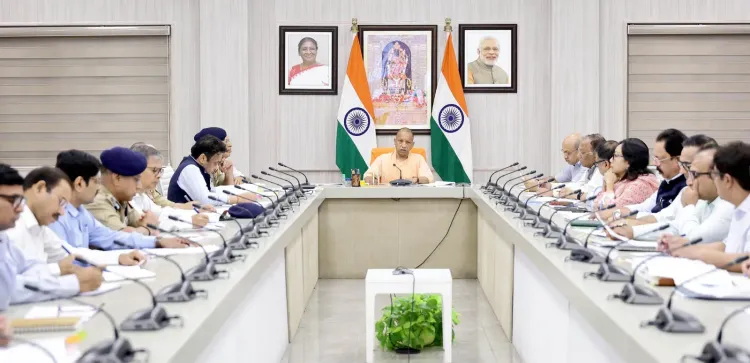
The Chief Minister's Office of Uttar Pradesh announced on Sunday, 25 May 2026 that Chief Minister Yogi Adityanath conducted a video-conference review of the state's law-and-order situation and administrative functions, issuing fresh directives to strengthen grassroots grievance redressal across all development blocks.
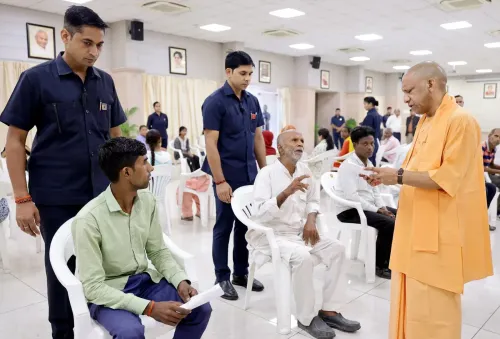
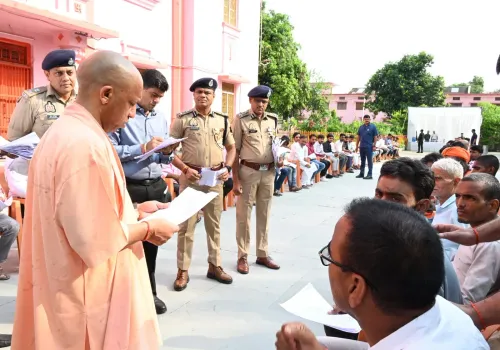
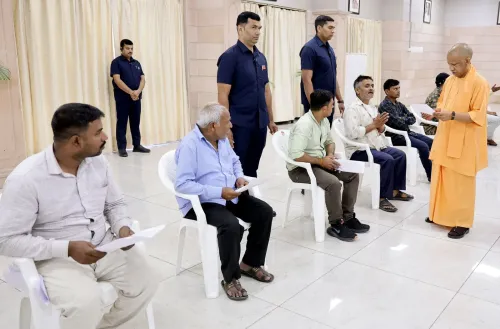
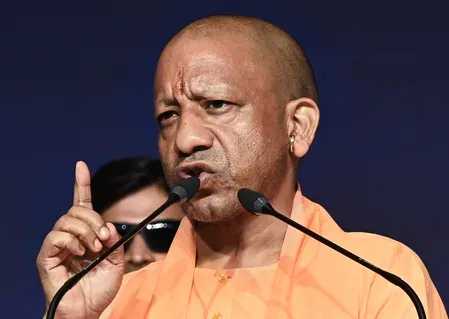
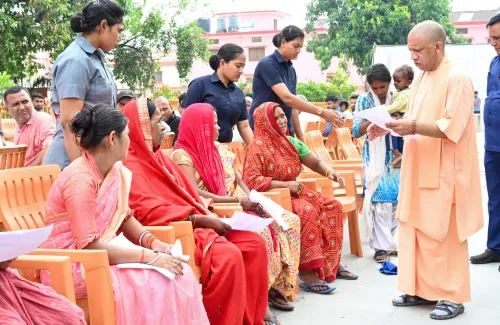
Addressing officials through the video conference, CM Yogi Adityanath directed that weekly choupals (open public hearings) be organised at every development block level across Uttar Pradesh. The instruction specifies that these forums must ensure on-the-spot resolution of revenue disputes, domestic violence complaints, illegal extortion cases, and other local-level grievances.
Context
The Chief Minister stated that the choupals are intended to bring complaint resolution closer to the citizen, reducing dependence on district headquarters for issues that can be addressed at the block tier. Directing officials to ensure 'quality and satisfactory disposal' of grievances received through the Integrated Grievance Redressal System (IGRS) and the CM Helpline, he made clear that 'negligence at any level will not be accepted.' The review reflects the administration's continuing effort to decentralise accountability and make local officials directly answerable for pending complaints.Policy Backdrop
The IGRS and the CM Helpline were introduced in 2017 as the twin pillars of centralised grievance monitoring in Uttar Pradesh, allowing citizens to register complaints online or by phone and track their resolution across departments. Since CM Yogi Adityanath took office in 2017 and was re-elected in 2022, periodic video-conference reviews of law-and-order and administrative performance have been a defining feature of governance in the state. The push to move grievance disposal from district offices down to the development block — the lowest-tier administrative unit responsible for revenue and development functions — marks a further step in this decentralisation drive.Stakeholders and Impact
The directive most directly affects block-level officials across Uttar Pradesh, who will now be required to organise and preside over weekly open hearings. Rural complainants — particularly those involved in revenue litigation, domestic violence cases, and disputes over illegal extortion — stand to benefit from faster, localised resolution without travelling to district centres. The emphasis on IGRS and CM Helpline quality also signals tighter scrutiny of departmental officers whose complaint-disposal records fall short of the Chief Minister's expectations.What's Next
Attention will now turn to the roll-out of the weekly choupals across all development blocks in the state and whether subsequent data releases from the IGRS and the CM Helpline reflect measurable improvements in disposal rates and citizen satisfaction scores. The administration's stated zero-tolerance stance on negligence suggests that block-level performance metrics could become a new benchmark for official accountability in Uttar Pradesh.Point of View
Making block-level officers — not just district collectors — the visible face of governance. By coupling this with explicit warnings on IGRS and CM Helpline disposal quality, the Chief Minister is using performance data as a disciplinary lever, a tactic that has defined his administrative style since 2017. The move also carries electoral logic: with rural grievances around revenue disputes and domestic violence historically fuelling discontent, institutionalising on-the-spot redressal at the block tier can neutralise local complaints before they aggregate into larger opposition narratives. Whether the weekly chaupals translate into measurable relief or remain a procedural exercise will depend entirely on the monitoring rigour that follows.
NationPress
9 Oct 2026
Frequently Asked Questions
What is the weekly chaupals order by CM Yogi Adityanath?
CM Yogi Adityanath has directed that weekly open public hearings called choupals be held at every development block in Uttar Pradesh to resolve local grievances — including revenue disputes, domestic violence cases, and illegal extortion complaints — on the spot.
What is IGRS in Uttar Pradesh?
IGRS stands for Integrated Grievance Redressal System, an online platform introduced in Uttar Pradesh in 2017 that allows citizens to register and track complaints across government departments.
What is the CM Helpline in UP?
The CM Helpline is a telephone and online grievance platform in Uttar Pradesh through which citizens can escalate complaints directly to the Chief Minister's office for faster resolution.
What is a development block in Uttar Pradesh?
A development block is the lowest-tier administrative unit in Uttar Pradesh, responsible for implementing revenue and development functions at the local level below the district.
Why is CM Yogi focusing on block-level grievance redressal?
The focus is part of a sustained effort since 2017 to decentralise complaint resolution in Uttar Pradesh, bringing redressal closer to citizens and holding local officials directly accountable for pending cases.