CM Dhami Highlights 1905 Helpline for Uttarakhand Grievances
Synopsis
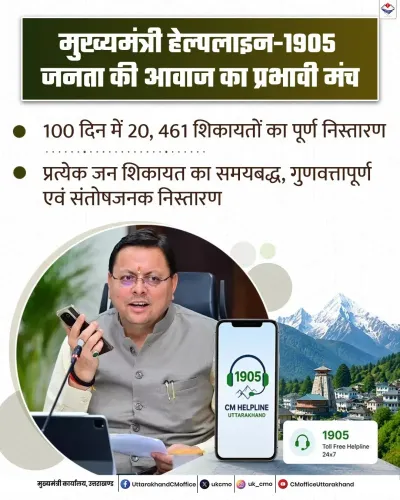
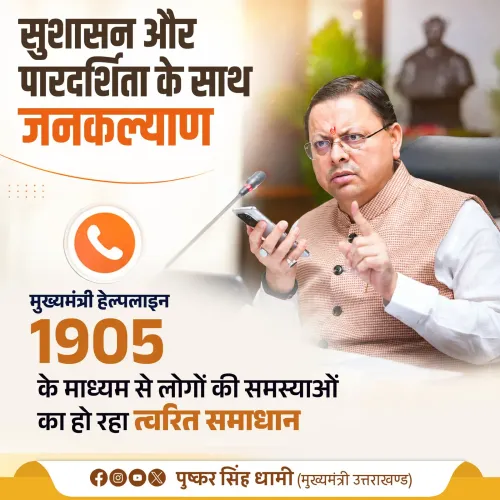
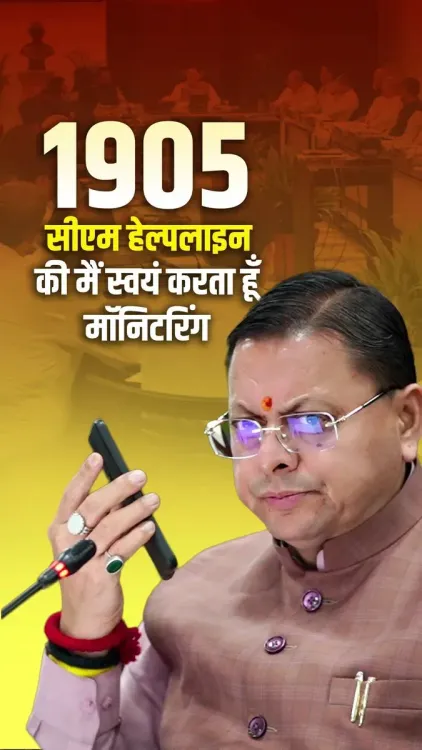
Uttarakhand CM Pushkar Singh Dhami on 31 May 2026 spotlighted the 1905 Chief Minister Helpline as a key grievance redressal tool, promising quick and transparent resolution of citizen complaints across the state.
Key Takeaways
CM Pushkar Singh Dhami publicly promoted the 1905 Chief Minister Helpline on 31 May 2026 .
The helpline allows Uttarakhand residents to register complaints directly for time-bound and transparent resolution.
The service aligns with India's broader CPGRAMS framework, launched by the Government of India in 2007 .
Similar CM helplines operate in states including Uttar Pradesh and Madhya Pradesh .
Uttarakhand , with a population of over 10 million , has pursued e-governance reforms since its formation in 2000 .
Future watch points include public reporting on resolution rates and possible integration with the state RTI portal .
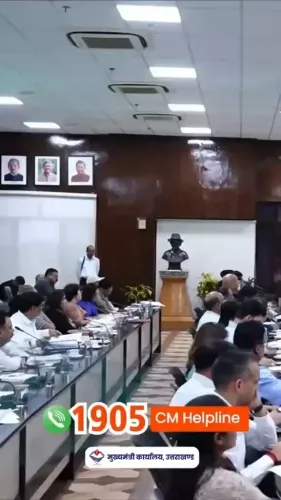
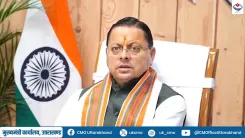
Uttarakhand Chief Minister Pushkar Singh Dhami on Sunday, 31 May 2026, highlighted the 1905 Chief Minister Helpline as a robust mechanism for the effective and time-bound resolution of citizens' grievances across the state.
Context
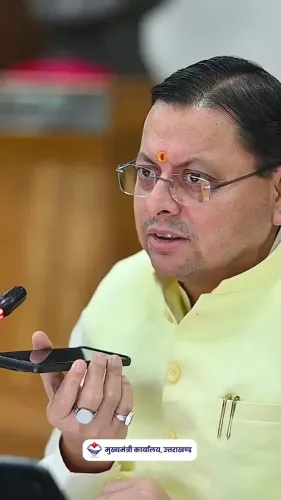
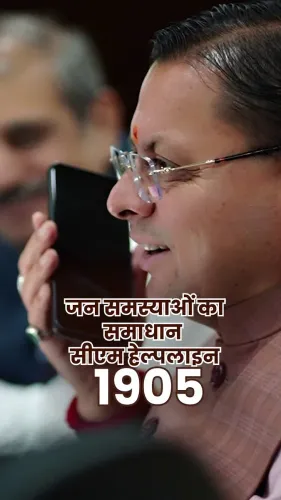
In his post, CM Dhami described the 1905 helpline as 'ek sashakt madhyam' (a powerful medium) that has emerged to address residents' problems efficiently. He stated that citizens can register their complaints and issues directly through the service, with 'quick and transparent resolution' being ensured by the administration.
The post, shared in Hindi, underlines the state government's emphasis on accessible, direct-to-government grievance channels as a pillar of its administrative outreach.
Policy Backdrop
The 1905 Chief Minister Helpline is Uttarakhand's dedicated grievance redressal platform, allowing residents of the Himalayan state — home to over 10 million people — to escalate complaints directly to the state administration for time-bound action.
The initiative aligns with the broader national framework of citizen-centric governance. The Government of India launched the Centralized Public Grievance Redress and Monitoring System (CPGRAMS) in 2007 to enable online grievance filing across central and state departments. Uttarakhand's dedicated helpline follows a model already adopted by states such as Uttar Pradesh and Madhya Pradesh, which introduced similar CM-branded grievance lines as part of digital governance pushes in the mid-2010s.
Uttarakhand, formed in 2000, has progressively pursued e-governance reforms, and the 1905 service represents one of its frontline tools for bridging the gap between district administrations and ordinary residents.
Stakeholders and Impact
The primary beneficiaries are Uttarakhand's residents, particularly those in remote hill districts where physical access to government offices can be difficult. By offering a direct dial-in grievance channel, the helpline is intended to reduce the dependency on in-person visits and informal intermediaries.
District administrations across the state are the key implementing bodies, responsible for acknowledging, processing, and closing complaints registered through the 1905 number within defined timelines. The emphasis on transparency, as noted by CM Dhami, suggests that resolution updates are communicated back to complainants.
What's Next
Analysts and governance observers will watch for periodic public disclosures on complaint resolution rates and average disposal times under the 1905 helpline, which would provide measurable evidence of the service's effectiveness.
There is also the possibility of deeper integration with the state's Right to Information (RTI) portal or enhanced mobile application features, which could further expand the helpline's reach among younger, digitally connected citizens. CM Dhami's public amplification of the service signals continued political ownership of the initiative, keeping administrative accountability in focus ahead of future governance reviews.
Point of View
Which frames administrative responsiveness as a political asset ahead of electoral cycles. By highlighting transparency and speed, the communication seeks to position the state government as proactively accountable rather than reactive. The move fits a national pattern in which ruling parties at the state level use citizen-facing digital tools to demonstrate tangible governance outputs. Whether the helpline's operational performance matches its political messaging will ultimately determine its credibility with residents.
NationPress
15 Oct 2026
Frequently Asked Questions
What is the 1905 Chief Minister Helpline in Uttarakhand?
The 1905 Chief Minister Helpline is Uttarakhand's dedicated grievance redressal service that allows residents to register complaints directly with the state administration for time-bound and transparent resolution.
How can Uttarakhand residents use the 1905 helpline?
Citizens can dial 1905 to register their complaints and problems directly, after which the administration is responsible for processing and resolving the grievance within defined timelines.
What did CM Dhami say about the 1905 helpline?
CM Pushkar Singh Dhami described the 1905 helpline as a 'powerful medium' for effective and time-bound resolution of residents' problems, emphasising quick and transparent solutions.
Is the 1905 helpline similar to other state CM helplines in India?
Yes, Uttarakhand's 1905 service follows a model similar to dedicated CM grievance helplines already operating in states such as Uttar Pradesh and Madhya Pradesh, part of India's wider digital governance push since the mid-2010s.
What is CPGRAMS and how does it relate to the Uttarakhand helpline?
CPGRAMS, or the Centralized Public Grievance Redress and Monitoring System, was launched by the Government of India in 2007 to enable online grievance filing; Uttarakhand's 1905 helpline operates within this broader national framework of citizen-centric grievance redressal.