CM Yogi to name residential schools after Sant Ravidas in every UP district
Synopsis
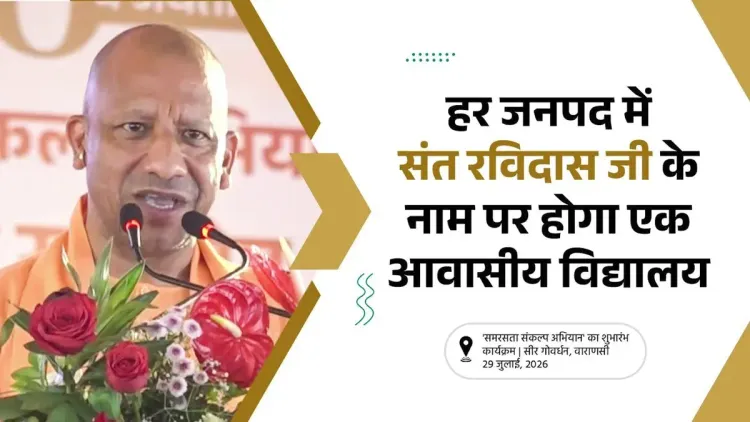
Chief Minister Yogi Adityanath announced that one residential school dedicated to Sant Sadguru Ravidas Ji Maharaj will be built in each of Uttar Pradesh's 75 districts, extending the ongoing Chief Minister Composite Schools initiative and targeting students from marginalised communities.
Key Takeaways
CM Yogi Adityanath announced one Sant Ravidas-dedicated residential school in each of UP's 75 districts .
The residential schools are framed as the next phase of the existing Chief Minister Composite Schools scheme.
Sant Ravidas , the 15th–16th century Bhakti saint and social reformer, is deeply revered by Scheduled Caste communities across northern India.
Uttar Pradesh has expanded residential schooling for marginalised students since the late 2010s, drawing on the Eklavya residential school model.
Rollout timelines, per-school budgets, and enrollment criteria have not yet been specified.
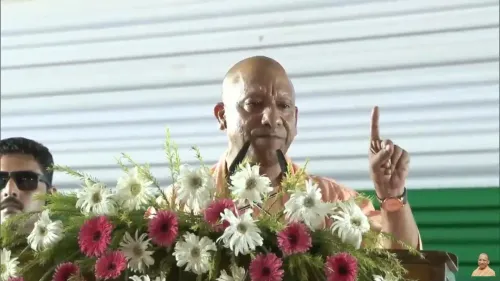
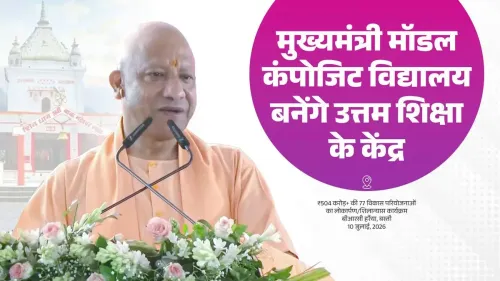
One residential school per district, dedicated to a 15th-century Bhakti saint revered by millions of Scheduled Caste families — that is the commitment Chief Minister Yogi Adityanath put on record on Wednesday, 29 July 2026, as Uttar Pradesh pushes deeper into school infrastructure expansion.
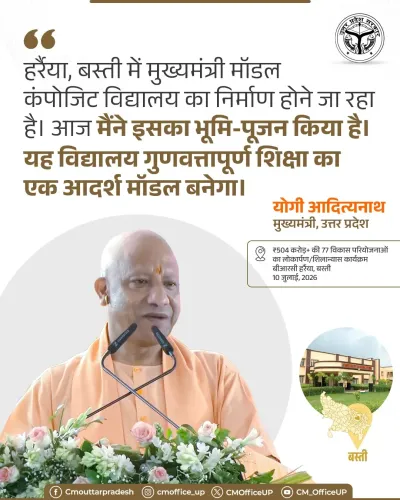
Posting from the Chief Minister's Office of Uttar Pradesh, the announcement states: 'हर जनपद में मुख्यमंत्री कंपोजिट विद्यालय स्थापित किए जा रहे हैं। उसी शृंखला में प्रत्येक जनपद में एक-एक आवासीय विद्यालय बनाया जाएगा, जो संत सद्गुरु रविदास जी महाराज के नाम समर्पित होगा।' — 'Chief Minister Composite Schools are being established in every district. In the same chain, one residential school will be built in each district, dedicated to Sant Sadguru Ravidas Ji Maharaj.'Composite schools first, residential schools next
The residential school plan sits inside a larger infrastructure drive. The state is already rolling out Chief Minister Composite Schools — institutions that bundle multiple educational streams under one roof — across all 75 districts of Uttar Pradesh. The residential schools are framed explicitly as the next link in that chain, not a standalone promise.
Residential schooling for students from marginalised communities has been a policy thread in Uttar Pradesh since the late 2010s, modelled broadly on the Eklavya residential school template developed for tribal students nationally. Extending that model district-by-district, and tying it to a cultural icon central to Dalit identity, sharpens the political and social signal considerably.
Why Sant Ravidas, and why now
Sant Ravidas — the 15th–16th century cobbler-poet of Varanasi — is among the most venerated figures in the Bhakti tradition, particularly for Scheduled Caste communities across northern India. His verses appear in the Guru Granth Sahib; his birthplace in Varanasi draws lakhs of pilgrims every year. Naming 75 residential schools after him is not a quiet administrative decision — it is a statement about whose legacy the state chooses to institutionalise in brick and mortar.
The pattern fits a broader Yogi-era approach: honouring regional saints and social reformers through public infrastructure, from roads to stadiums to now schools, in a state where symbolic recognition of Dalit icons carries significant electoral and social weight.
What the rollout still needs to show
The announcement does not specify a construction timeline, per-school budget, or enrollment criteria. With 75 districts to cover, the scale of capital and administrative execution required is substantial. Observers will watch for budget line items in the state's education allocations and clarity on which student communities — and at which grade levels — the residential schools will serve.
For now, CM Yogi Adityanath has set a clear direction: every district in India's most populous state will eventually have a residential school bearing the name of one of its most beloved saints. The blueprint is announced. The construction is the test.
Point of View
A combination the Yogi government has deployed with increasing regularity. Naming 75 residential schools after Sant Ravidas deepens the BJP's outreach to Scheduled Caste voters in a state that sends 80 Lok Sabha members, without requiring new legislation or immediate fiscal disclosure. The composite-schools-first framing also lets the government present the residential schools as a logical continuation of ongoing work rather than a fresh promise, lending it administrative credibility. Whether the execution matches the announcement will be the real measure — 75 simultaneous district-level construction projects demand both budget and bureaucratic bandwidth that past UP schemes have not always delivered on schedule.
NationPress
13 Sept 2026
Frequently Asked Questions
What is the Sant Ravidas residential school scheme in Uttar Pradesh?
The Uttar Pradesh government plans to build one residential school dedicated to Sant Sadguru Ravidas Ji Maharaj in each of the state's 75 districts, announced by Chief Minister Yogi Adityanath on 29 July 2026 as part of the Chief Minister Composite Schools initiative.
Who was Sant Ravidas and why is he significant?
Sant Ravidas was a 15th–16th century Bhakti saint and social reformer from Varanasi, deeply revered by Scheduled Caste communities across northern India. His verses are included in the Guru Granth Sahib, and his birthplace in Varanasi draws large numbers of pilgrims annually.
What are Chief Minister Composite Schools in UP?
Chief Minister Composite Schools are state-run institutions being set up in every Uttar Pradesh district that offer multiple educational streams under one roof. The new Sant Ravidas residential schools are announced as the next phase of this same programme.
How many districts will get a Sant Ravidas residential school?
All 75 districts of Uttar Pradesh are to receive one Sant Ravidas-dedicated residential school under the scheme announced by CM Yogi Adityanath.
When will the Sant Ravidas residential schools be built in UP?
No specific construction timeline or budget has been announced yet. The scheme was declared on 29 July 2026; rollout schedules and enrollment criteria are yet to be detailed by the state government.