CM Yogi visits Kushinagar flood zones after Narayani River embankment breach
Synopsis
The Narayani River's flow spiked to 5.5 lakh cusecs — well above its normal 3–4 lakh cusecs ceiling — after a trans-boundary surge from Nepal breached the AP embankment in Kushinagar late Monday. Chief Minister Yogi Adityanath was on the ground Tuesday, conducting an aerial survey and personally distributing relief, while ordering long-term dredging and channelisation work once the crisis eases.
Key Takeaways
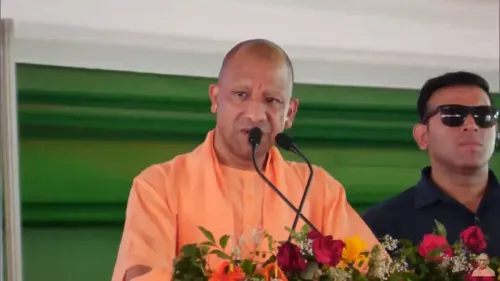
CM Yogi Adityanath visited flood-affected Kushinagar on Tuesday, 29 September 2026 , after the Narayani River's AP embankment breached late Monday night.
A water surge from Nepal pushed river flow from a normal 3–4 lakh cusecs to 5.5 lakh cusecs , causing rapid flooding in adjacent villages.
The breach occurred near Chain Patti and Jawahi Mali Ehtmali in the Tatwa Tola area of Kushinagar.
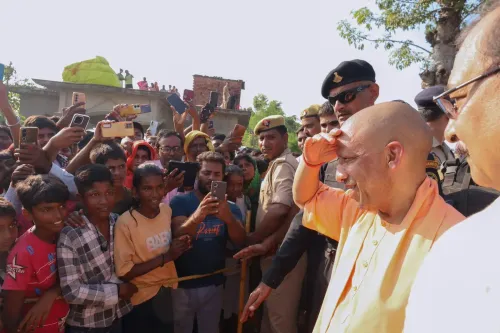
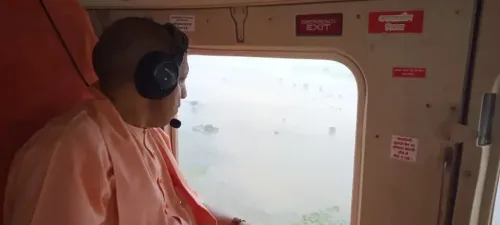
Yogi conducted an aerial survey , visited displaced residents on higher ground, and distributed food packets and relief materials.
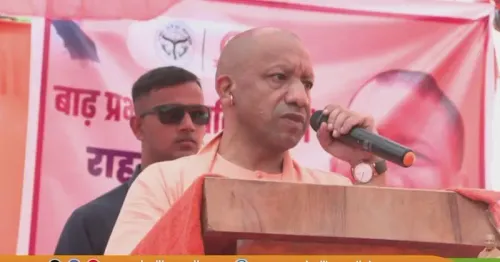
He directed the Jal Shakti Minister and Principal Secretary of the Irrigation Department to carry out dredging and channelisation of the Narayani River after normalcy is restored.
The flooding follows four days of torrential rainfall affecting multiple regions across Uttar Pradesh.
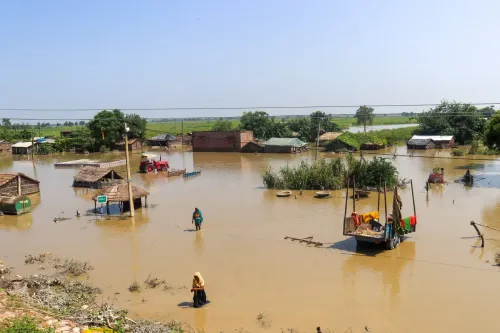
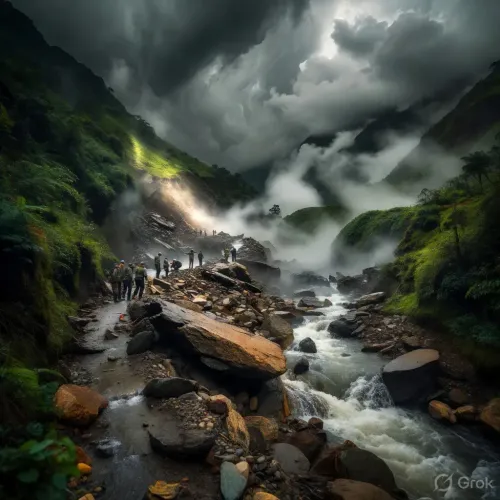
Uttar Pradesh Chief Minister Yogi Adityanath on Tuesday, 29 September 2026, visited flood-affected villages in Kushinagar after the Narayani River's AP embankment breached near Chain Patti and Jawahi Mali Ehtmali in the Tatwa Tola area late Monday night, displacing numerous families and inundating adjacent villages. The breach was triggered by a sharp surge of water originating from Nepal, pushing the river's flow from its typical 3 to 4 lakh cusecs to an abnormal 5.5 lakh cusecs.
On the Ground: Aerial Survey and Village Visits
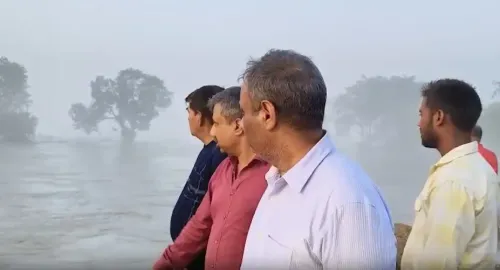
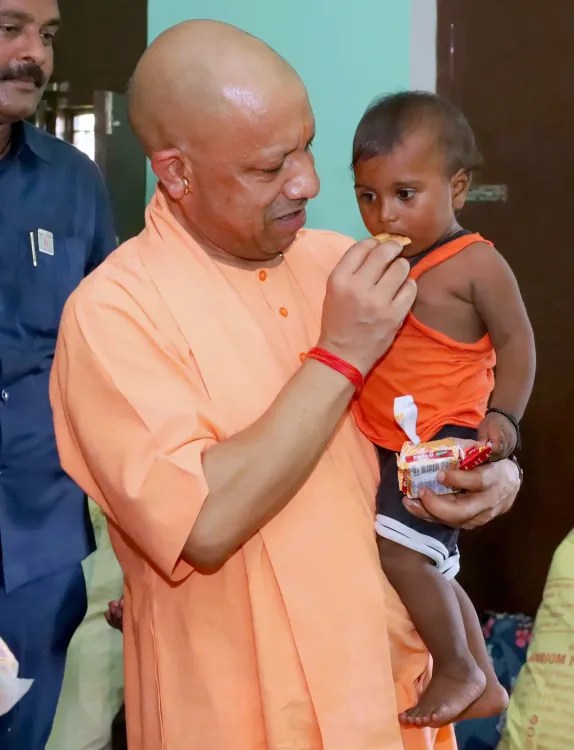
Chief Minister Yogi conducted an aerial survey to assess the scale of the embankment damage and the extent of flooding across affected zones. He subsequently visited villages on the ground, meeting residents who had taken shelter on higher ground, and personally distributed lunch packets and chocolates to children among those displaced. He assured flood victims that the state government stands firmly with them and that the administration would extend all possible assistance to affected families.
Relief Operations Underway
Yogi inspected ongoing relief operations, distributed food packets and essential materials to displaced residents, and directed officials to accelerate evacuations from flood-hit areas. He had been monitoring the crisis and issuing instructions since Monday night, well before his ground visit on Tuesday. The Chief Minister also noted that multiple regions across Uttar Pradesh and the broader country have been grappling with severe flooding following four consecutive days of torrential rainfall.
Long-Term Fix Ordered for Narayani River
Looking beyond immediate relief, Yogi directed the Jal Shakti Minister and the Principal Secretary of the Irrigation Department to undertake dredging and channelisation work on the Narayani River once floodwaters recede and the situation normalises. This instruction signals a focus on structural prevention, as cross-border water surges from Nepal have historically strained embankments along this stretch of the river.
What Caused the Breach
The Narayani River's AP embankment, a critical flood-control structure in the Kushinagar district, gave way late Monday night under the pressure of the sudden flow spike. The river, which ordinarily carries between 3 and 4 lakh cusecs, saw volume surge to 5.5 lakh cusecs — roughly 37% above its upper normal threshold — as excess water discharged from across the border in Nepal. The rapid rise left little time for preventive reinforcement, and floodwaters quickly entered several villages near the embankment.
What Comes Next
With relief operations continuing, state authorities are focused on safe evacuation of remaining residents and restoration of essential services to affected villages. Dredging and channelisation of the Narayani River are expected to begin once the river levels recede. The incident renews attention on the vulnerability of embankments along rivers that carry trans-boundary flows, and on the coordination mechanisms between India and Nepal during peak monsoon periods.
Point of View
But similar directives have followed previous breaches without permanent resolution. The deeper question is whether India-Nepal water-sharing and flood-alert coordination has kept pace with climate-driven flow volatility. Until embankment upgrades and real-time cross-border data-sharing mechanisms are institutionalised, Kushinagar and similar districts will remain perennially vulnerable every monsoon season.
NationPress
29 Sept 2026
Frequently Asked Questions
Why did the Narayani River embankment breach in Kushinagar?
The Narayani River's AP embankment breached late Monday night because a surge of water from Nepal caused the river's flow to spike from its normal 3–4 lakh cusecs to 5.5 lakh cusecs, overwhelming the embankment near Chain Patti and Jawahi Mali Ehtmali in the Tatwa Tola area. The sudden volume increase left little time for preventive reinforcement.
What relief measures did CM Yogi Adityanath announce in Kushinagar?
Chief Minister Yogi Adityanath personally distributed food packets, lunch packets, and chocolates to displaced children during his visit on 29 September. He directed officials to accelerate evacuations, assured victims of full government support, and ordered the Jal Shakti Minister and Principal Secretary of the Irrigation Department to undertake dredging and channelisation of the Narayani River once the situation normalises.
Which areas in Kushinagar were affected by the flooding?
The flooding primarily affected villages situated near the AP embankment, with the breach occurring near Chain Patti and Jawahi Mali Ehtmali in the Tatwa Tola area of Kushinagar district. Floodwaters entered multiple villages, forcing many families to flee to higher ground.
What is the long-term plan for the Narayani River after the breach?
Chief Minister Yogi directed the Jal Shakti Minister and the Principal Secretary of the Irrigation Department to undertake dredging and channelisation work on the Narayani River after the floodwaters recede. This structural intervention is aimed at improving the river's water-carrying capacity and reducing the risk of future embankment breaches.
How does the Kushinagar flood fit into the broader monsoon situation in Uttar Pradesh?
The Kushinagar flooding is part of a wider crisis triggered by four consecutive days of torrential rainfall affecting multiple districts across Uttar Pradesh and other parts of India. The Chief Minister has been monitoring the statewide flood situation since Monday night, and the Narayani River breach is among the most severe localised incidents of this monsoon season.