Youth Congress Lawyers Condemn Chib's Arrest as Political Vendetta Following AI Summit Protest
Synopsis
Senior advocates criticize the arrest of Uday Bhanu Chib, President of the Indian Youth Congress, during AI Summit protests, labeling police actions as undemocratic and excessive. This incident has ignited a wider political debate on the limits of protest and democratic freedoms.
Key Takeaways
Criticism of Police Actions: Advocates assert that the arrest of Chib is excessive and against democratic norms.
Protests as Democratic Expression: Legal experts emphasize that protests at international events are typical in democracies.
Disproportionate Response: The actions of law enforcement, including extended custody, are deemed unwarranted.
Fundamental Rights Concerns: Allegations of procedural lapses and curtailment of free speech are raised.
Political Debate Triggered: The incident ignites discussions on the balance between public order and democratic rights.
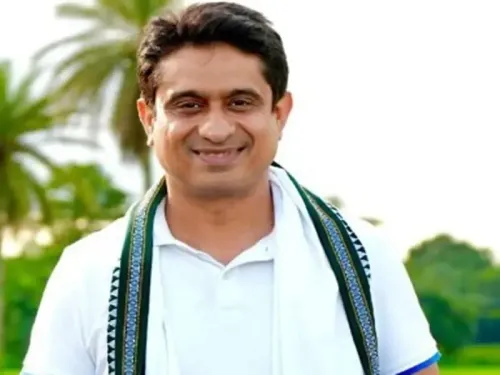
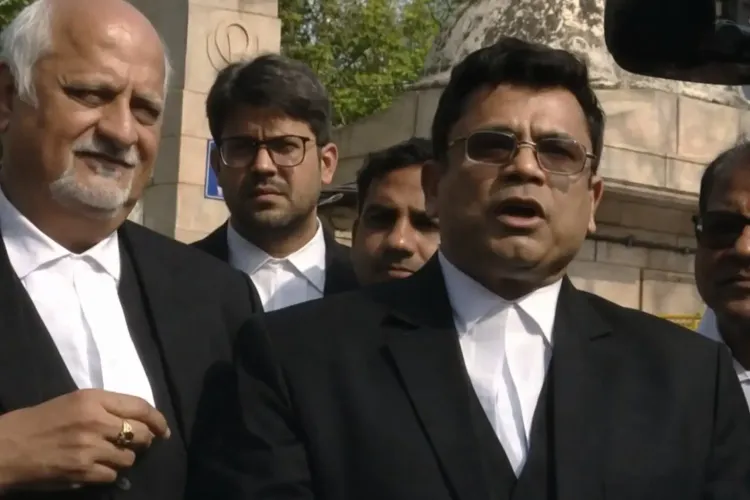
New Delhi, Feb 24 (NationPress) Prominent attorneys representing the Indian Youth Congress (IYC) demonstrators have vehemently denounced the detention of the organization's President, Uday Bhanu Chib, in relation to protests during a global AI Summit, deeming the police's actions as excessive and inconsistent with democratic principles.
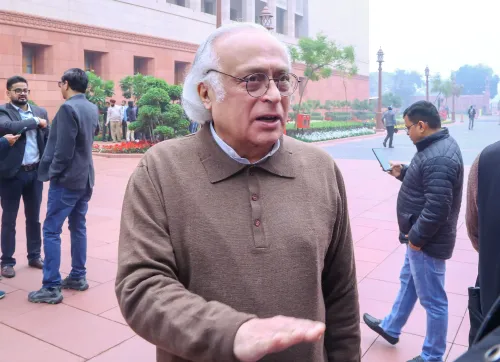
Senior advocate Sanjoy Ghosh emphasized that protests during significant international gatherings are a standard aspect of vibrant democracies. "In any robust democracy, protests are commonplace at such events. While you may disagree with them, they are essential to democracy," he stated, highlighting that the arrest of youth opposition leaders over such demonstrations conveys a misleading message to the world.
He argued that the authorities' response, which included attempts to prolong police custody, was disproportionate. Referencing Supreme Court guidelines, Ghosh pointed out that for offenses punishable by less than seven years, bail should typically be granted, making extended custody unwarranted. He also rejected assertions that the protest resulted in "national shame," insisting that democratic dissent should be viewed as a sign of institutional resilience.
Additionally, advocate Subhash Gulati accused the authorities of procedural violations and infringing upon fundamental rights. "Oppression is evident when democracy is suppressed. There is no freedom of speech or expression, and even in court, we are denied access to the FIR," he criticized, taking aim at the police's conduct.
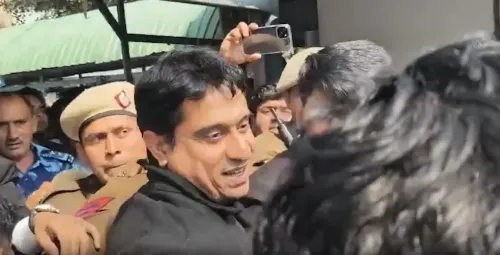
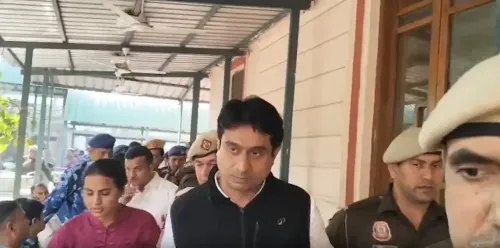
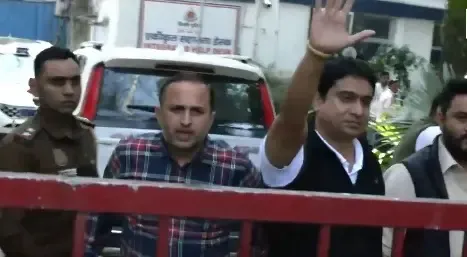
Simultaneously, tensions escalated outside the court as Congress supporters shouted slogans while Chib was escorted out under heavy security. Significant numbers of police and Rapid Action Force personnel were stationed to avert any disturbances.
Officials have asserted that the arrest was related to law-and-order issues stemming from the protest, with further inquiries ongoing. This incident has sparked a political dialogue concerning the boundaries of protest, the policing of demonstrations, and the equilibrium between public order and democratic liberties.
Point of View
It is crucial to highlight the tension between law enforcement actions and democratic freedoms. The arrest of Uday Bhanu Chib raises important questions about the right to protest and the balance between public order and individual rights. A careful examination is necessary to uphold the values of democracy.
NationPress
20 Sept 2026
Frequently Asked Questions
Why was Uday Bhanu Chib arrested?
Uday Bhanu Chib was arrested in connection with protests during an international AI Summit, which authorities claimed raised law-and-order concerns.
What do advocates say about the arrest?
Advocates argue that the arrest is excessive and contrary to democratic principles, suggesting it sends a negative message about dissent in India.
What are the implications of this incident?
The incident has sparked a broader political debate regarding the limits of protest and the balance between maintaining public order and protecting democratic freedoms.
How did the public react outside the court?
Congress supporters raised slogans in protest as Chib was escorted under heavy security, indicating strong public sentiment regarding the arrest.
What is the current status of the investigation?
Authorities have stated that further investigation is underway regarding the circumstances surrounding the protests and the subsequent arrests.