Has the Constitution been frozen by the Yunus regime in Bangladesh?
Synopsis
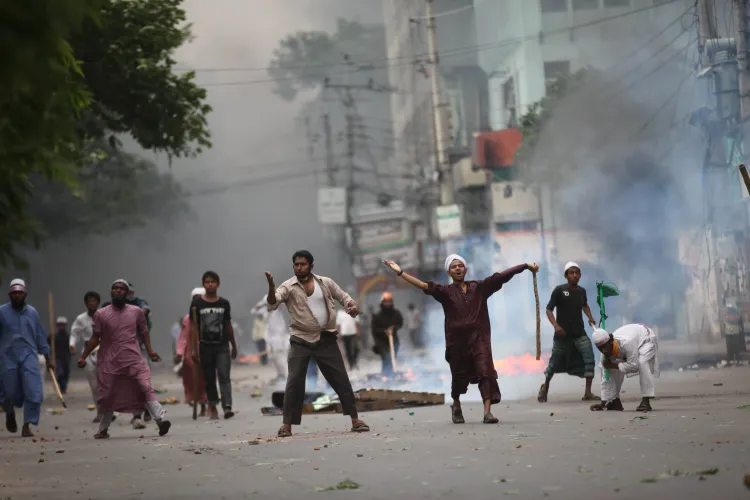
As political tensions rise in Bangladesh under the Yunus regime, India calls for immediate elections. Former diplomats voice grave concerns over violence against minorities, highlighting the urgency of restoring democratic processes. This article delves into the implications of the current political landscape in Bangladesh and its potential impact on regional stability.
Key Takeaways
India calls for immediate elections to restore democracy in Bangladesh.
The Constitution is currently not in operation, leading to concerns over governance.
Violence against minorities is escalating, prompting international scrutiny.
Former diplomats urge accountability for the Yunus-led government.
Regional stability is at risk, with external influences from Pakistan and China.
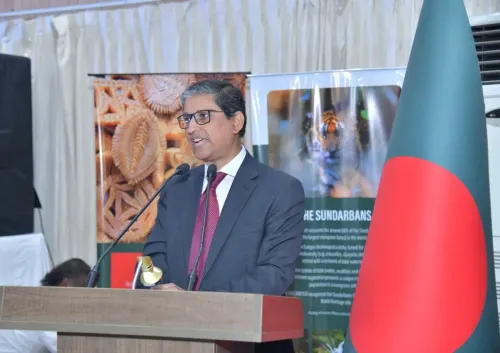
New Delhi, Dec 22 (NationPress) The former Indian High Commissioner to Bangladesh, Pinak Ranjan Chakravarty, remarked on Monday that India has maintained a clear position regarding the political climate in Bangladesh, emphasizing the urgency for conducting free, fair, inclusive, and credible elections and ensuring power is transferred to the winning party.
In an exclusive conversation with IANS, Chakravarty stated, "India's position is unequivocal. It is essential that free, fair, inclusive, and credible elections take place promptly, and power must be handed over to the victors. India holds no preferential ties and will engage with whichever party is democratically elected. However, a democratic entity must restore the Constitution, which remains inactive."
“The Constitution has been effectively frozen, making long-term planning impossible under such a government, as tomorrow could bring unanticipated changes. This is why India’s approach has been one of patience and observation, followed by subsequent actions if necessary. India will refrain from interfering in their internal matters, but we will certainly voice our concerns, especially regarding the violence against Hindus,” he added.
Meanwhile, former diplomat Veena Sikri labeled the Yunus-led interim government as “illegitimate,” arguing that it must be held globally accountable for its assaults on minorities and should not be permitted to remain in power.
She highlighted the maltreatment of Hindu minorities, stating to IANS, "What has been done to Dipu Chandra Das is barbarous and reminiscent of medieval times. Such behavior is not characteristic of 21st-century civilization, suggesting that the populace has been incited to act in such a brutal manner. Claims of blasphemy have been proven false in subsequent investigations."
Sikri pointed out the interim government’s silence amidst ongoing violence against Hindus, Buddhists, Christians, Sufis, and Ahmadiyyas since the ousting of former Prime Minister Sheikh Hasina.
Recalling that on August 8, Prime Minister Narendra Modi congratulated Yunus on his appointment as Chief Advisor to the interim government while urging him to safeguard minorities amid escalating violence, she remarked, "Hindu professors have faced harassment and forced resignations. Hindu journalists have been incarcerated for over a year without any charges or trials. This is an appalling situation in Bangladesh, especially as they attempt to conduct fraudulent elections which exclude participation, resulting in increasing violence.”
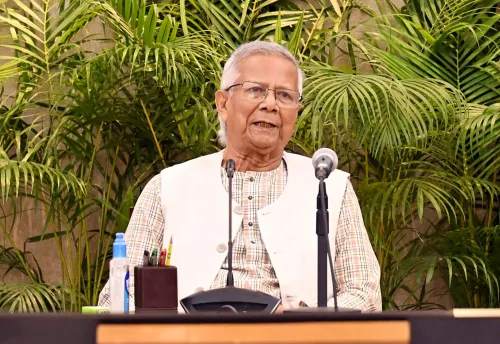
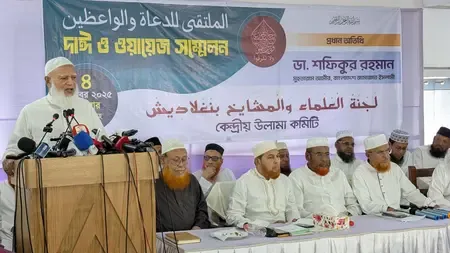
Commenting on the deteriorating circumstances in Bangladesh, former diplomat K.P. Fabian asserted, "Bangladesh is spiraling into chaos and anarchy, descending deeper into turmoil each day. One contributing factor is that interim Chief Advisor Muhammad Yunus has failed to manage the situation, allowing factions hostile to India, like Jamaat-e-Islami, to gain political influence. Furthermore, both Pakistan and China are actively working to disrupt India-Bangladesh relations."
Point of View
Especially for minorities, is paramount in fostering a stable and peaceful region.
NationPress
26 Sept 2026
Frequently Asked Questions
What is the current political situation in Bangladesh?
The political landscape is tumultuous, with allegations against the Yunus-led interim government for failing to uphold democratic processes and for violence against minorities.
What role is India playing in this situation?
India is advocating for free and fair elections and has expressed concerns over the violence against minorities, emphasizing non-interference in Bangladesh's domestic affairs.
Who is Pinak Ranjan Chakravarty?
Pinak Ranjan Chakravarty is the former Indian High Commissioner to Bangladesh, known for his insights into the political dynamics of the region.
What are the allegations against the Yunus regime?
The Yunus regime is accused of being illegitimate and of failing to protect minority rights while allowing violence to proliferate.
What are the implications of this political unrest?
The unrest could lead to further instability in Bangladesh, impacting regional security and international relations.