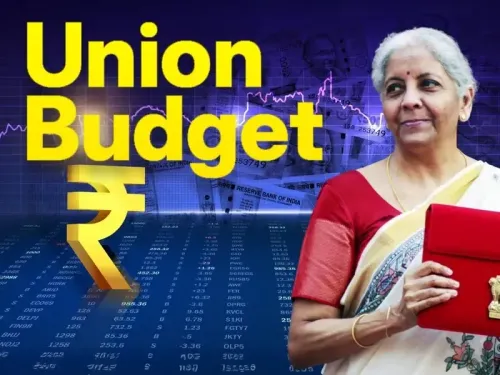
Is the Budget for 2026-27 a Turning Point for India as a Global Innovation Hub?
Synopsis
The 2026-27 Budget signals a transformative phase for India, aiming to establish the nation as a leader in innovation and advanced manufacturing. This strategic approach could redefine India's economic landscape, fostering growth in key sectors and enhancing global competitiveness.
Key Takeaways
Significant focus on innovation and advanced manufacturing.
Emphasis on sunrise sectors like semiconductors and AI.
Investment in rural agriculture and high-value products.
Domestic manufacturing for construction equipment highlighted.
Infrastructure Risk Guarantee Fund to support private sector confidence.
New Delhi, Feb 2 (NationPress) The 2026-27 Budget represents a pivotal move towards establishing India as a global center for innovation and advanced manufacturing, with global competitiveness being the cornerstone, states Challa Sreenivasulu Setty, Chairman of the State Bank of India.
This Budget ensures policy continuity and tax predictability while striking a delicate balance between rural and urban needs, as well as traditional and emerging sectors.
"This year's Budget encompasses both predictable and forward-thinking components. The predictable aspect is the fundamental framework that remains focused on emerging and job-generating sectors. The infrastructure sector continues to be a key element, with an increase in proposed investments," he explained in the State Bank of India’s ‘Union Budget 2026-27 Analysis Report.
There are numerous positives and prospects for the banking industry. Reinventing banking in a rapidly evolving context while maintaining stability in financial markets, thus aligning with India's next growth phase, is crucial, Setty remarked.
The emphasis on sunrise sectors, which contribute to the futuristic aspect of the budget, includes initiatives on Semiconductors, Data Centres, Carbon Capture Utilisation and Storage, and Critical Minerals.
"Beginning with basic fiscal calculations, the budgetary allocations are premised on a nominal GDP growth assumption of 10 percent, which seems prudent considering the current inflation trends. This leads to a projected fiscal deficit of 4.3 percent of GDP," he noted.
On the rural and agricultural front, the Budget has introduced some significant changes.
"The focus will shift towards high-value products like sandalwood, cashews, and fisheries, alongside integrated development of 500 reservoirs, a coconut promotion scheme to enhance production, rejuvenating old, low-yielding orchards, and expanding high-density cultivation of walnuts, almonds, and pine nuts," said the SBI Chairman.
There is also a commitment to increasing the role of AI in agriculture by integrating Agri Stack portals.
The focus on services, particularly tourism, the orange economy, and education, is timely and complements the proposed infrastructure expansion, connectivity, and future growth led by digital capital expenditure. A high-powered 'Education to Employment and Enterprise' Standing Committee will prioritize the services sector as a fundamental driver of Viksit Bharat.
The extensive scale of specialized construction necessitates a domestic supply chain for infrastructure equipment. Hence, the Budget has proposed domestic manufacturing of high-value and technologically advanced Construction and Infrastructure Equipment.
"To bolster the confidence of private developers, an Infrastructure Risk Guarantee Fund will be established to offer prudently calibrated partial credit guarantees to lenders," Setty added.
Acknowledging the reality of a rapidly urbanizing India, the Budget aims to leverage the potential of urban agglomerations. In this regard, city economic regions (CER) will be mapped according to their specific growth drivers, with an allocation of Rs 5,000 crore per CER over five years for implementing developmental plans.
Setty mentioned that in the sunrise sectors, the Budget proposes to enhance the current Indian Semiconductor Mission by introducing India Semiconductor Mission (ISM) 2.0 to manufacture equipment and materials, design full-stack Indian IP, and strengthen supply chains.
In light of disruptions in critical minerals, the existing National Critical Mineral Mission will be complemented by dedicated Rare Earth Corridors and exemptions from BCD for the import of capital goods.
The people-centric initiatives, measures to improve the ease of doing business and living, which form the softer aspects of tough decisions, highlight the challenges the country faces, he concluded.
Point of View
Making it essential for stakeholders to remain engaged and adaptive.
NationPress
19 Sept 2026
Frequently Asked Questions
What does the 2026-27 Budget aim to achieve?
The 2026-27 Budget aims to position India as a global hub for innovation and advanced manufacturing, with a focus on enhancing global competitiveness.
What are the key areas of focus in the Budget?
Key areas include semiconductors, data centers, carbon capture technologies, and the promotion of high-value agricultural products.
How does the Budget impact the banking sector?
The Budget presents numerous opportunities for the banking sector, emphasizing the need for innovation and stability in financial markets to support growth.
What initiatives are included for rural development?
The Budget introduces initiatives focusing on high-value agricultural products and integrated development of reservoirs to boost rural economies.
How is the education sector addressed in the Budget?
A high-powered committee will focus on the services sector, emphasizing education as a core component of economic development.