AgiLink hits unicorn status in under 150 days as China robotic hand funding surges
Synopsis
AgiLink became a unicorn in under 150 days — a sector record — while Xynova raised nearly US$148 million in back-to-back rounds, exposing just how fiercely China's industrial giants are scrambling to lock up dexterous robotic hand technology before the humanoid market matures.
Key Takeaways
AgiLink achieved a US$1 billion valuation in fewer than 150 days after being spun off from AgiBot in January 2026 — the fastest unicorn in the humanoid component sector, per ITJuzi .
AgiLink completed four funding rounds between January and May 2026 , according to reports from The Paper and state-run media.
Xynova closed a Series A round on 30 May 2026 with backing from Xiaomi and Li Auto venture arms, bringing total raised to nearly 1 billion yuan (US$148 million) .
Xynova 's latest round came just two months after its previous financing, underscoring the accelerating deal pace.
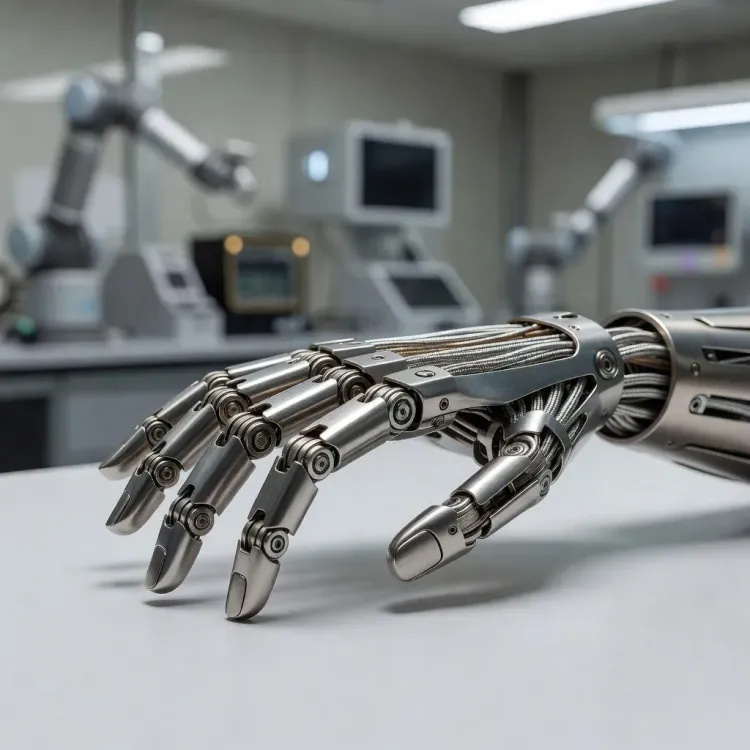
Dexterous robotic hands are identified as the primary hardware bottleneck for humanoid robots, driving strategic investment from non-traditional backers including automakers and smartphone companies.
AgiLink, a Hangzhou-based dexterous robotic hand developer spun off from humanoid robot manufacturer AgiBot in January 2026, has crossed the US$1 billion valuation threshold in under 150 days — a record for the humanoid component sector, according to industry analysts. The milestone reflects an accelerating capital blitz targeting dexterous hands, widely regarded as the hardest unsolved bottleneck in the global humanoid hardware race.
Record-breaking unicorn birth
AgiLink completed four funding rounds between its spin-off in January and its unicorn designation, reported last week by The Paper and several state-run media outlets. AgiLink did not immediately respond to a request for comment. Wu Meimei, senior analyst at ITJuzi — a firm that tracks China's venture-capital market — called the trajectory historic: 'Achieving unicorn status in less than 150 days is unprecedented in the humanoid component sector.'
Xynova closes fresh round two months after its last
The funding momentum is not isolated to AgiLink. On Friday, 30 May 2026, Xynova — also headquartered in Hangzhou — announced the close of a Series A round backed by the venture arms of smartphone maker Xiaomi and electric vehicle giant Li Auto, lifting total capital raised to nearly 1 billion yuan (US$148 million). The round arrived just two months after Xynova's previous financing, signalling the frantic cadence at which investors are moving.
Why dexterous hands matter
Dexterous robotic hands — capable of fine motor manipulation — are considered the primary hardware constraint preventing humanoid robots from performing complex real-world tasks. Unlike locomotion, which has seen rapid progress from players such as Unitree and LinkerBot, hand dexterity demands breakthroughs in actuator design, tactile sensing, and real-time control software simultaneously. Solving it unlocks the bulk of industrial and consumer humanoid use cases.
The competitive backdrop
The investment surge is reshaping how hard-tech start-ups are financed in China. Industrial giants and strategic investors — rather than pure financial funds — are leading rounds, as companies like Xiaomi and Li Auto seek to secure supply-chain positions ahead of anticipated humanoid robot mass production. The involvement of AgiBot, itself a well-capitalised humanoid robot maker, as the parent of AgiLink illustrates how vertically integrated ecosystems are forming around critical subsystems.
What's next
With valuations compressing timelines and strategic backers multiplying, the dexterous hand segment is entering a phase where technology differentiation will be tested under commercial conditions. Watch for further consolidation as larger robotics platforms seek to acquire or exclusively partner with the leading hand developers before the market narrows.
Point of View
But the more consequential dynamic is the speed compression: when four rounds close in under five months, it suggests investors believe the technology window is narrow and first-mover supply agreements will be locked in soon. The parallel with the early EV battery supply-chain race — where automakers scrambled to secure cell makers — is hard to ignore.
NationPress
15 Oct 2026
Frequently Asked Questions
What is AgiLink and why did it become a unicorn so fast?
AgiLink is a dexterous robotic hand developer spun off from humanoid robot manufacturer AgiBot in January 2026 . It reached a US$1 billion valuation in under 150 days by completing four funding rounds in rapid succession, driven by intense investor demand for solutions to the humanoid hardware bottleneck.
Who are the investors backing Xynova's Series A?
Xynova 's Series A round, announced on 30 May 2026 , was backed by the venture arms of Xiaomi and Li Auto . The round brought Xynova 's total capital raised to nearly 1 billion yuan (US$148 million) .
Why are dexterous robotic hands considered the hardest problem in humanoid robotics?
Dexterous robotic hands require simultaneous advances in actuator design, tactile sensing, and real-time control software — unlike locomotion, which has seen faster progress. Solving hand dexterity is widely seen as the key to unlocking practical industrial and consumer humanoid applications.
What does AgiLink's unicorn milestone mean for China's robotics sector?
According to Wu Meimei , senior analyst at ITJuzi , achieving unicorn status in under 150 days is 'unprecedented in the humanoid component sector.' It signals that strategic capital — not just financial investors — is moving aggressively to secure positions in critical humanoid subsystems before the market consolidates.
Which other companies are competing in China's robotic hand space?
Beyond AgiLink and Xynova , companies including LinkerBot and Unitree are active in China 's broader humanoid and dexterous robotics landscape. The sector is seeing an 'arms race' dynamic as industrial giants and start-ups race to establish technology and supply-chain advantages.