Alibaba unveils 'China's most powerful' AI chip, eyes 10T-parameter model
Synopsis
Alibaba has teased a 10-trillion-parameter AI model and debuted the Zhenwu V900 — dubbed China's most powerful AI chip — while targeting 20 GW of global cloud capacity by 2032, signalling an all-in bet on artificial superintelligence that directly challenges Nvidia, Huawei, and US hyperscalers simultaneously.
Key Takeaways
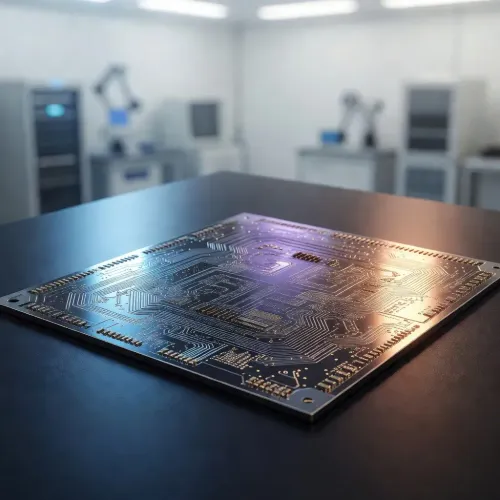
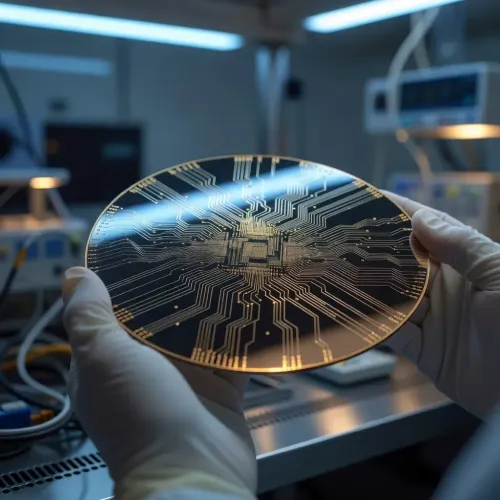
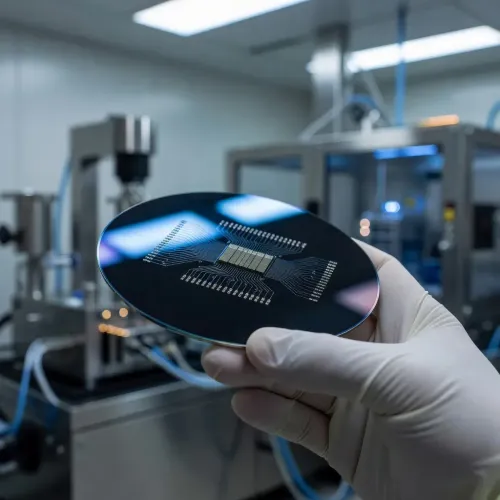
Alibaba Group Holding unveiled the T-Head Zhenwu V900 , which it described as China 's most powerful AI chip, at the Apsara Conference in Hangzhou on 22 September 2026 .
CEO Eddie Wu Yongming identified 'AI models, AI chips and the AI cloud' as the three strategic pillars of Alibaba 's machine intelligence era road map.
The company is planning to train an AI model with up to 10 trillion parameters , far exceeding the scale of its existing Qwen model family.
Alibaba Cloud is targeting global data-centre capacity of more than 20 gigawatts by 2032 to support frontier model training.
Chairman Joe Tsai reaffirmed Alibaba 's pursuit of artificial superintelligence ( ASI ), framing the investment as a shift from technological breakthrough to value creation.
Alibaba Group Holding has unveiled what it described as China's most powerful artificial intelligence chip and signalled plans to train an AI model with up to 10 trillion parameters, as senior executives doubled down on the company's pursuit of artificial superintelligence (ASI). The announcements were made at the company's flagship annual Apsara Conference in Hangzhou on Tuesday, 22 September 2026.
Full-Stack AI Vision
Alibaba group chairman Joe Tsai opened the multi-day event — which runs through Thursday — by reaffirming the company's commitment to building end-to-end AI infrastructure. 'Alibaba is firmly investing in building full-stack AI ... to let AI move from a technological breakthrough to value creation,' Tsai said during his opening remarks. The statement positions Alibaba as an integrated player spanning silicon, software, and cloud services, rather than a pure application-layer competitor.Three Cornerstones of the Machine Intelligence Era
CEO Eddie Wu Yongming used his keynote address to lay out the company's strategic road map, identifying 'AI models, AI chips and the AI cloud' as the three cornerstones of what he called the machine intelligence era. Central to the chip announcement is the T-Head Zhenwu V900, the in-house accelerator that Alibaba is positioning as a domestic alternative to offerings from Nvidia and Huawei Technologies' Ascend series. The Zhenwu V900 is reportedly designed to support the extreme compute demands of frontier model training at the scale Alibaba is now targeting.The 10-Trillion-Parameter Ambition
The teased 10-trillion-parameter model would dwarf most publicly known AI architectures and, if realised, would represent a significant leap beyond Alibaba's existing Qwen model family. According to the company, scaling to that parameter count requires both proprietary silicon and a massive expansion of cloud infrastructure. Alibaba Cloud has set a target of scaling its global data-centre capacity to more than 20 gigawatts by 2032, a figure that underscores the capital intensity of frontier AI development.Why It Matters
The announcements arrive as China's technology sector navigates ongoing restrictions on advanced semiconductor imports from the US, making domestic chip development a strategic imperative rather than a commercial option. Alibaba's dual push — proprietary silicon plus a record-scale model — mirrors moves by US hyperscalers such as Google and Meta, which have similarly invested in custom AI accelerators to reduce dependence on third-party chip suppliers. The competitive backdrop in China is equally intense, with Huawei Technologies' Ascend chips and models from rivals including Baidu and DeepSeek all vying for enterprise and cloud workloads.What's Next
Alibaba has not disclosed a timeline for the 10-trillion-parameter model's training completion or public availability. Investors and industry observers will be watching whether the Zhenwu V900's real-world performance can match the company's claims, and whether Alibaba Cloud's infrastructure expansion stays on track amid a global data-centre supply crunch. The trajectory of Alibaba's ASI ambitions — and how regulators in both China and the US respond — will be a defining storyline for the broader global AI race.Point of View
Software, and cloud infrastructure, the company is hedging against future export controls that could otherwise throttle its AI ambitions at the hardware layer. What mainstream coverage often underweights is the infrastructure math — a 20-gigawatt data-centre target by 2032 implies capital expenditure commitments that rival sovereign-level investment, raising questions about returns in a market where AI model capabilities are commoditising rapidly. The Zhenwu V900's real test will not be benchmark performance but yield, supply chain resilience, and software ecosystem maturity — areas where Nvidia's CUDA moat has proven durable. If Alibaba can close that software gap, it becomes a genuine systemic alternative for China's enterprise AI market; if it cannot, the chip announcement risks being more geopolitical theatre than commercial disruption.
NationPress
23 Sept 2026
Frequently Asked Questions
What is the Alibaba Zhenwu V900 AI chip?
The Zhenwu V900 is an in-house AI accelerator developed by Alibaba 's chip unit T-Head , unveiled at the Apsara Conference on 22 September 2026 and described by the company as China 's most powerful AI chip. It is designed to support large-scale AI model training and is positioned as a domestic alternative to chips from Nvidia and Huawei Technologies ' Ascend series.
How large is Alibaba's planned 10-trillion-parameter AI model?
Alibaba has teased plans to train an AI model with up to 10 trillion parameters , which would significantly exceed the scale of most publicly known AI architectures. The company has not disclosed a specific timeline for when training will be completed or when the model might be made available.
What did Alibaba announce at the Apsara Conference 2026?
At the Apsara Conference in Hangzhou on 22 September 2026 , Alibaba unveiled the Zhenwu V900 AI chip, teased a 10-trillion-parameter model, and outlined a plan to scale Alibaba Cloud 's global data-centre capacity to more than 20 gigawatts by 2032 . Chairman Joe Tsai and CEO Eddie Wu Yongming both addressed the event.
Why is Alibaba developing its own AI chips?
Alibaba is developing its own AI chips primarily because US export restrictions have limited China 's access to advanced semiconductors from companies like Nvidia , making domestic chip development a strategic necessity. Proprietary silicon also gives the company greater control over the performance and cost of training frontier AI models at scale.
How does Alibaba's AI strategy compare to its rivals?
Alibaba 's full-stack approach — spanning custom chips, large language models, and cloud infrastructure — mirrors strategies adopted by US hyperscalers such as Google and Meta . In China , it competes directly with Huawei Technologies ' Ascend chip ecosystem and AI model developers including Baidu and DeepSeek .