Alibaba unveils Zhenwu M890 AI chip amid China's push for chip self-sufficiency
Synopsis
Alibaba's semiconductor unit has unveiled the Zhenwu M890, an AI chip claiming three times the performance of its predecessor — a direct response to Beijing's push to replace Nvidia hardware with homegrown silicon amid tightening US export controls.
Key Takeaways
Alibaba Group 's semiconductor unit unveiled the Zhenwu M890 AI chip on Wednesday , designed for both AI training and inference workloads.
The company claims the Zhenwu M890 delivers three times the performance of its predecessor chip.
The launch is directly tied to the Chinese government 's push to accelerate adoption of domestic AI chips and reduce reliance on Nvidia .
The chip was developed by T-Head , Alibaba 's in-house semiconductor subsidiary founded in 2018 .
US export controls on advanced AI chips to China , expanded from 2022 onwards, have been a key driver of domestic chip investment across China 's tech sector.
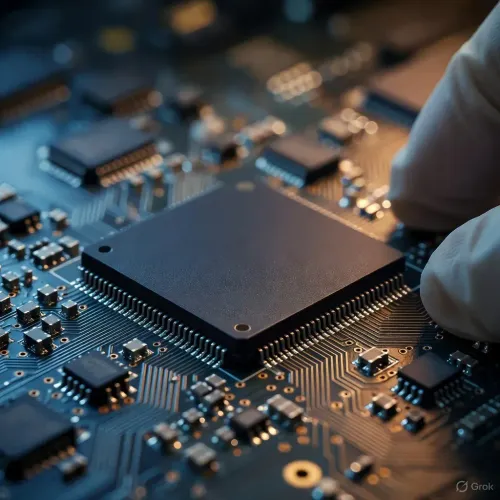
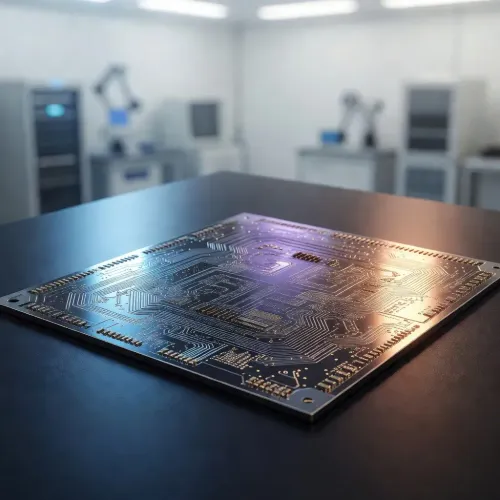
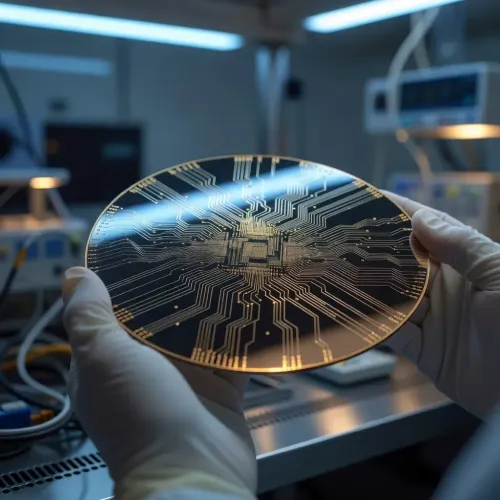
Alibaba Group's semiconductor design unit on Wednesday unveiled the Zhenwu M890, a new AI chip capable of training and running AI models, as China intensifies its drive to reduce dependence on foreign silicon — particularly chips from Nvidia. The announcement marks a significant step in Alibaba's push to develop homegrown AI hardware capable of competing with restricted US-made accelerators.
The Zhenwu M890: What Alibaba claims
According to the company, the Zhenwu M890 delivers three times the performance of its predecessor chip. Alibaba described the new accelerator as 'exceptionally well-suited' for AI workloads, positioning it as a credible alternative for both training and inference tasks. The chip was developed by T-Head, Alibaba's dedicated semiconductor subsidiary established in 2018.
The performance claims, if verified at scale, would represent a meaningful generational leap in domestic AI silicon — a benchmark the broader Chinese tech industry is watching closely.
Why it matters: Beijing's semiconductor strategy
The launch comes as the Chinese government actively pushes domestic technology companies to accelerate adoption of homegrown AI chips, reducing the country's exposure to US export controls that have progressively restricted access to advanced Nvidia hardware since 2022. China's emphasis on semiconductor self-sufficiency has been a cornerstone of national industrial policy, rooted in the Made in China 2025 framework.
For Alibaba, developing competitive in-house silicon serves a dual purpose: insulating its cloud and AI businesses from supply-chain disruptions while positioning Alibaba Cloud as a credible AI infrastructure provider for enterprise customers across Asia and beyond.
The competitive backdrop
Alibaba is not alone in this race. Across China's internet and cloud sector, major players have expanded custom chip programmes to support growing AI workloads under tightening hardware import constraints. Successive generations of domestic accelerators from multiple vendors are narrowing — though not yet closing — the performance gap with leading US-designed chips.
Nvidia has historically dominated AI training and inference hardware globally, including significant sales to Chinese customers prior to export restrictions. The Zhenwu M890's arrival signals that domestic alternatives are maturing faster than many industry observers anticipated.
What's next
The scale of real-world deployment of the Zhenwu M890 — and whether it can perform at claimed benchmarks across diverse AI workloads — will be the critical test. Analysts will watch whether Alibaba Cloud begins migrating significant internal training runs to the new chip, and whether third-party enterprise customers adopt it at scale.
As China's domestic chip ecosystem matures, the global AI hardware market faces a structural realignment that could reshape competitive dynamics for years ahead.
Point of View
And Alibaba is the clearest vehicle for that ambition. What mainstream coverage underweights is the compounding effect — each chip generation narrows the gap, and the real inflection point arrives not when a domestic chip matches Nvidia on benchmarks, but when cloud customers stop waiting for it to do so. The geopolitical chip war is quietly shifting from a story about denial to one about substitution at scale. Nvidia's long-term China revenue exposure, already diminished by export curbs, faces a structural rather than cyclical threat if domestic alternatives reach credible performance parity within two to three generations.
NationPress
5 Oct 2026
Frequently Asked Questions
What is the Alibaba Zhenwu M890 chip?
The Zhenwu M890 is a new AI accelerator chip unveiled by Alibaba Group 's semiconductor design unit on Wednesday . According to the company, it can be used to train and run AI models and delivers three times the performance of its predecessor.
Why is Alibaba developing its own AI chips?
Alibaba is developing in-house AI chips to reduce dependence on Nvidia hardware, which has become increasingly restricted under US export controls on advanced semiconductors sold to China . The Chinese government has also been actively pushing domestic tech companies to adopt homegrown chips.
How does the Zhenwu M890 compare to Nvidia chips?
Alibaba has not made a direct public comparison to specific Nvidia products. The company states the Zhenwu M890 delivers three times the performance of its own predecessor chip and describes it as 'exceptionally well-suited' for AI workloads. Independent verification of performance claims at scale has not yet been reported.
What is T-Head, the unit behind the chip?
T-Head is Alibaba 's dedicated semiconductor subsidiary, established in 2018 , responsible for designing custom processors for the company's cloud and AI infrastructure. It has previously developed AI inference chips for internal use within Alibaba Cloud .
What does this mean for China's AI chip industry?
The launch reflects a broader pattern of Chinese cloud and internet companies accelerating custom chip development in response to restricted access to foreign hardware. If domestic accelerators reach competitive performance levels, it could structurally reduce China 's dependence on US -designed AI silicon and reshape the global AI hardware market.