BofA analyst: Neither US nor China can win AI race alone
Synopsis
A Bank of America analyst says the US power grid — averaging 30-40 years old versus China's 15-20 — is a critical AI infrastructure liability, while China's chip dependency on foreign suppliers equally limits its dominance ambitions. Neither superpower can go it alone.
Key Takeaways
Matty Zhao , co-head of China equity at Bank of America , stated on September 21, 2026 that neither the US nor China can win the AI race without relying on other nations.
China holds advantages in power grid infrastructure and manufacturing equipment but remains dependent on overseas suppliers for advanced chips, memory, and high-end materials.
The average US power grid is 30 to 40 years old , compared with 15 to 20 years old in China , creating a structural energy bottleneck for American AI data centre expansion.
Data centre growth across the US has sparked political and community opposition over fears of rising power costs for local residents.
The analysis was released ahead of a high-stakes US-China bilateral summit, raising the stakes for technology trade policy outcomes.
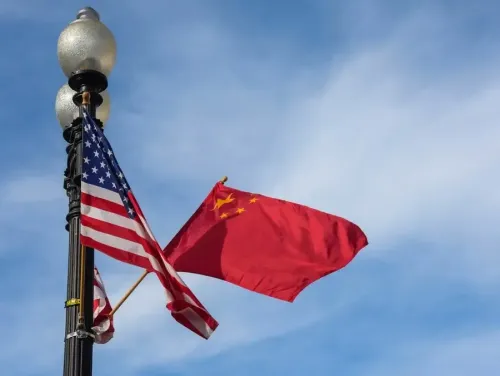
Bank of America analyst Matty Zhao warned on Monday, September 21, 2026, that neither Washington nor Beijing can achieve artificial intelligence dominance without the support of third-party nations, citing deeply entangled global tech supply chains ahead of a high-stakes bilateral summit scheduled for later in the week.
Where each superpower falls short
Zhao, co-head of China equity at Bank of America, said China has built meaningful advantages in power grid infrastructure and manufacturing equipment. However, the country remains structurally dependent on overseas suppliers for advanced chips, memory modules, and select high-end materials, according to the analyst.
The United States, meanwhile, faces its own set of constraints. Zhao noted that the average American power grid is between 30 and 40 years old, compared with just 15 to 20 years old in China — a gap that could meaningfully slow the buildout of energy-hungry AI data centres.
Why it matters
Data centre expansion across the US has already triggered widespread political and community pushback, driven largely by fears of surging electricity costs for local residents. This infrastructure bottleneck adds a domestic political dimension to what is primarily framed as a geopolitical technology competition.
The remarks arrive at a pivotal moment, with a high-profile US-China bilateral summit set to unfold this week — a meeting widely seen as a potential inflection point for technology trade policy between the world's two largest economies.
The competitive backdrop
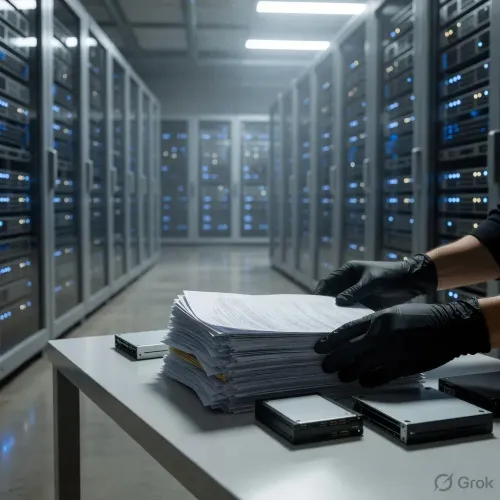
The global AI supply chain is far more interdependent than the superpower rivalry narrative suggests. Advanced semiconductor fabrication relies on equipment and materials sourced from Japan, South Korea, the Netherlands, and other nations, meaning export controls from any single country create cascading dependencies rather than clean technological decoupling.
Both Beijing and Washington have pursued aggressive industrial policies — from chip subsidies to data localisation rules — yet neither has achieved full-stack self-sufficiency in the AI hardware and infrastructure layers that underpin large-scale model training and deployment.
What's next
Zhao's comments suggest that the outcome of this week's bilateral summit could have outsized implications for third-party technology suppliers in Asia and beyond, as any easing or tightening of export restrictions would ripple through interconnected supply chains. Investors and policymakers will be watching closely to see whether the summit produces any concrete agreements on technology trade or remains largely symbolic.
Point of View
The real story may not be what the two superpowers agree on, but how third-party suppliers quietly reposition themselves in the resulting policy space.
NationPress
23 Sept 2026
Frequently Asked Questions
What did the Bank of America analyst say about the US-China AI race?
Matty Zhao , co-head of China equity at Bank of America , said on September 21, 2026 that neither Washington nor Beijing can achieve AI dominance without relying on other countries. He cited deeply entangled global tech supply chains as the primary reason for this mutual dependency.
Why is the US power grid a problem for AI development?
The average US power grid is between 30 and 40 years old , compared with 15 to 20 years old in China , according to Zhao . This ageing infrastructure limits the speed and scale at which energy-intensive AI data centres can be deployed across the country, and has already generated political and community opposition over rising electricity costs.
What are China's weaknesses in the AI competition?
Despite advantages in power grid modernisation and manufacturing equipment, China remains dependent on overseas suppliers for advanced chips, memory, and select high-end materials, according to Zhao . This reliance on foreign components represents a significant strategic vulnerability that domestic industrial policy has not yet fully addressed.
Why does the US-China bilateral summit matter for AI and tech supply chains?
The summit, scheduled for later in the week of September 21, 2026 , is seen as a potential turning point for technology trade policy between the world's two largest economies. Any changes to export controls or trade agreements could send immediate ripple effects through interconnected semiconductor and AI infrastructure supply chains globally.
Which other countries are important in the global AI supply chain?
Nations including Japan and South Korea play critical roles in supplying the advanced semiconductor equipment and materials that both the US and China depend on for AI hardware. This means export policy decisions by these third-party nations can significantly constrain or enable either superpower's AI ambitions.