China rare earth cerium nanoparticles target gout at its root, study finds
Synopsis
Scientists at Shanghai Jiao Tong University have used cerium-based rare earth oxide nanoparticles to simultaneously lower uric acid, dissolve joint crystals, cut inflammation, and block bone breakdown in animal models of gout — a four-in-one approach that no existing drug achieves.
Key Takeaways
Shanghai Jiao Tong University 's school of pharmaceutical sciences developed a rare earth oxide nanoparticle drug targeting gouty arthritis (GA) , published in Biomaterials .
More than 55 million people worldwide had gout in 2020 ; the number is projected to rise 70 per cent by 2050 , according to US health data.
The drug targets four pathways simultaneously: lowering uric acid, reducing MSU crystal formation, alleviating inflammation, and inhibiting osteoclast (bone breakdown) activity.
The active compound is derived from cerium , one of the most abundant rare earth elements, with major global deposits at Bayan Obo , Inner Mongolia, China .
Results are from animal studies; human clinical trials have not yet been conducted.
Shanghai Jiao Tong University researchers have developed a rare earth oxide nanoparticle-based drug that could offer a comprehensive, long-lasting treatment for gout — one of humanity's oldest and most debilitating forms of inflammatory arthritis. The study, published in the journal Biomaterials, was led by scientists at the university's school of pharmaceutical sciences and represents a significant step toward targeting the disease's root causes rather than just its symptoms.
Why gout is a growing global health burden
More than 55 million people worldwide were living with gout as of 2020, according to US health data, and that figure is expected to surge by 70 per cent by 2050. The disease begins with elevated uric acid levels in the blood — a condition known as hyperuricemia — which triggers the formation of monosodium urate (MSU) crystals in joints, causing sudden, severe pain attacks. Left untreated, the crystal build-up can lead to joint deformities, kidney damage, and a heightened risk of cardiovascular disease.
The ancient Greek physician Aretaeus, writing in the second century AD, described gout's agony in terms that remain striking today: 'No other pain is more severe than this, not iron screws, nor cords, nor the wound of a dagger, nor burning fire.' Despite millennia of awareness, existing treatments remain inadequate for many patients.
The cerium nanoparticle breakthrough
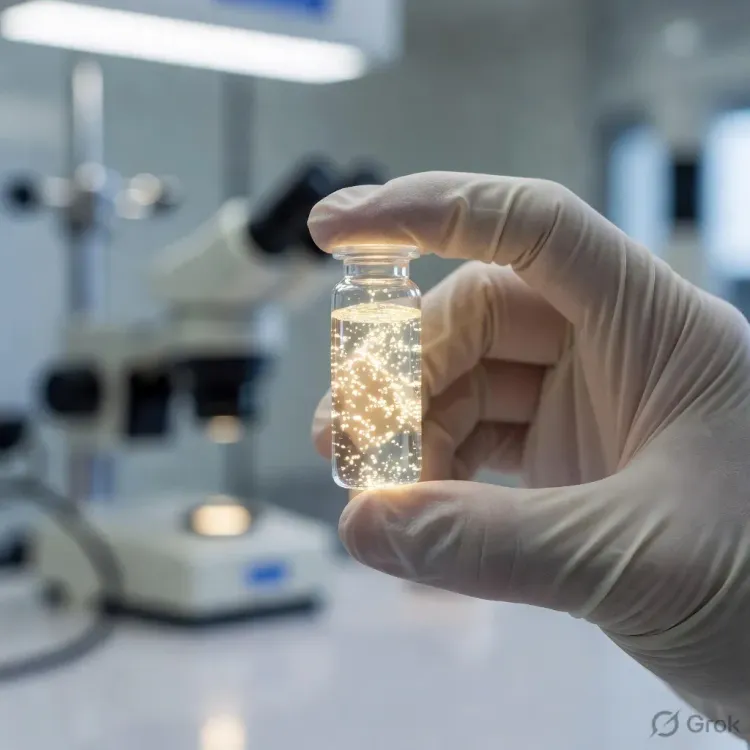
The Shanghai Jiao Tong University team developed a drug based on rare earth oxide nanoparticles — derived from cerium, one of the world's most abundant rare earth elements — that targets gout through multiple biological pathways simultaneously. In animal studies, the compound was shown to lower uric acid levels, reduce the formation of gout crystals, alleviate inflammation, and inhibit osteoclast (bone breakdown) activity, according to the researchers.
By addressing all four of these mechanisms at once, the drug targets the full spectrum of gouty arthritis (GA) symptoms — a multi-pronged approach that current medications largely fail to achieve. The team noted the drug's potential to provide relief that is both comprehensive and durable.
China's rare earth advantage in drug development
China controls the world's largest reserves of rare earth elements, including major deposits at Bayan Obo in Inner Mongolia. This resource dominance is increasingly being channelled into advanced materials research, including pharmaceutical applications. The use of cerium — a lanthanide element with well-documented antioxidant and anti-inflammatory properties — reflects a broader push by Chinese academic institutions to translate rare earth chemistry into biomedical innovation.
The involvement of enzyme-based approaches such as uricase — which breaks down uric acid — alongside nanoparticle delivery systems underscores the study's ambition to combine multiple therapeutic strategies in a single formulation.
What's next
The findings remain at the preclinical, animal-study stage, and human clinical trials would be required before any regulatory pathway could be considered. Nonetheless, the research signals a potentially transformative direction for gout treatment, a field that has seen limited pharmacological innovation in recent decades. Analysts and clinicians will be watching closely to see whether the nanoparticle platform can be translated into a safe and scalable human therapy — and whether China's rare earth supply chain gives its pharmaceutical sector a structural edge in bringing such treatments to market.
Point of View
China's control over cerium supply could give domestic manufacturers a structural cost advantage that shapes global pricing and access. The broader pattern here mirrors what has played out in EV batteries and solar panels: scientific leadership backed by raw-material monopoly.
NationPress
19 Oct 2026
Frequently Asked Questions
What is the new gout treatment discovered by Chinese scientists?
Researchers at Shanghai Jiao Tong University developed a drug based on rare earth oxide nanoparticles — derived from the element cerium — that targets gout through four biological pathways at once. In animal studies, it lowered uric acid, reduced monosodium urate (MSU) crystal formation, cut inflammation, and blocked bone breakdown. No existing gout medication addresses all four mechanisms simultaneously.
Why does gout cause such severe pain?
Gout pain is caused by monosodium urate (MSU) crystals that form in joints when uric acid levels in the blood remain persistently elevated — a condition called hyperuricemia . These sharp crystals trigger intense inflammatory responses. The ancient Greek physician Aretaeus described the pain in the second century AD as worse than 'iron screws, nor cords, nor the wound of a dagger, nor burning fire.'
How common is gout and is it getting worse?
More than 55 million people worldwide had gout in 2020 , according to US health data . The global caseload is expected to increase by 70 per cent by 2050 , driven by ageing populations, rising obesity rates, and dietary changes. Untreated gout can lead to joint deformities, kidney damage, and increased cardiovascular risk.
What is cerium and why is China using it in medicine?
Cerium is one of the world's most abundant rare earth elements, with major deposits at Bayan Obo in Inner Mongolia, China . It has well-documented antioxidant and anti-inflammatory properties that make it attractive for biomedical applications. China 's dominance in rare earth mining and processing gives its researchers privileged access to these materials for pharmaceutical innovation.
When will this gout drug be available to patients?
The drug is currently at the preclinical animal-study stage and has not yet entered human clinical trials. Regulatory approval would require successful trials demonstrating safety and efficacy in humans, a process that typically spans several years. The research team's findings were published in the journal Biomaterials and represent a proof-of-concept rather than a market-ready treatment.