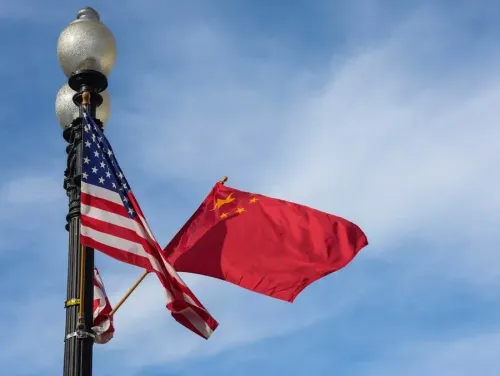
China grants 166 foreign firms telecoms VAS licences amid US carrier row

Synopsis
China quietly approved 166 foreign-firm telecoms licences even as the US moves to ban Chinese carriers — but analysts say the pilot-zone structure limits any real market disruption.
Key Takeaways
China's MIIT approved 166 foreign-invested entities for value-added telecommunications service pilots since February last year .
Approved VAS categories include internet data centres , internet access , and information services .
China lifted its previous 50 per cent foreign ownership cap , allowing wholly foreign-owned telecoms operators in pilot zones.
Pilot zones are limited to Beijing , Shanghai , Hainan , and Shenzhen .
Yang Guang , Senior Principal Analyst at Omdia , said the move is unlikely to significantly impact China's domestic telecoms market.
The announcement comes as the US Federal Communications Commission escalates restrictions on Chinese carriers operating in the United States .
China's Ministry of Industry and Information Technology (MIIT) has approved value-added telecommunications service (VAS) licences for 166 foreign-invested companies since February last year, in a move that signals incremental market opening even as Washington moves to restrict Chinese carriers from operating on US soil. The licences cover sectors including internet data centres, internet access, and information services, according to the ministry.
What China opened — and what it didn't
China has progressively dismantled a previous 50 per cent foreign ownership cap, now permitting wholly foreign-owned enterprises to operate VAS businesses within designated pilot zones. The approved zones include Beijing, Shanghai, Hainan, and Shenzhen. The MIIT confirmed the approvals on Wednesday, framing the policy as a further step toward broadening market access for global players.
Why it matters — and why it may not
Despite the headline figure of 166 licences, industry experts cautioned against overstating the significance. Yang Guang, Senior Principal Analyst covering communications at consultancy Omdia, noted that the sectors being unlocked are already intensely competitive domestically. 'I don't think there will be a significant impact on the domestic market,' Yang said. The restrictions, moreover, remain confined to pilot zones rather than the broader national market.
The competitive backdrop
The announcement arrives against a sharply adversarial backdrop in global telecoms. The US Federal Communications Commission (FCC) has been escalating efforts to block or revoke operating licences for Chinese carriers on national-security grounds. Beijing's reciprocal opening — even if modest in practical scope — can be read as a diplomatic signal toward multinationals such as Siemens and Airbus, which maintain substantial commercial interests in China and have lobbied for greater regulatory predictability.
Market reaction and analyst view
Analysts tracking the sector under bodies including the World Trade Organization (WTO) framework have long pressed China to reduce non-tariff barriers in digital services. The pilot-zone model, however, is a well-worn instrument of Chinese regulatory gradualism — offering foreign firms a foothold without exposing incumbents to full competitive pressure. The State Council has previously used similar pilot structures in finance and logistics before deciding whether to roll out changes nationally.
What's next
The critical question is whether MIIT will expand the pilot zones to a national framework, or whether the 166 approved entities will remain ring-fenced in four cities. Multinationals operating data-intensive services in China — particularly those reliant on cross-border data flows — will be watching the State Council's next policy signals most closely, especially as US-China tech decoupling intensifies through 2026.
Point of View
Coinciding with escalating FCC actions against Chinese carriers in the US, suggests a tit-for-tat signalling dynamic rather than structural liberalisation. What mainstream coverage underplays is that 166 licences across four cities in a country of 1.4 billion internet users is a rounding error in market-access terms. The more consequential variable is whether the State Council uses this pilot data to justify national rollout — or, as history suggests, to indefinitely defer it.
NationPress
21 Oct 2026
Frequently Asked Questions
How many foreign companies received telecoms licences in China?
China's MIIT approved 166 foreign-invested entities for value-added telecoms service pilots since February last year . The licences cover internet data centres, internet access, and information services.
Which cities are included in China's foreign telecoms pilot zones?
The pilot zones where wholly foreign-owned telecoms operators are permitted include Beijing , Shanghai , Hainan , and Shenzhen . Operations outside these zones remain subject to existing restrictions.
Will China's telecoms opening significantly affect the domestic market?
Yang Guang , Senior Principal Analyst at Omdia , said he does not expect a significant impact on the domestic market. The sectors being opened are already fiercely contested, and access remains confined to pilot zones.
Why is China opening its telecoms market to foreign firms now?
The move follows China's gradual easing of a previous 50 per cent foreign ownership cap on telecoms VAS providers. It coincides with heightened US-China tensions over carrier access, suggesting a diplomatic dimension alongside any genuine liberalisation intent.
How does this relate to US restrictions on Chinese telecoms carriers?
The US Federal Communications Commission has been moving to block or restrict Chinese carriers from operating in the United States on national-security grounds. Beijing's reciprocal opening of its market, even in limited form, adds a layer of geopolitical context to what is nominally a regulatory licensing announcement.