China deploys AI fish facial recognition on Tibet's Yarlung Tsangpo dam
Synopsis
China has turned its AI facial-recognition expertise on fish, deploying a round-the-clock biometric identification system on Tibet's Yarlung Tsangpo River dam — a tech crossover that could reshape how hydropower projects justify their environmental footprint globally.
Key Takeaways
China has deployed an AI-based 'fish facial recognition' system at the Zangmu Hydropower Station on the Yarlung Tsangpo River in Tibet .
The 116-metre-tall dam has been operational since 2015 ; its fishway has facilitated the upstream passage of approximately 570,000 rare fish .
Yang Xiaocheng , Director of Safety and Environmental Protection at the dam, said fish populations in the middle reaches of the river remain stable and have not declined due to dam construction.
The system replaces labour-intensive manual species counts with continuous, automated AI monitoring tailored to regionally unique Tibetan aquatic fauna.
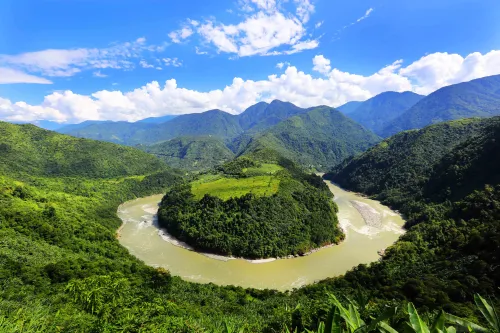
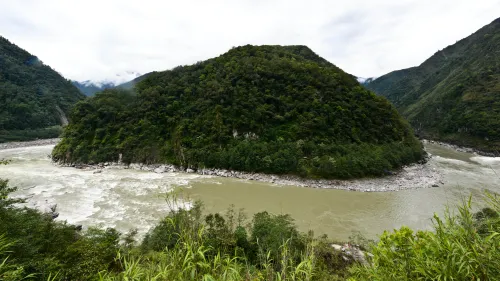
The Yarlung Tsangpo flows downstream as the Brahmaputra into India and Bangladesh , making its ecological management a transboundary concern.
Comparable fish-passage monitoring technologies have been developed by Innovasea ( Canada ), Nova Scotia Power , and the Alaska Fisheries Science Centre , as well as the US Department of Energy .
China has deployed an artificial intelligence-driven 'fish facial recognition' system on a fishway at the Zangmu Hydropower Station on the Yarlung Tsangpo River in Tibet, enabling round-the-clock automated species tracking that replaces labour-intensive manual counts. The system identifies fish species unique to the Tibet Autonomous Region and monitors their passage continuously, according to a report published by Global Times on Tuesday, 10 August 2026.
How the AI system works
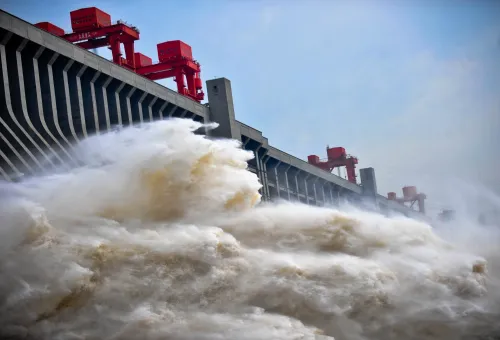
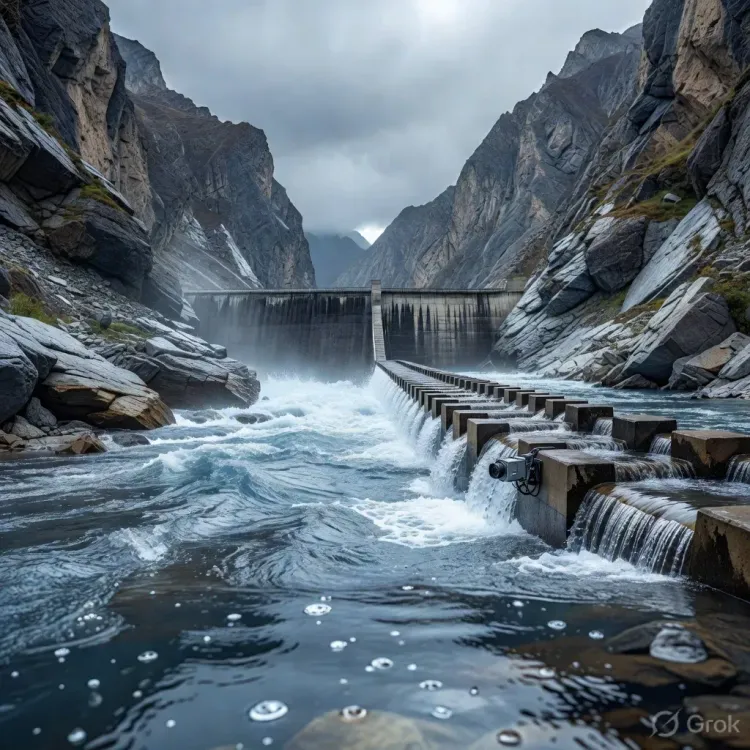
The AI-based identification platform operates along the fishway — commonly called a fish ladder — built into the 116-metre-tall (381 feet) Zangmu Hydropower Station, which has been operational since 2015 on the middle reaches of the Yarlung Tsangpo River. Rather than relying on periodic human observation, the system runs uninterrupted, logging every species that passes through the passage. The technology applies image-recognition algorithms trained on regionally specific aquatic fauna, effectively giving each fish a biometric profile.
Why it matters for conservation
Since the dam began operating, its fishway has helped approximately 570,000 rare fish swim upstream — a figure that underscores the ecological pressure large hydropower infrastructure places on migratory species. Yang Xiaocheng, Director of Safety and Environmental Protection at the dam, said the monitoring data points to a healthy ecosystem. 'From the monitoring results, the fish population in the middle reaches of the Yarlung Tsangpo is very stable and has not decreased because of the construction of the hydropower station,' Yang said. He added: 'On the contrary, the aquatic ecology and animal-plant life in the entire middle gorge section of the Yarlung Tsangpo River have shown positive changes.'
The competitive backdrop
Automated fish-monitoring technology is an emerging field globally. Institutions including the Alaska Fisheries Science Centre and private firms such as Innovasea in Canada and Nova Scotia Power have developed acoustic and video-based fish-passage monitoring systems. The US Department of Energy has also funded fishway research. China's deployment of AI facial-recognition methodology — a technique the country has refined extensively in urban surveillance — represents a novel crossover application into wildlife conservation at scale.
Hydropower's environmental trade-off
Hydropower facilities provide flood protection and a reliable renewable energy source that can offset intermittent generation from solar and wind installations. However, they restructure natural water bodies and fragment migratory corridors for aquatic species, posing significant environmental challenges. The Yarlung Tsangpo, which flows downstream into Bangladesh and India as the Brahmaputra, is ecologically sensitive and home to species such as Glyptosternon maculatum. Downstream nations have long raised concerns about the cumulative impact of dam construction in the upper basin.
What's next
The application of AI-based biometric identification to fishway monitoring could inform policy decisions around future hydropower projects on the Yarlung Tsangpo, where China has announced plans for additional large-scale dams including one in Medog. Whether the data gathered by the system will be shared with downstream nations — particularly India and Bangladesh — or used exclusively for domestic environmental compliance remains to be seen. The technology's scalability across other Chinese dam networks, including facilities linked to the Three Gorges Dam system, will be the next benchmark to watch.
Point of View
Including the contentious Medog mega-dam. Mainstream coverage treats this as a wildlife tech curiosity, but the deeper story is how China is using AI-generated environmental compliance data to pre-empt criticism from downstream nations India and Bangladesh, both of which have raised alarms about upstream dam proliferation. The crossover from urban surveillance AI to ecological monitoring also signals that China's image-recognition industrial base is mature enough to find commercial and political applications far beyond its original mandate. Analysts tracking the Brahmaputra basin's geopolitics should watch whether this data is ever made available for independent verification.
NationPress
10 Aug 2026
Frequently Asked Questions
What is China's AI fish facial recognition system on the Yarlung Tsangpo?
China has deployed an AI-based fish identification system at the Zangmu Hydropower Station on the Yarlung Tsangpo River in Tibet that monitors fish species passing through the dam's fishway around the clock. The system uses image-recognition algorithms trained on species unique to the Tibet Autonomous Region, replacing manual counting methods that were previously used to track fish passage.
How many fish have passed through the Zangmu dam fishway?
Approximately 570,000 rare fish have swum upstream through the fishway at the Zangmu Hydropower Station since the dam began operating in 2015. Dam officials say monitoring data shows the fish population in the middle reaches of the Yarlung Tsangpo remains stable.
Why does hydropower on the Yarlung Tsangpo matter internationally?
The Yarlung Tsangpo flows downstream into India and Bangladesh as the Brahmaputra River, making any ecological changes in Tibet's upper basin a transboundary concern. Both India and Bangladesh have previously raised concerns about the cumulative impact of Chinese dam construction on downstream water flow and aquatic ecosystems.
How does China's fish AI system compare to global technology?
Similar fish-passage monitoring systems have been developed by Innovasea in Canada, Nova Scotia Power, and the Alaska Fisheries Science Centre, as well as funded by the US Department of Energy. China's approach is distinctive in applying facial-recognition AI methodology — a technology the country has developed extensively for urban applications — to wildlife conservation at a hydropower facility.
What are China's future hydropower plans on the Yarlung Tsangpo?
China has announced plans for additional large-scale hydropower development on the Yarlung Tsangpo, including a major project in the Medog area. The AI monitoring data collected at Zangmu could be used to support environmental impact assessments for these future projects, making the system's credibility and data transparency significant factors to watch.