China expands quantum tech across power grid after Hefei trial
Synopsis
China has completed an 18-month quantum technology trial at a Hefei substation — the world's first systematic quantum deployment in power grid engineering — and is now moving to expand it nationwide, with quantum sensors, communications, and computing all in play.
Key Takeaways
China plans to expand quantum technology across its national power grid after an 18-month trial in Hefei, Anhui province proved successful.
The substation, officially commissioned in November 2024 , deployed dozens of quantum solutions spanning measurement, communication, and computing .
Quantum sensors enabled rapid detection and diagnosis of equipment defects and faults in the power system.
Tian Teng of Anhui Electric Power Company called the technology a 'hard support' for guaranteeing power supply, not a showpiece.
The project is described as the first systematic application of quantum technology to power grid engineering globally.
State Grid Corporation of China and the Anhui Electric Power Research Institute are key institutional partners in the initiative.
China is scaling quantum technology across its national power grid following a successful 18-month trial at a substation in Hefei, Anhui province, aiming to prevent blackouts through faster fault detection and advanced diagnostics. The expansion, reported on Wednesday, 1 August 2026, marks the first systematic application of quantum technology to power grid engineering anywhere in the world, according to a report by People's Daily.
What the Hefei trial achieved
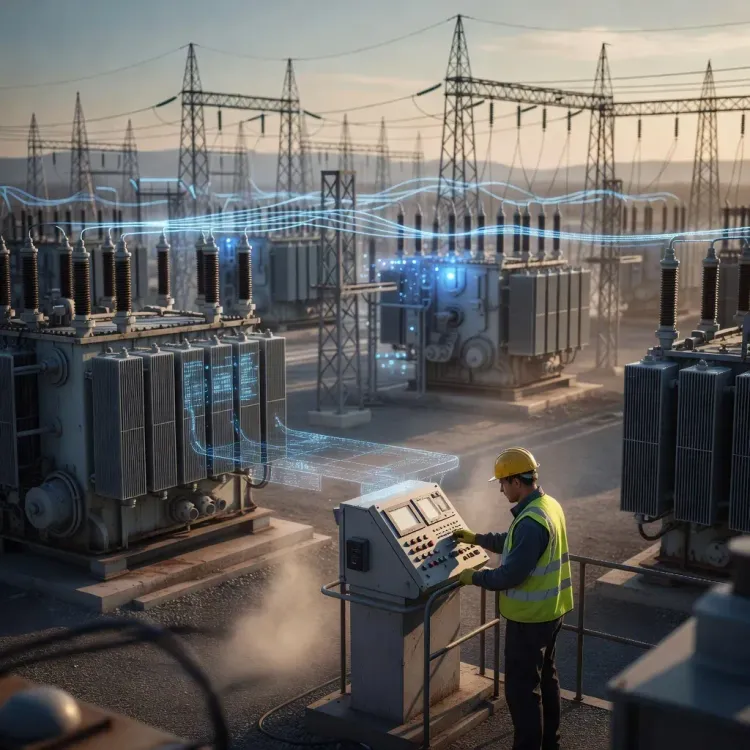
Officially commissioned in November 2024, the pilot facility — operated in partnership with Anhui Electric Power Company — developed and deployed dozens of quantum solutions across three domains: measurement, communication, and computing. Quantum sensors were used to rapidly detect and diagnose equipment defects and faults within the power system, significantly reducing response times compared to conventional monitoring methods.
Tian Teng, a researcher with Anhui Electric Power Company, was quoted as saying: "The operation has proved that quantum technology is not a 'showpiece', but a 'hard support' for guaranteeing the power supply and promoting development." The facility was described in the report as a "landmark integration of the new-type power grid with cutting-edge quantum technology."
Why it matters
Quantum technology exploits the physics of individual atoms, which can exist in multiple states simultaneously — a phenomenon called "superposition" — until they are measured. This property enables measurement, computation, and data communication with significant advantages in precision, speed, and security over classical methods.
For a country with one of the world's largest and most complex electricity networks, applying quantum sensing and simulation at grid scale could meaningfully reduce the frequency and severity of outages. China's power grid has faced recurring stress from extreme weather events and surging industrial electricity demand driven by its AI and manufacturing buildout.
The competitive backdrop
State Grid Corporation of China, the state-owned utility that oversees the bulk of the country's transmission infrastructure, is the institutional backbone behind the grid modernisation push. The Anhui Electric Power Research Institute contributed to the technical development of the quantum solutions deployed during the trial.
Globally, quantum sensing for industrial infrastructure remains largely at the research stage, making China's grid-level deployment a notable leap. The United States, European Union, and Japan have active quantum research programmes but have not yet reported comparable real-world deployments at utility scale.
What's next
Following the trial's positive results, authorities plan to expand quantum technology applications across broader sections of China's power grid, though a specific national rollout timeline has not yet been disclosed. The success of the Hefei substation model is expected to serve as the blueprint for that expansion.
Investors and infrastructure watchers will be tracking which quantum hardware and software providers — including domestic players involved in the Origin Wukong quantum computing ecosystem — stand to benefit from grid-scale procurement contracts as the programme scales.
Point of View
Giving Beijing a first-mover advantage in quantum-hardened utilities. This fits a broader pattern of China using state-owned enterprises as forcing functions for deep-tech commercialisation — compressing the lab-to-deployment cycle that Western markets leave to private capital. What mainstream coverage underplays is the security dimension: quantum communication across a power grid is also a quantum-encrypted communication backbone, with obvious dual-use implications. The expansion timeline and procurement pipeline will be the real signal to watch — if contracts materialise at scale, it will pressure allied nations to accelerate their own critical-infrastructure quantum programmes.
NationPress
15 Sept 2026
Frequently Asked Questions
What did China's quantum power grid trial in Hefei involve?
The trial, run over 18 months at a substation in Hefei, Anhui province , applied quantum technology to detect and diagnose equipment defects and faults in the power system. Officially commissioned in November 2024 , it deployed dozens of quantum solutions across measurement, communication, and computing domains.
Why is China applying quantum technology to its power grid?
Quantum sensors and simulations offer superior precision and speed compared to classical monitoring tools, enabling faster fault detection that can prevent or limit blackouts. China's grid faces growing stress from extreme weather and rising electricity demand from its expanding AI and manufacturing sectors.
Who is behind China's quantum power grid project?
Anhui Electric Power Company and the Anhui Electric Power Research Institute led the trial, with State Grid Corporation of China providing the broader institutional framework. Researcher Tian Teng of Anhui Electric Power Company was among the key voices cited in the official report.
Is this the first time quantum technology has been used in a power grid?
Yes, according to the official report, the Hefei facility represents the first systematic application of quantum technology to power grid engineering anywhere in the world. Other major economies have active quantum research programmes but have not reported comparable utility-scale deployments.
What happens next with China's quantum grid expansion?
Following the successful trial, authorities plan to roll out quantum technology across broader sections of China 's national power grid, using the Hefei substation as a blueprint. A detailed national timeline has not yet been publicly disclosed, but procurement and scaling activity will be closely watched by industry analysts.