Trump Signs Executive Orders to Boost US Quantum Leadership
Synopsis
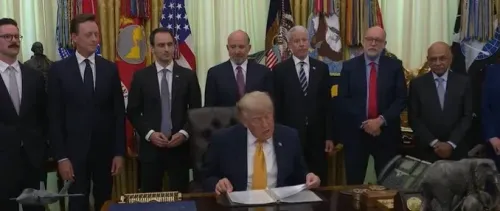
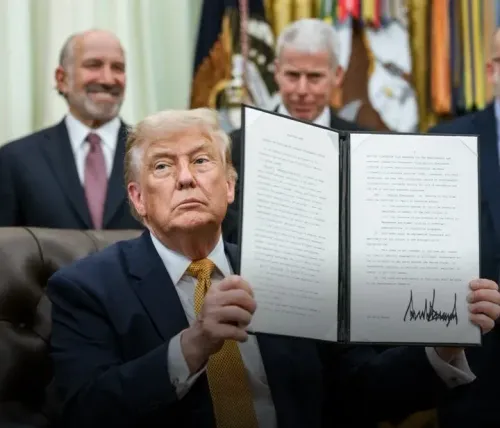
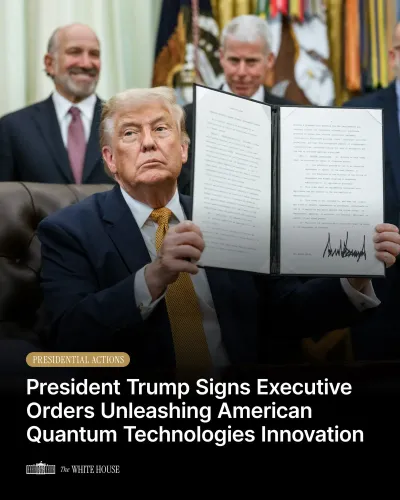
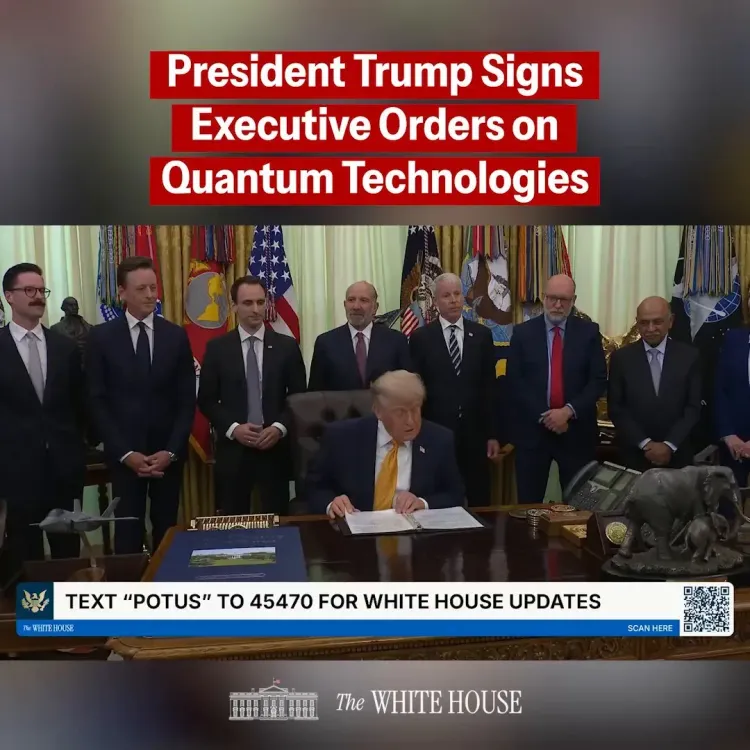
President Trump signed executive orders on quantum technologies on 23 June 2026, directing a national effort to accelerate quantum innovation, protect security interests, and maintain American leadership in a strategically vital industry facing intense global competition.
Key Takeaways
President Trump signed executive orders on 23 June 2026 specifically targeting quantum technology development.
The orders aim to 'supercharge' national innovation in quantum computing, sensing, and communications while ensuring national security.
The move builds on the National Quantum Initiative Act of 2018 , which established a 10-year federal quantum programme.
Quantum technologies are central to next-generation cryptography, making federal investment a direct national security concern.
The United States is engaged in sustained strategic competition with China over quantum capabilities, with both nations committing large state resources.
Congressional appropriations and interagency guidance from bodies like NIST and NSF will determine the practical impact of the orders.
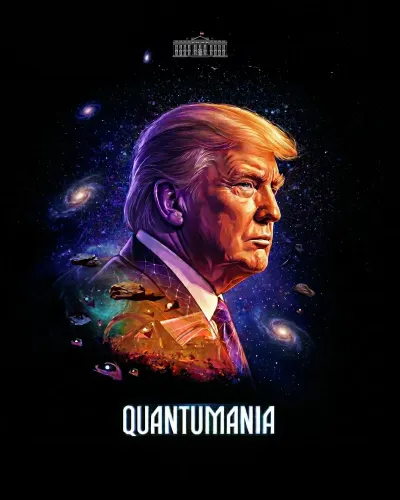
The White House announced on Tuesday, 23 June 2026 that President Donald Trump has signed executive orders focused on quantum technologies, framing the move as a major push to 'supercharge' national innovation, safeguard security interests, and sustain American competitiveness in a sector the administration describes as critical.
Context
The White House post states that the executive orders are aimed at 'investing in American quantum leadership like never before,' ensuring national security, and 'continuing American growth in a critical industry.' While the specific provisions of the newly signed orders have not been detailed in the post, the announcement signals a significant federal commitment to quantum technologies spanning computing, sensing, and communications.
Quantum technologies are widely regarded as a next-generation frontier, with applications ranging from ultra-secure communications to computational capabilities that far exceed classical computers. The United States has long identified this domain as a strategic priority, and the latest executive action reinforces that posture.
Policy Backdrop
The National Quantum Initiative Act, signed in December 2018 during Trump's first term, established a 10-year coordinated federal programme to accelerate quantum information science research, development, and workforce training across agencies. A 2019 National Strategic Overview for Quantum Information Science further outlined agency roles and identified quantum as a priority for both economic and security leadership.
Successive administrations have treated quantum technologies as a domain of acute strategic competition, particularly with China, which has announced large-scale state investments in quantum computing and secure communications. Federal policy has combined research funding, export controls, and supply-chain measures in an effort to maintain American advantages in these dual-use technologies.
The new executive orders appear to deepen and extend this policy lineage, with the Trump administration framing quantum investment as indispensable to both economic growth and national security architecture.
Stakeholders and Impact
The executive orders are expected to affect a broad set of stakeholders, including quantum researchers at universities and national laboratories, defence agencies relying on next-generation cryptography and sensing, and a growing private technology industry building quantum hardware and software platforms.
Quantum capabilities intersect directly with cryptography — the encryption systems that protect financial networks, government communications, and military infrastructure. Advances in quantum computing could render current encryption standards vulnerable, making federal investment in quantum-resistant systems a matter of urgent national security.
For India, which has its own National Quantum Mission launched in 2023 with an outlay of over Rs 6,000 crore, the American push signals intensifying global competition for talent, patents, and supply-chain partnerships in this sector. Indian technology firms and research institutions with ties to the US ecosystem will be watching the implementation closely.
What's Next
Attention will now turn to Congressional appropriations for quantum programmes in upcoming budget cycles and any new interagency implementation guidance or technical standards released by bodies such as NIST or NSF. The specific mandates contained within the executive orders — including funding allocations, agency responsibilities, and timelines — will determine the practical scope of the administration's ambitions.
As quantum technologies move from laboratory research toward real-world deployment, the executive orders position the United States to assert first-mover advantages in a domain that analysts consider foundational to the next era of economic and military power.
Point of View
The White House is signalling continuity with a bipartisan policy consensus while seeking to accelerate its pace. The move fits a broader pattern of US industrial-policy interventionism in strategic technology sectors, from semiconductors to artificial intelligence. For rival powers and allied nations alike, the signal is clear: Washington intends to contest quantum supremacy with the full weight of federal authority.
NationPress
21 Sept 2026
Frequently Asked Questions
What executive orders did Trump sign on quantum technology?
President Trump signed executive orders on 23 June 2026 directing a national effort to accelerate quantum technology innovation, ensure national security, and sustain American leadership in the quantum industry. Specific provisions have not yet been publicly detailed.
What is the National Quantum Initiative Act?
The National Quantum Initiative Act was signed in December 2018 to establish a coordinated 10-year federal programme accelerating quantum information science research, development, and workforce training across US government agencies.
Why is quantum technology important for national security?
Quantum computing can potentially break current encryption systems that protect military communications, financial networks, and government data. Quantum-secure communications and sensing also offer significant defence advantages, making the technology a top national security priority.
How does the US compare to China in quantum technology?
Both the United States and China have committed large state resources to quantum technologies. China has announced major investments in quantum computing and secure communications, prompting successive US administrations to combine research funding, export controls, and supply-chain measures to maintain American advantages.
What does Trump's quantum executive order mean for India?
India launched its own National Quantum Mission in 2023 with an outlay of over Rs 6,000 crore . The US push intensifies global competition for quantum talent, patents, and partnerships, which Indian research institutions and technology firms linked to the American ecosystem will need to navigate carefully.