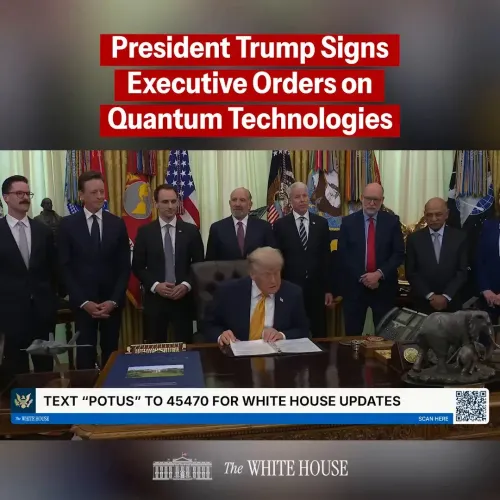
Trump signs quantum executive orders, targets quantum computer by 2028
Synopsis
Trump's twin quantum executive orders do more than signal ambition — they set hard deadlines. A scientifically relevant quantum computer by 2028, post-quantum cryptography across federal agencies by 2031, and $2 billion already committed: the US is treating quantum not as a research horizon but as an active geopolitical contest, and the clock is now officially running.
Key Takeaways
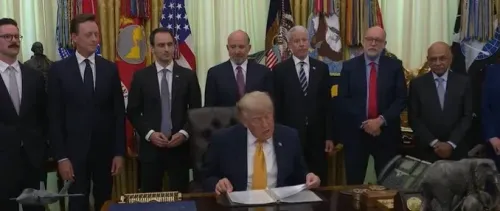
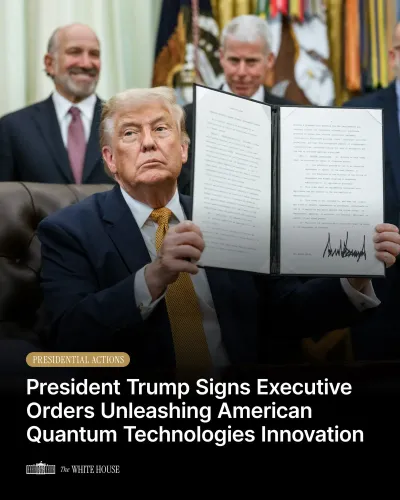
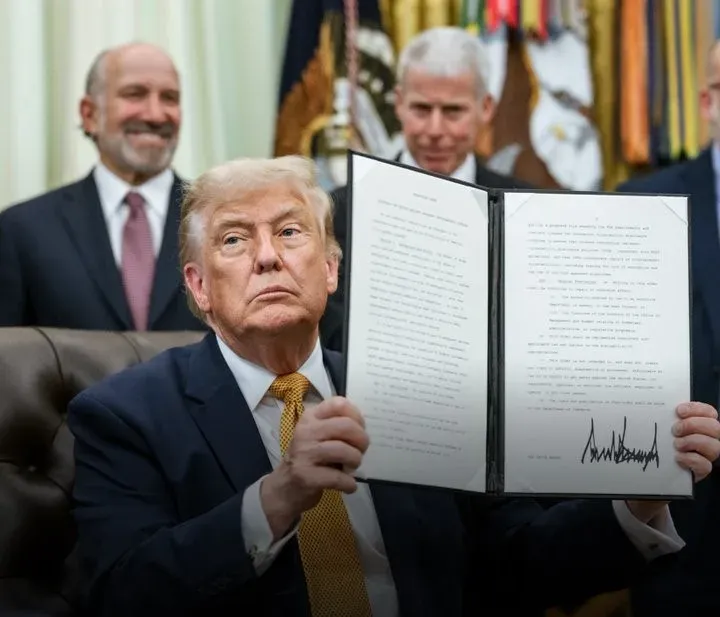
President Donald Trump signed two quantum-focused executive orders at the White House on 23 June .
The first order targets a scientifically relevant quantum computer by 2028 , to be deployed at a Department of Energy facility.
The second order accelerates federal transition to post-quantum cryptography, with a deadline of 2031 .
The administration has already invested $2 billion in quantum technology in recent weeks, according to Commerce Secretary Howard Lutnick .
Google President Ruth Porat and IBM CEO Arvind Krishna both backed the initiative at the signing ceremony.
The orders build on the National Quantum Initiative Act signed by Trump in 2018 .
President Donald Trump on 23 June signed two executive orders at a White House ceremony, launching a sweeping federal push to accelerate quantum computing development and fortify the government's cyber defences against future quantum-enabled threats. The twin directives mark the most significant US policy action on quantum technology since the National Quantum Initiative Act of 2018.
The Innovation Order: A Quantum Computer by 2028
The first order, titled Ushering in the Next Frontier of Quantum Innovation, sets national goals for building what the administration calls a 'scientifically relevant quantum computer' within the next five years. Trump said the initiative would launch 'a national effort to produce a quantum computer capable of performing important scientific calculations and to develop quantum enabled sensors and networks in the next five years.'
The administration believes such a machine could be operational by 2028. The Department of Energy has been tasked with defining the technical requirements; the system is expected to be deployed at a national laboratory or Department of Energy facility. A senior administration official described the moment as a turning point: 'We're now at the moment where a lot of that research is starting to pay off into commercial applications. And what this executive order will do is turbocharge that.'
Beyond the headline computing target, the order also directs the expansion of domestic manufacturing capacity for quantum technologies, the strengthening of supply chains, the creation of workforce development programmes, and deeper cooperation with allied nations on research, intellectual property protection and supply-chain security.
The Cyber Security Order: Post-Quantum Cryptography by 2031
The second executive order focuses squarely on cyber security, accelerating the federal government's transition to post-quantum cryptography and moving key compliance deadlines forward to 2031. National Cyber Director Sean Cairncross explained the urgency: 'As quantum rolls forward, it will challenge public key cryptography, which is what secures everything. These two executive orders, which pair innovation and security, will address those issues.'
The concern is that sufficiently powerful quantum computers could eventually break the encryption systems that currently protect financial transactions, critical infrastructure, and government networks — a scenario security experts refer to as 'Q-Day'. By mandating an earlier transition deadline, the administration is signalling that it considers the threat timeline closer than previously acknowledged.
Investment and Industry Response
Commerce Secretary Howard Lutnick noted that the administration had already committed significant capital to the sector. 'You all know that the government invested $2 billion just a couple of weeks ago in quantum to drive it forward,' he said, adding that domestic manufacturing investment was also underway to ensure advanced quantum technologies are built in America.
Technology industry leaders at the signing welcomed the move. Google President Ruth Porat called quantum computing 'a breakthrough critical technology' and declared, 'The US is in the lead, will stay in the lead.' IBM Chief Executive Arvind Krishna said government backing would catalyse private-sector investment: 'The role of the government in pushing innovation and technology forward is what both of these will achieve.'
Strategic Context: The Global Quantum Race
Quantum computing has emerged as a strategic priority for major powers because of its potential to solve scientific, industrial, and security challenges far beyond the reach of conventional computers. The United States and China have each invested heavily in the technology over the past decade, and the latest executive orders are widely read as a direct response to that intensifying competition.
The orders build on the National Quantum Initiative Act, which Trump signed during his first term in 2018. That legislation expanded federal support for quantum research and established a framework for collaboration among government agencies, universities, and private industry. Trump linked the new initiative to the country's broader heritage: 'America is celebrating 250 years of ingenuity, innovation, and invention this year, and today's commitments to quantum leadership will help secure that legacy for decades to come.'
With a 2028 computing target and a 2031 cryptography deadline now locked into federal policy, the coming years will test whether the administration's ambition can translate into verifiable technological milestones.
Point of View
Not an engineering guarantee — and the vagueness of that phrase matters enormously. The administration has not defined what 'scientifically relevant' means in measurable terms, which leaves the goalposts movable. The 2031 post-quantum cryptography deadline is more concrete and arguably more urgent: security researchers have warned for years that federal agencies are dangerously slow on this transition, and a hard deadline backed by executive authority is overdue. What the orders do not address is the talent pipeline — domestic quantum expertise remains scarce, and without a credible workforce strategy, both deadlines risk becoming aspirational rather than operational.
NationPress
21 Sept 2026
Frequently Asked Questions
What did President Trump's quantum executive orders do?
President Trump signed two executive orders on 23 June directing the federal government to develop a scientifically relevant quantum computer by 2028 and to complete the transition to post-quantum cryptography by 2031. The orders also expand domestic manufacturing capacity and deepen allied cooperation on quantum technology.
Why is the US pushing for quantum computing leadership?
Quantum computing is considered strategically critical because it could solve scientific, industrial, and security problems beyond the reach of conventional computers. The US views it as a key arena of competition with China, and the new orders are designed to convert years of federal research investment into practical applications.
What is post-quantum cryptography and why does it matter?
Post-quantum cryptography refers to encryption methods designed to resist attacks from quantum computers. Current encryption systems — which protect financial transactions, government networks, and critical infrastructure — could potentially be broken by sufficiently powerful quantum machines, making the transition to quantum-resistant systems a national security priority.
How much has the US government invested in quantum technology?
Commerce Secretary Howard Lutnick stated at the signing ceremony that the government had invested $2 billion in quantum technology in the weeks preceding the executive orders, in addition to the longer-term federal funding established under the National Quantum Initiative Act of 2018.
What role will the Department of Energy play?
The Department of Energy has been tasked with defining the technical requirements for the target quantum computer system, which is expected to be deployed at a national laboratory or a Department of Energy facility as part of the first executive order's mandate.