Trump targets quantum computing breakthrough by 2028 with dual executive orders
Synopsis
The Trump administration has set a hard 2028 deadline to deliver a government-backed quantum computer at a national lab — and pulled the post-quantum cryptography migration deadline four years forward to 2031. Two executive orders in a single day signal that Washington views quantum supremacy not as a research aspiration but as an active national security race.
Key Takeaways
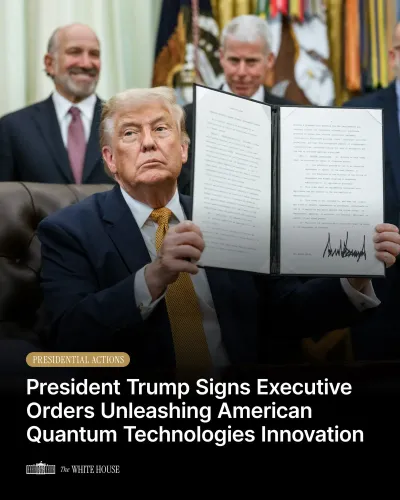
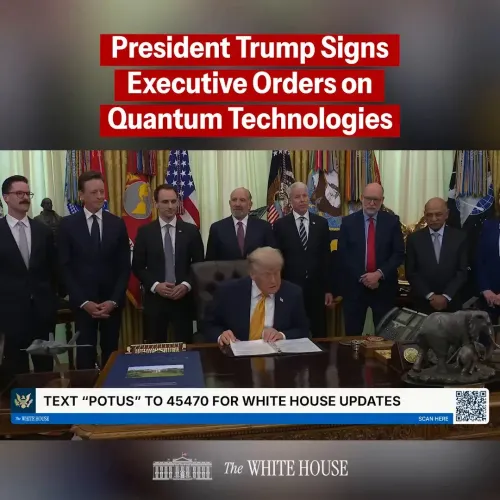
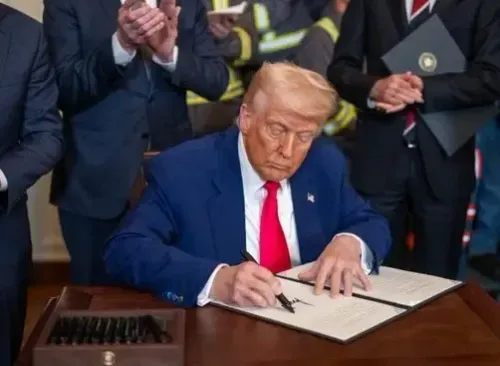
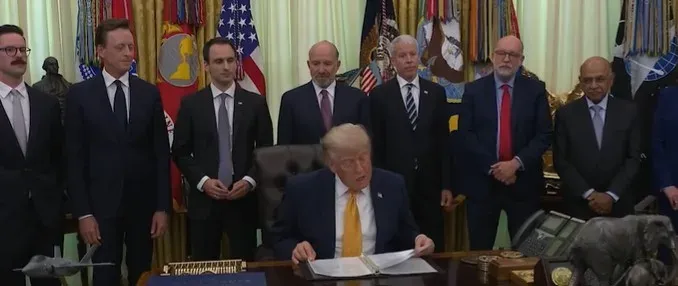
President Donald Trump signed two executive orders targeting quantum computing leadership and cybersecurity on 23 June .
The administration has set a 2028 deadline to deliver a 'scientifically relevant quantum computer' at a national laboratory or Department of Energy facility.
The Department of Energy is tasked with defining technical specifications for the target system.
Federal agencies must develop five-year deployment plans for quantum-enabled sensors and networking technologies.
The post-quantum cryptography migration deadline has been moved from 2035 to 2031 , citing risks to existing encryption from future quantum systems.
The strategy includes domestic supply chain strengthening, workforce expansion, and allied-nation research cooperation.
The Trump administration has set a formal target of delivering a scientifically relevant quantum computer by 2028, unveiling a sweeping national strategy to secure American leadership in one of the world's most consequential emerging technologies. The initiative was formalised through two executive orders signed by President Donald Trump, covering both quantum innovation and cybersecurity defences against future quantum-enabled threats.
The 2028 Quantum Target
According to senior administration officials, the centrepiece of the strategy is the development of a quantum computer capable of performing meaningful scientific calculations — described as a 'stepping stone' toward larger commercial systems. 'We believe this can happen by 2028,' a senior administration official told reporters during a briefing.
The Department of Energy has been tasked with defining the precise technical specifications for this 'scientifically relevant quantum computer.' Once built, the machine is expected to be deployed at a national laboratory or a Department of Energy facility. 'The intent is to have one of these scientifically relevant quantum computers delivered to a national lab or Department of Energy facility,' an official confirmed.
Accelerating Commercial Applications
Officials framed the moment as a turning point where years of federal and private-sector investment are beginning to yield practical results. 'We're now at the moment where a lot of that research is starting to pay off into commercial applications,' one official said. 'And what this executive order will do is turbocharge that.'
The first executive order also directs federal agencies to develop deployment plans for quantum-enabled sensors and networking technologies over the next five years. The strategy additionally encompasses measures to strengthen domestic supply chains, expand workforce training programmes, and deepen cooperation with allied nations on research security and intellectual property protection.
Post-Quantum Cryptography Deadline Brought Forward
The second executive order accelerates the federal government's migration to post-quantum cryptography, moving a key compliance deadline from 2035 to 2031. Officials warned that sufficiently advanced quantum computers could eventually break existing encryption systems relied upon by governments, financial institutions, and critical infrastructure operators — making the transition an urgent national security priority.
'A lot of the focus here is going to be around coordination of protections against these threats to the QIST ecosystem,' a senior White House official said, referring to quantum information science and technology.
National Security and Global Competition
The Department of War and other agencies have been directed to explore national security applications of quantum technologies, spanning sensing, networking, and advanced computing. This comes amid intensifying global competition in quantum research, with governments worldwide racing to harness the technology's potential advantages in artificial intelligence, defence, and scientific discovery.
Quantum computing promises to solve certain classes of computational problems exponentially faster than classical machines, though significant technical hurdles remain before large-scale systems become viable. The administration's 2028 milestone, if achieved, would mark the first time a government-backed quantum system has demonstrated scientifically meaningful performance at scale — a benchmark that could reshape the global technology race.
Point of View
Giving the administration room to claim success without necessarily delivering a system that changes the competitive landscape. The more consequential move may be the cryptography deadline shift from 2035 to 2031, which puts real compliance pressure on federal agencies and their private-sector partners. Quantum computing has seen headline milestones before — from Google's 2019 'supremacy' claim to IBM's roadmap — that did not translate into near-term strategic advantage. Whether this executive order accelerates genuine capability or primarily signals geopolitical intent toward China remains the central question mainstream coverage has so far sidestepped.
NationPress
21 Sept 2026
Frequently Asked Questions
What is the Trump administration's 2028 quantum computing goal?
The administration aims to deliver a 'scientifically relevant quantum computer' by 2028, to be deployed at a national laboratory or Department of Energy facility. The system is intended as a stepping stone toward larger, commercially viable quantum machines.
Which agencies are responsible for executing the quantum strategy?
The Department of Energy has been tasked with defining the technical specifications for the target quantum computer. Other federal agencies, including the Department of War, have been directed to explore national security applications of quantum technologies, including sensing and networking.
Why has the post-quantum cryptography deadline been moved forward?
Officials moved the deadline from 2035 to 2031 because future quantum computers could eventually break the encryption systems currently used by governments, financial institutions, and critical infrastructure operators. The earlier deadline is intended to ensure the federal government completes its migration before such systems become viable.
What else do the executive orders cover beyond quantum hardware?
The orders direct agencies to develop five-year deployment plans for quantum-enabled sensors and networking, strengthen domestic supply chains, expand workforce training programmes, and increase cooperation with allied nations on research security and intellectual property protection.
How does this fit into the broader global quantum race?
Quantum computing has become a major arena of technological competition, with governments worldwide seeking advantages in AI, defence, communications, and scientific research. The US strategy is explicitly framed as securing American leadership against rival nations, though officials did not name specific competitors in public remarks.