Chinese SiC chipmakers eye data centre boom as AI strains power grids

Synopsis
Chinese SiC chipmaker Basic Semiconductor is heading for a Hong Kong IPO as AI-driven data centre power demands open a major new market for silicon carbide chips — with Nvidia's 800V Kyber racks set to hand SiC and GaN a 10–15% share of next-gen power semiconductor architecture by 2027.
Key Takeaways
Basic Semiconductor , founded in 2016 by Tsinghua University and University of Cambridge graduates, passed a Hong Kong IPO listing hearing earlier this week.
The Shenzhen -based firm is one of China 's few fully integrated SiC device manufacturers, spanning design, wafer fabrication, and module packaging.
According to UBS , the global SiC market is currently oversupplied due to aggressive capacity expansion by Chinese producers.
Nvidia 's 800V Kyber rack systems, slated for mass deployment in 2027 , are projected to give SiC and GaN chips a 10 to 15 per cent share of the power semiconductor architecture.
The 2027–2028 shift to 800V data centre architectures is expected to absorb current excess SiC inventory, per UBS analysis.
Basic Semiconductor competes domestically with Silan Microelectronics and China Resources Microelectronics , and globally with Infineon Technologies and STMicroelectronics .
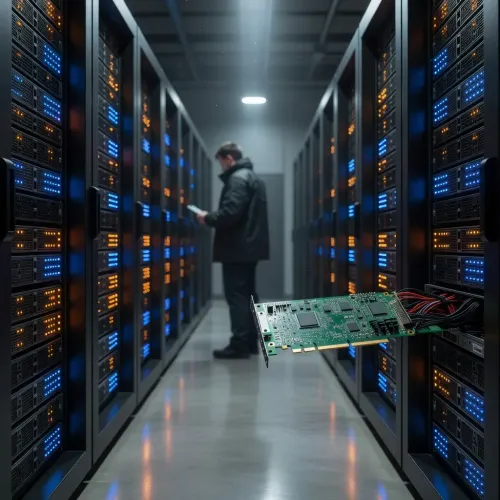
Silicon carbide (SiC) semiconductors are emerging as a critical solution to the power crisis gripping global AI data centres, and Chinese chipmakers are racing to capitalise. Shenzhen-based Basic Semiconductor, founded in 2016 by graduates of Tsinghua University and the University of Cambridge, passed a listing hearing earlier this week on its path to an initial public offering (IPO) in Hong Kong, making it the latest Chinese SiC firm to seek public capital to fund expansion.
Why it matters
The global AI infrastructure buildout is placing unprecedented strain on data centre energy grids, forcing operators to rethink power delivery from the ground up. SiC chips — compound semiconductors prized for exceptional heat resistance and power efficiency — are now being evaluated not just for electric vehicles (EVs), where they have long been a staple, but as a core component in next-generation data centre power architectures.
Basic Semiconductor is one of China's few fully integrated device manufacturers in the SiC space, covering chip design, wafer fabrication, and module packaging under one roof — a vertical integration model that gives it a structural edge in supply chain control.
The competitive backdrop
Basic Semiconductor joins domestic peers Silan Microelectronics and China Resources Microelectronics in a crowded push to supply next-generation AI infrastructure. Global incumbents including Infineon Technologies and STMicroelectronics have historically dominated the SiC market, but aggressive capacity expansion by Chinese firms has already shifted the supply-demand balance.
According to research from UBS, the global SiC market is currently oversupplied, largely as a result of that rapid capacity ramp-up by Chinese manufacturers. However, analysts noted that the transition to 800V power architectures in 2027 and 2028 is expected to help absorb the excess inventory, with data centre adoption playing a meaningful supporting role.
Nvidia's 800V catalyst
Nvidia's advanced 800V Kyber rack configurations are slated for mass deployment in 2027, and UBS research projects that SiC and gallium nitride (GaN) chips will together capture 10 to 15 per cent of the power semiconductor architecture in those systems. Like SiC, GaN is a next-generation compound material capable of handling higher voltages than conventional silicon, making both technologies well-suited to the demands of high-density AI compute clusters.
The anticipated Nvidia Kyber ramp represents a concrete, time-bound demand signal that could help Chinese SiC producers work through current oversupply conditions while establishing supply relationships with hyperscale data centre operators.
What's next
Basic Semiconductor's expected Hong Kong listing underscores a deliberate national strategy to dominate the next phase of SiC technology, with public markets providing the capital runway needed to scale production ahead of the 2027 architecture transition. Investors and industry observers will be watching whether Chinese SiC producers can translate current oversupply into long-term market share gains as data centres become a structurally important demand vertical alongside EVs.
Point of View
Not just GPUs. What mainstream coverage tends to underplay is the timing asymmetry: Chinese producers have built capacity ahead of demand, creating a painful oversupply window, but the Nvidia Kyber architecture transition in 2027 could hand them a rare demand tailwind precisely when Western incumbents like Infineon and STMicroelectronics are still recalibrating. The Basic Semiconductor IPO is also a signal that China's semiconductor self-sufficiency drive is moving beyond logic chips into the compound semiconductor layer — an area that has so far escaped the most intense geopolitical scrutiny but may not for long.
NationPress
26 Sept 2026
Frequently Asked Questions
What is Basic Semiconductor and why is it going public?
Basic Semiconductor is a Shenzhen -based, fully integrated silicon carbide (SiC) chipmaker founded in 2016 by graduates of Tsinghua University and the University of Cambridge . The company passed a Hong Kong IPO listing hearing earlier this week, seeking public capital to fund expansion as demand for SiC chips in AI data centres accelerates.
Why are silicon carbide chips important for AI data centres?
SiC semiconductors offer exceptional heat resistance and power efficiency compared to conventional silicon, making them well-suited to the high-voltage, high-density power delivery systems that AI data centres require. As AI workloads strain energy grids, operators are upgrading to architectures like Nvidia 's 800V Kyber racks, which are projected to rely on SiC and GaN chips for 10 to 15 per cent of their power semiconductor needs.
Is the SiC chip market currently oversupplied?
Yes, according to UBS analysts, the global SiC market is currently oversupplied, largely because Chinese manufacturers have aggressively expanded capacity. However, UBS expects the industry transition to 800V architectures in 2027 and 2028 — driven by both data centres and continued EV adoption — to help absorb the excess inventory.
Who are Basic Semiconductor's main competitors?
Basic Semiconductor competes domestically with Silan Microelectronics and China Resources Microelectronics , all of which are racing to supply next-generation AI infrastructure. On the global stage, established players Infineon Technologies and STMicroelectronics have historically led the SiC market.
When will Nvidia's 800V Kyber racks drive SiC demand?
Nvidia 's 800V Kyber rack configurations are slated for mass deployment in 2027 , according to UBS research. At that point, SiC and gallium nitride (GaN) chips are projected to account for 10 to 15 per cent of the power semiconductor architecture in those systems, representing a significant new demand vertical for compound semiconductor producers.