MLCC capacitors emerge as AI's next hardware investment surge
Synopsis
AI servers running Nvidia's next-gen Rubin architecture will require 12,000 MLCCs per board — nearly double today's GB200 — while a fully loaded AI server needs up to 28,000 units, a 13-fold jump over standard servers. Analysts say the tiny capacitor sector could mirror the optical module boom.
Key Takeaways
Nvidia's Rubin architecture requires 12,000 MLCC units per board, up from 6,500 on the current GB200 platform, according to TrendForce (report dated 19 May 2026 ).
A single GPU-dense AI server can require up to 28,000 MLCCs — a 13-fold increase over a standard server — per China Securities .
AI servers consume up to 10 times more power than traditional servers, driving complex power-management and capacitor needs.
MLCC manufacturers are prioritising high-end data-centre supply, causing price increases in consumer-grade segments, TrendForce said.
The global high-end MLCC market is led by Murata Manufacturing ( Kyoto ) and Samsung Electro-Mechanics (SEMCO) , with Chinese producers Guangdong Fenghua Advanced Technology and Chaozhou Three-Circle competing in lower tiers.
China Securities likened the MLCC sector's growth potential to the 'growth miracle previously seen in the optical module sector.'
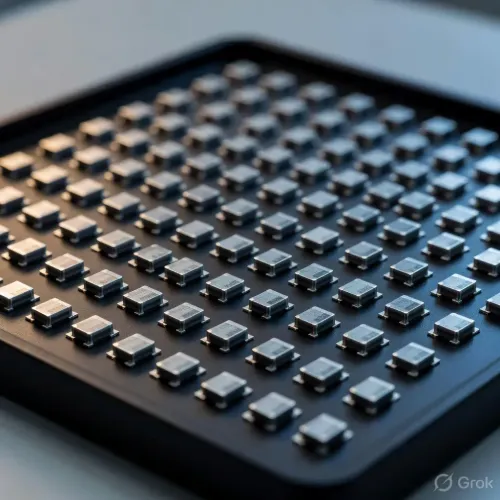
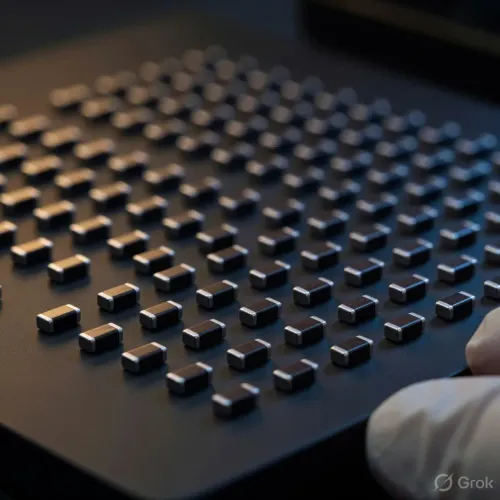
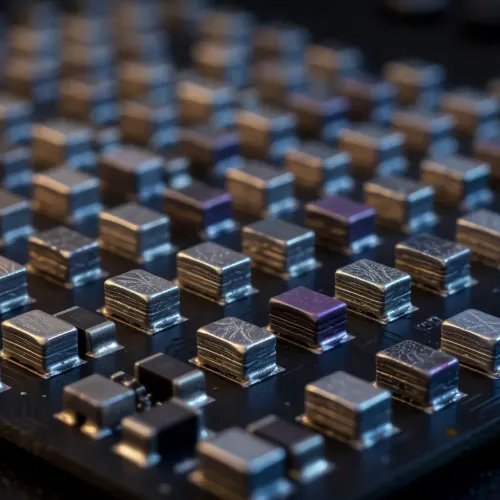
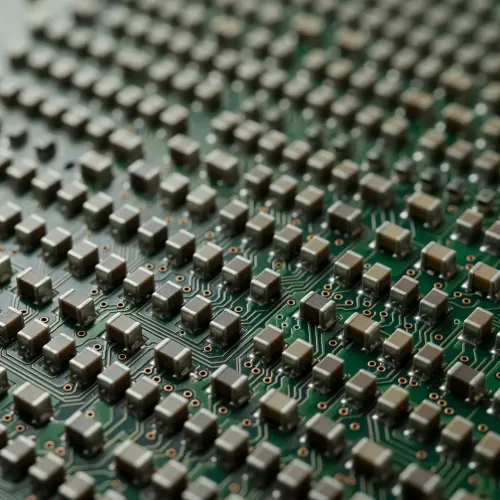
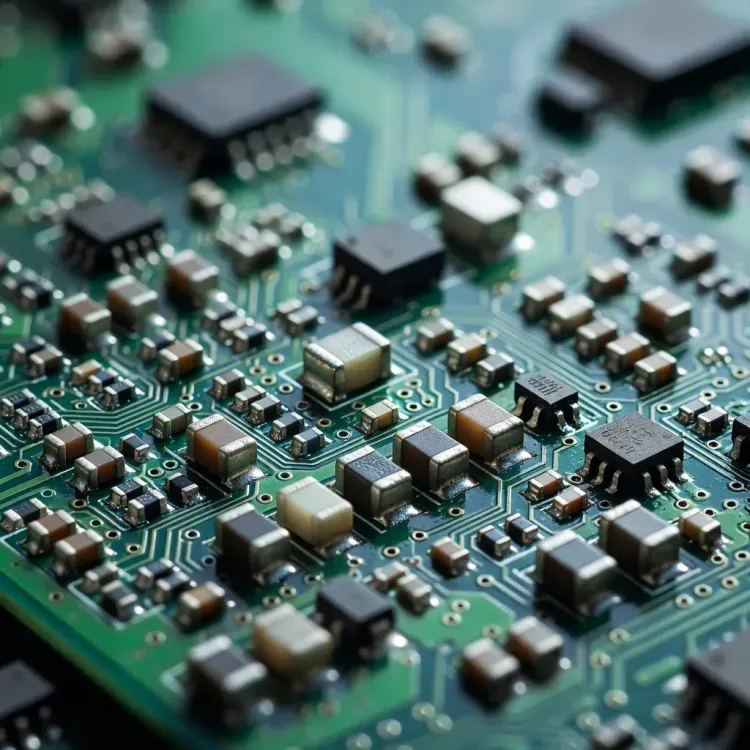
Multilayer ceramic capacitors (MLCCs) — tiny electrical buffer components embedded in circuit boards — are rapidly becoming one of the most sought-after components in the AI hardware supply chain, with surging demand from high-performance data centres driving up prices and straining production capacity as of May 2026. The sector is drawing comparisons to the explosive growth trajectories previously seen in memory chips and optical modules.
Why it matters
According to a report released on Monday, 19 May 2026 by TrendForce, a market research firm based in Taipei, the AI hardware boom is squeezing MLCC production capacity as manufacturers prioritise high-end supply for data centres over consumer-grade components. This supply tightening is prompting suppliers to raise prices across the board.
The core driver is architectural: next-generation AI hardware requires significantly larger volumes of MLCCs per unit than its predecessors. Nvidia's forthcoming Rubin architecture platform, designed to power advanced AI computing workloads with more complex power management requirements, uses 12,000 MLCC units on a single board — nearly double the 6,500 units found on the current GB200 platform, according to TrendForce.
The scale of demand
The density figures are striking. A single AI server densely packed with graphics processing units consumes up to 10 times more power than a traditional server and requires as many as 28,000 MLCCs per unit — a 13-fold increase compared with a standard server configuration, according to a research note issued last week by China Securities.
China Securities described the MLCC industry as poised for explosive growth, suggesting it could be 'potentially repeating the growth miracle previously seen in the optical module sector.' That sector saw multi-year valuation surges as AI infrastructure spending accelerated globally.
The competitive backdrop
The global MLCC market is currently dominated by Japanese and South Korean manufacturers. Murata Manufacturing, headquartered in Kyoto, and Samsung Electro-Mechanics (SEMCO) of South Korea maintain a firm grip on the high-end capacitor segment used in AI servers, according to industry reports. Chinese producers, including Guangdong Fenghua Advanced Technology and Chaozhou Three-Circle, are positioned in lower-tier segments but are watching the high-end opportunity closely.
What's next
As Nvidia's Rubin architecture moves toward broader deployment and hyperscaler capital expenditure continues to climb, MLCC suppliers face both an opportunity and a capacity challenge. Manufacturers that can scale high-end production fastest stand to capture the most value from this infrastructure wave.
Investors and procurement teams alike will be tracking whether Murata, SEMCO, and emerging challengers can expand high-grade MLCC output quickly enough to meet the accelerating demands of next-generation AI platforms.
Point of View
Commodity-adjacent components — the same dynamic that turned optical transceiver makers into market darlings almost overnight. What mainstream coverage often misses is that the bottleneck is not just volume but grade: Japanese and South Korean incumbents like Murata and SEMCO have years of process refinement in high-reliability, high-capacitance MLCCs that Chinese challengers cannot replicate quickly. This creates a structural advantage for Tokyo and Seoul even as Beijing pushes domestic substitution across the semiconductor supply chain. With Nvidia's Rubin rollout set to roughly double per-board MLCC consumption, any supply constraint at the high end could become a quiet but meaningful brake on AI server output timelines.
NationPress
5 Oct 2026
Frequently Asked Questions
What are MLCCs and why are they important for AI servers?
MLCCs, or multilayer ceramic capacitors, are tiny components that act as electrical buffers on circuit boards, stabilising power delivery. They are critical in AI servers because high-density GPU configurations consume up to 10 times more power than traditional servers, requiring far more sophisticated power management and up to 28,000 MLCC units per server, according to China Securities.
How many MLCCs does Nvidia's Rubin architecture require?
Nvidia's next-generation Rubin architecture uses 12,000 MLCC units on a single board, according to TrendForce. That is nearly double the 6,500 units used on the current GB200 platform, reflecting the increased power-management complexity of the new design.
Which companies dominate the MLCC market?
The global high-end MLCC market is dominated by Japan's Murata Manufacturing and South Korea's Samsung Electro-Mechanics (SEMCO). Chinese manufacturers Guangdong Fenghua Advanced Technology and Chaozhou Three-Circle are active in lower-tier segments but have yet to establish a strong presence in the premium data-centre grade.
Why are MLCC prices rising in 2026?
MLCC prices are rising because manufacturers are prioritising high-end production for AI data centres over consumer-grade supply, creating tightness in the broader market. TrendForce noted in its May 2026 report that the AI hardware boom is squeezing overall production capacity, prompting suppliers to increase prices.
Could the MLCC sector repeat the optical module investment boom?
China Securities has drawn an explicit parallel, saying the MLCC industry is 'potentially repeating the growth miracle previously seen in the optical module sector.' If AI server deployments continue to scale at the current pace and per-unit MLCC counts keep rising with each new architecture generation, the comparison may prove accurate — though supply concentration among Japanese and Korean incumbents could limit how broadly gains are distributed.