China's MLCC makers eye market share as Japan and Korea go upmarket
Synopsis
Goldman Sachs calls it 'the largest and longest cycle in history': as Japanese and Korean MLCC giants chase AI server premiums, Chinese rivals are quietly moving to fill the mid-tier vacuum — a shift that could reshape the global passive components supply chain.
Key Takeaways
The global MLCC market was worth approximately US$15 billion in 2025 , with the server MLCC sub-segment valued at US$1.3 billion , according to Citrini Research .
AI server MLCCs are projected to grow by approximately 80 per cent , driving a major reallocation of capacity among top-tier producers.
Goldman Sachs has described the current MLCC demand cycle as 'the largest and longest cycle in history' .
Morningstar 's Kazunori Ito said high-end MLCC suppliers have announced successive price increases from 2026 onward, with the trend expected to persist.
Chinese MLCC manufacturers , concentrated in Shenzhen , are positioned to gain share in lower-end segments as Japanese and Korean leaders focus capacity on premium AI server components.
The technology gap between Chinese producers and Japanese/Korean leaders in advanced MLCC specifications remains, but volume gains could fund future R&D catch-up.
China's multilayer ceramic capacitor (MLCC) manufacturers are positioning to capture lower-end market share as Japanese and South Korean industry leaders pivot aggressively toward high-value components for AI servers — a structural shift that Goldman Sachs has called 'the largest and longest cycle in history' for the sector.
Why it matters
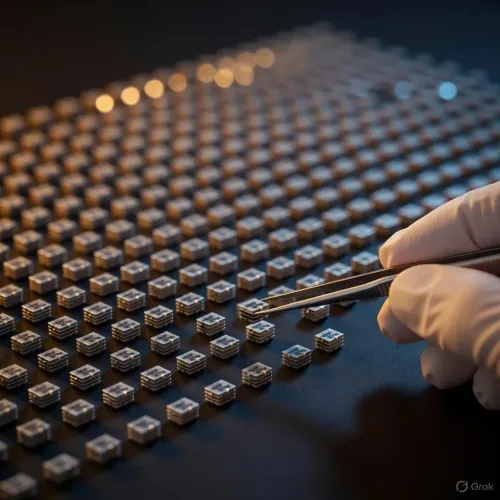
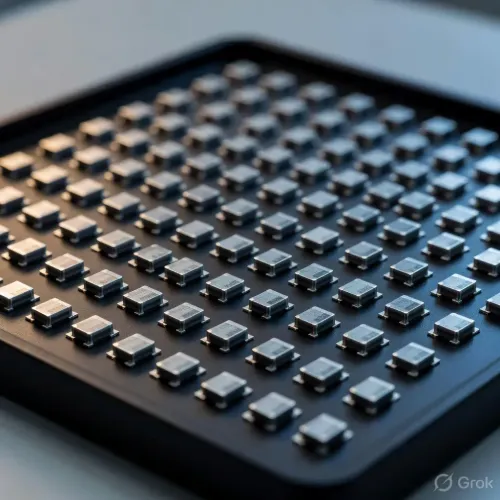
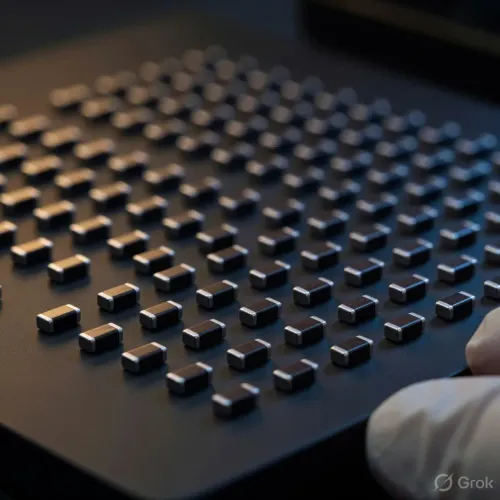
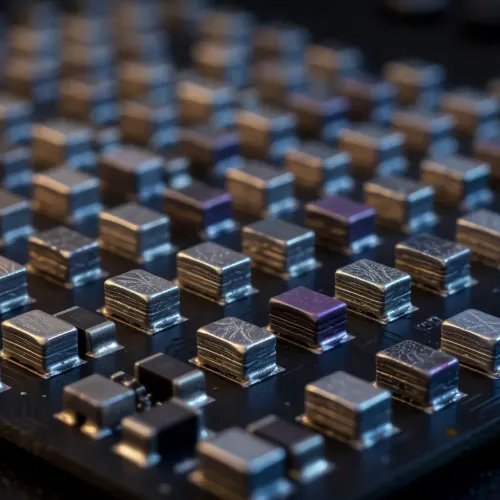
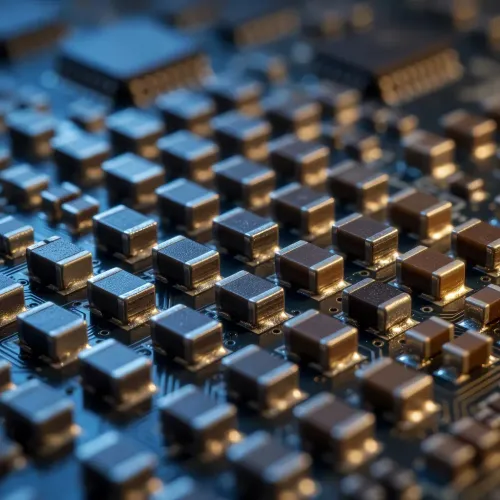
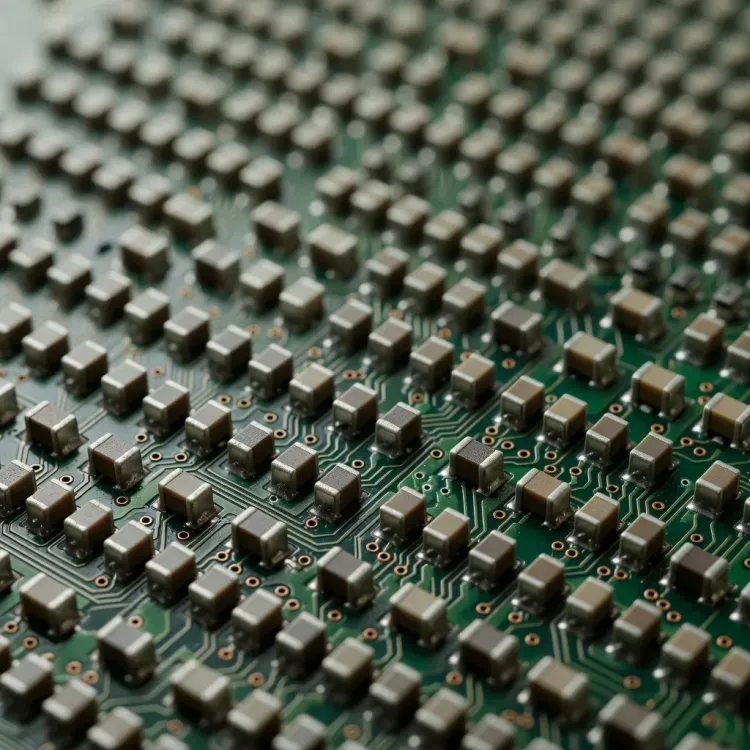
MLCCs — nicknamed the 'rice of the electronics industry' for their near-universal presence in electronics — are tiny passive components that regulate and stabilise electrical currents across devices from smartphones and electric vehicles to AI servers and data centres. Their criticality to modern hardware makes supply-chain dynamics in this segment a bellwether for the broader electronics industry.
As AI infrastructure buildout accelerates globally, the demand profile for MLCCs is bifurcating sharply: premium, high-reliability components are being snapped up by hyperscalers and server OEMs, while the commodity end of the market faces a relative vacuum that Chinese manufacturers are now moving to fill.
The AI server demand surge
Kazunori Ito, Director of Equity Research at Morningstar, attributed the surge to compounding technical pressures inside modern AI infrastructure. 'The sharp increase in power consumption in AI servers, alongside rising chip complexity, is driving demand for MLCCs that combine miniaturisation, high capacitance, thermal resistance and long-term reliability,' he said.
Ito added that pricing dynamics are unusually favourable for established suppliers: 'The price erosion that typically accompanies intensifying competition is likely to be considerably more muted than in a normal year. Indeed, high-end MLCC suppliers have announced a succession of price increases from 2026 onward, and we expect this trend to persist for some time.'
Market backdrop
According to a recent note by Citrini Research, the global market for server MLCCs was valued at approximately US$1.3 billion in 2025, against a total global MLCC market of roughly US$15 billion. Demand in the server segment is expanding rapidly, with AI server MLCCs projected to grow by approximately 80 per cent.
That growth trajectory is concentrating capacity investment at the top tier — capacity expansions and successive price increases by leading Japanese and Korean producers are signalling where their strategic priorities lie, effectively ceding the commodity segment to lower-cost rivals.
The competitive backdrop
Chinese MLCC firms, based largely in Shenzhen and broader Guangdong province, have historically trailed their Japanese counterparts — particularly Murata Manufacturing and TDK — and Korean rivals in advanced miniaturisation and reliability ratings required for mission-critical server applications. That technology gap remains, but the strategic realignment at the top of the market is creating a window that did not previously exist at this scale.
Industry analysts note that Chinese producers gaining volume and revenue in mid-to-lower-end segments could fund the R&D investment needed to eventually close the gap in higher-specification tiers — a pattern seen previously in displays, batteries, and solar panels.
What's next
The trajectory of AI server deployments through 2026 and beyond will determine how durable this opportunity is for Chinese MLCC makers. If leading Japanese and Korean producers sustain their upmarket focus — and current order books suggest they will — the window for Chinese competitors to consolidate a larger share of the mid-tier market could widen materially over the next two to three years.
Point of View
Incumbent leaders voluntarily vacate the middle market, and Chinese manufacturers — initially dismissed as low-end players — use that volume as a springboard toward technical parity. Mainstream coverage tends to frame this as a simple win for Japanese and Korean firms riding the AI wave, but the more consequential long-term dynamic is the capability accumulation happening at the tier below. The 80 per cent projected growth in AI server MLCCs is also a reminder that the AI infrastructure buildout is not just a story about GPUs and memory — passive components are a genuine bottleneck, and pricing power has shifted decisively to suppliers. Investors and procurement teams focused solely on compute chips may be underweighting the passive components constraint in their AI capex models.
NationPress
26 Oct 2026
Frequently Asked Questions
What are MLCCs and why are they important for AI servers?
MLCCs, or multilayer ceramic capacitors, are tiny passive electronic components that regulate and stabilise electrical currents in devices. In AI servers, rising chip complexity and power consumption have made high-performance MLCCs — combining miniaturisation, high capacitance, thermal resistance, and long-term reliability — a critical and increasingly scarce component.
How big is the AI server MLCC market?
According to Citrini Research, the server MLCC market was valued at approximately US$1.3 billion in 2025, within a total global MLCC market of roughly US$15 billion. The AI server segment is projected to grow by approximately 80 per cent.
Why are Chinese MLCC makers gaining an opportunity now?
Japanese and South Korean MLCC leaders are concentrating capacity on high-end, high-margin components for AI servers, effectively reducing their focus on mid-to-lower-tier products. This strategic shift is opening space for Chinese manufacturers to capture share in segments that premium producers are deprioritising.
Are Chinese MLCC manufacturers technologically competitive with Japanese and Korean rivals?
Not yet at the high end — Chinese producers currently lag Japanese and Korean manufacturers in advanced miniaturisation and reliability specifications required for mission-critical AI server applications. However, analysts note that volume gains in mid-tier segments could fund R&D investment to gradually close that gap, mirroring patterns seen in displays and batteries.
What is driving MLCC price increases in 2026?
Morningstar's Kazunori Ito said that high-end MLCC suppliers have announced successive price increases from 2026 onward, driven by surging AI server demand. He noted that price erosion from competition will be 'considerably more muted than in a normal year' and that the pricing trend is expected to persist.