China MLCC supply chain races to scale amid AI server boom
Synopsis
Goldman Sachs calls it the 'largest and longest' MLCC cycle in history — and China's upstream material suppliers are racing to prove the point. Shandong Sinocera's 17% H1 2026 revenue jump to 2.5 billion yuan, backed by live AI-server production lines, signals that the real AI infrastructure bottleneck may lie not in chips but in capacitors.
Key Takeaways
Shandong Sinocera Functional Materials reported H1 2026 sales of 2.5 billion yuan (US$370 million) , up nearly 17 per cent year on year , with net income rising 9 per cent .
The company disclosed in a Shenzhen Stock Exchange filing dated August 6, 2026 that new MLCC dielectric powder production lines are partially operational and targeting AI server and automotive markets.
Goldman Sachs has characterised the current demand environment as the 'largest and longest' cycle in MLCC history, driven by AI infrastructure buildout.
Upstream suppliers Jiangsu Boqian New Materials (nickel powder) and Chaozhou Three-Circle are also reportedly committing capital to new capacity.
Incumbent MLCC finished-goods leaders Murata Manufacturing ( Japan ) and Samsung Electro-Mechanics ( South Korea ) face rising competition from Chinese material-layer suppliers scaling rapidly.
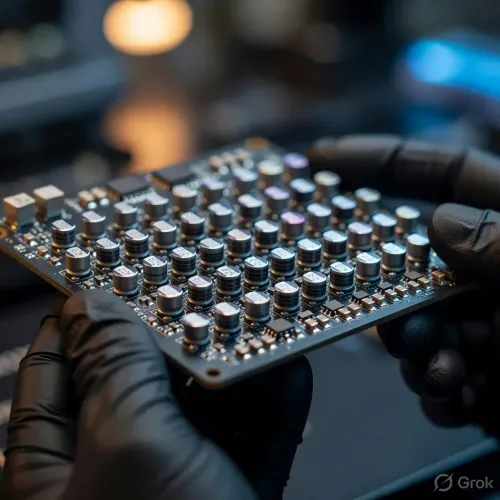
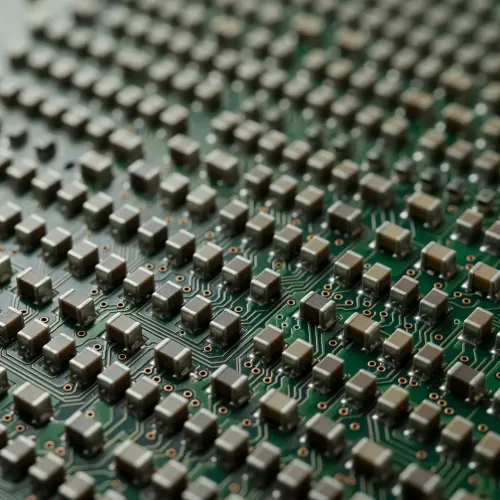
China's upstream supply chain for multilayer ceramic capacitors (MLCCs) — the miniature passive components often called 'the rice of electronics' — is aggressively expanding capacity as artificial intelligence-driven demand triggers a record surge in global orders, with major domestic suppliers reporting double-digit revenue growth heading into the second half of 2026.
Sinocera signals output surge ahead
Shandong Sinocera Functional Materials, one of China's leading suppliers of dielectric powder to MLCC manufacturers, disclosed in a Shenzhen Stock Exchange filing on Wednesday, August 6, 2026 that it is actively scaling capacity to serve AI server and automotive markets, with portions of its new production lines already operational. The company reported sales growth of nearly 17 per cent year on year in the first half of 2026, reaching 2.5 billion yuan (approximately US$370 million), while net income climbed 9 per cent over the same period.
'Looking ahead, as new capacity gradually ramps up, output and sales of MLCC powders are expected to rise further,' Sinocera said in the filing, adding that it would continue to expand and ensure its supply aligns with market momentum. Dielectric powder is the core raw material inside MLCCs, which regulate electrical currents across devices ranging from smartphones to high-performance AI hardware.
Why it matters: the 'largest and longest' MLCC cycle
Goldman Sachs has described the current phase as the 'largest and longest' cycle in MLCC history, underpinned by the insatiable computing requirements of AI infrastructure. Each high-density AI server rack can contain thousands of MLCCs, multiplying demand well beyond what consumer electronics cycles historically generated. The component's ubiquity across power regulation, signal filtering, and decoupling functions makes it a critical bottleneck when supply lags.
Global MLCC production has long been dominated by Japan's Murata Manufacturing and South Korea's Samsung Electro-Mechanics, but Chinese upstream material suppliers — including dielectric powder and nickel powder makers — are positioning themselves as indispensable links in the value chain as demand outpaces incumbent capacity.
Broader investment wave across upstream suppliers
Other upstream MLCC material suppliers have also moved quickly to commit capital. Companies including Jiangsu Boqian New Materials, a nickel powder supplier, and electrode material maker Chaozhou Three-Circle are among those reportedly pouring investments into new capacity to meet the accelerating order flow. The coordinated expansion signals that the supply response is broad-based rather than isolated to a single firm.
According to industry analysts, the upstream buildout reflects confidence that AI infrastructure spending — particularly in AI server clusters — will sustain elevated MLCC demand through at least the medium term, with research firm Frost & Sullivan among those tracking the sector's structural shift.
What's next
The pace at which Sinocera's new production lines reach full utilisation will be closely watched as a leading indicator of whether China's domestic MLCC supply chain can keep pace with accelerating global AI hardware deployments. Any capacity shortfall at the material level could ripple upstream into finished MLCC pricing and, ultimately, AI server build schedules — making the sector a bellwether for the broader AI infrastructure cycle.
Point of View
Passive components — unglamorous, sub-cent items — are quietly becoming a strategic chokepoint, and China's material suppliers are using this cycle to embed themselves deeper into the global value chain. Sinocera's 17% revenue growth while still ramping new lines suggests the demand signal is real and durable, not a pull-forward. The competitive risk for Murata and Samsung Electro-Mechanics is not that Chinese firms will displace them in finished MLCCs overnight, but that Chinese upstream control of dielectric and nickel powder gives domestic MLCC assemblers a cost and supply-security advantage that compounds over time — precisely the dynamic that has played out in solar, batteries, and display panels before.
NationPress
20 Sept 2026
Frequently Asked Questions
What are MLCCs and why are they important for AI servers?
Multilayer ceramic capacitors (MLCCs) are tiny passive components that regulate electrical currents in electronic devices. Each high-density AI server rack can require thousands of MLCCs for power regulation and signal filtering, making them a critical — and potentially scarce — building block of AI infrastructure.
What did Shandong Sinocera report for the first half of 2026?
Shandong Sinocera Functional Materials reported first-half 2026 sales of 2.5 billion yuan (approximately US$370 million), a rise of nearly 17 per cent year on year, while net income grew 9 per cent over the same period. The company also disclosed that new production lines targeting AI server and automotive markets are already partially operational.
What has Goldman Sachs said about the MLCC demand cycle?
Goldman Sachs has described the current MLCC demand environment as the 'largest and longest' cycle in the component's history, attributing it to the computing demands of AI infrastructure. The characterisation underscores why upstream material suppliers are committing significant capital to capacity expansion.
Which other Chinese suppliers are expanding MLCC-related capacity?
Beyond Sinocera, upstream suppliers including Jiangsu Boqian New Materials, a nickel powder producer, and electrode material maker Chaozhou Three-Circle are reportedly investing in new capacity. The broad-based expansion suggests the industry collectively anticipates sustained demand from AI hardware deployments.
How does China's MLCC supply chain expansion affect global market leaders?
Japan's Murata Manufacturing and South Korea's Samsung Electro-Mechanics currently dominate finished MLCC production globally. As Chinese upstream suppliers scale dielectric and nickel powder output, domestic MLCC assemblers gain cost and supply-chain advantages that could gradually erode the incumbents' market share, particularly in the fast-growing AI server segment.